📍 This Week in Bar
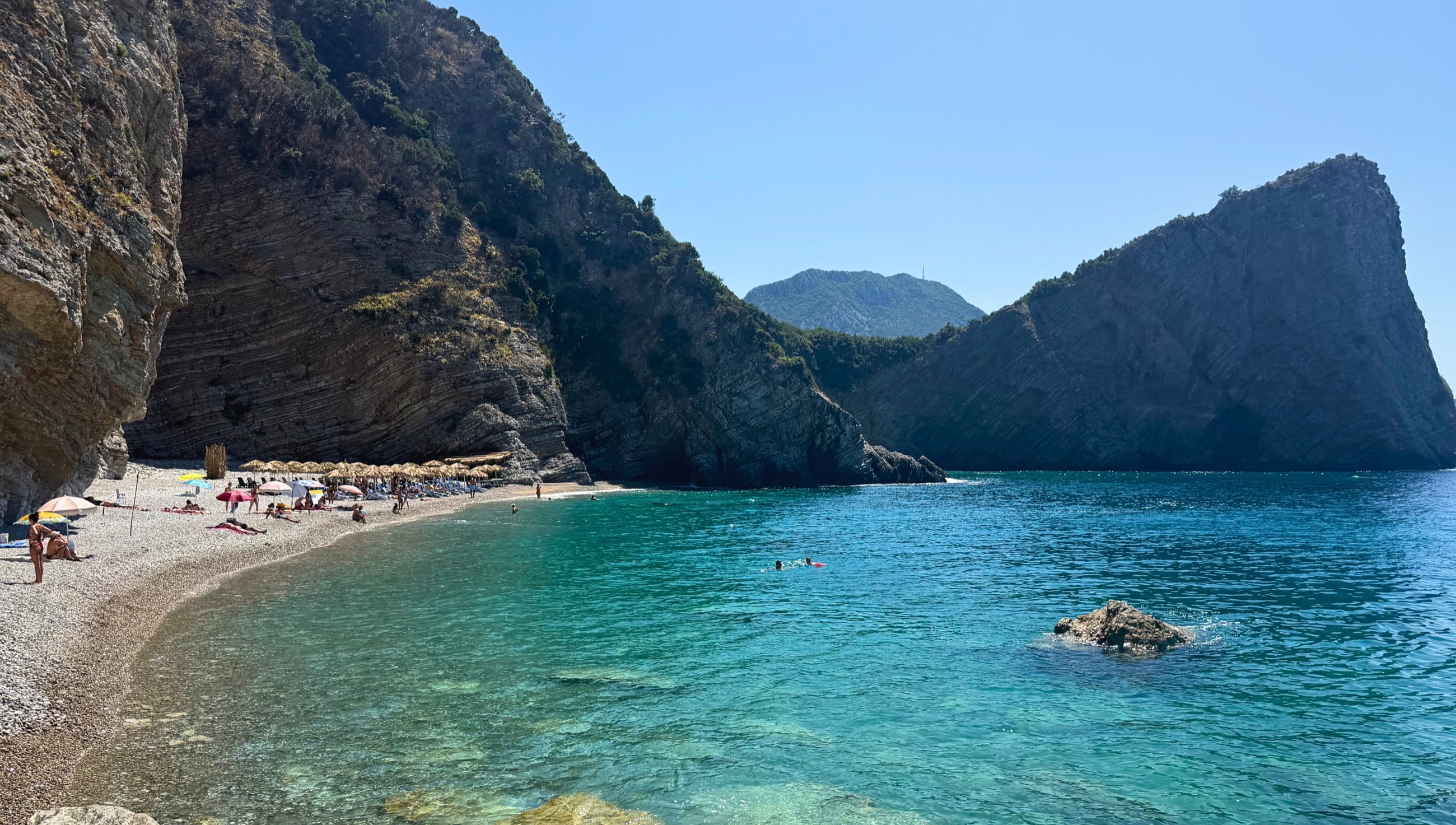 Vezirova Beach, a boat-access cove near Čanj, where steep cliffs meet some of the clearest water we found along the Montenegrin coast.
By our final week in Bar, a familiar beach day had acquired several variations.
There was the ten-minute walk to our local shoreline in Šušanj, where we could swim before coffee or carry wine down for sunset on the weekends. There was Red Beach, a small cove thirty minutes north on foot, with reddish pebbles and water clear enough to see the bottom well beyond the shore. There was Čanj, reached by a €2 bus ride, where a long public beach opened onto smaller coves accessible only from the sea.
This week, we took the Čanj excursion farther.
A taxi boat collected us from the main beach and carried us first to Vezirova Beach, a narrow, undeveloped cove enclosed by rock. There were no restaurants or beach bars. The boat dropped us beside the stony shore and left. A few taxi boats rotated through the cove periodically, and we simply climbed aboard one when we were ready to go.
The coastline around Čanj is cut by cliffs steep enough that roads never reached several of its coves, leaving them accessible primarily by boat.
The water was among the clearest we encountered during two months on the Montenegrin coast. It shifted from pale blue at the shoreline to deeper shades beyond the cove, with none of the suspended sand that softens visibility along broader beaches. The temperature remained cool enough to be refreshing despite another week of July heat.
We alternated between swimming and resting on the rocks beneath the cliff. Without facilities or road access, the beach felt less like an attraction than a piece of coastline temporarily shared by the people who had made the boat trip.
From there, we continued to Kraljičina Plaža, or Queen’s Beach. It is also reached primarily by boat, although the setting is larger and more organized. Loungers and umbrellas covered part of the shore, a small stand sold cold drinks, and boats gathered offshore throughout the afternoon.
The two coves offered useful contrasts. Vezirova was small, rocky, and undeveloped. Queen’s Beach was social, busy, and arranged for a full day beside the water. Both had exceptionally clean sea, but Vezirova was the one we would return to first.
The round-trip boat fare was €5 per person. After several long swims, we returned to Čanj for gyros before catching the bus home. By mid-afternoon, the towels were drying on the balcony and we were back at our computers.
That combination has defined much of Bar: a worthwhile coastal outing in the morning, followed by an otherwise normal workday.
The week also included an overnight return to Kotor, where friends from the United States were arriving by cruise ship. We took a vacation day, rode the morning bus north, and met them near the Sea Gate. Seeing familiar faces after months on the road gave the day a different energy before it had even started, a welcome connection to home.
The visit temporarily replaced our normal long-stay economics with an overnight in vacation mode: a cable-car excursion with drinks at the top, a room inside the walls, lunch in the Old Town, and elegant waterfront dining. Generous friends softened the costs.
Coffee beneath the Clock Tower opened the day, followed by a walk through the Old Town that took us up to Kampana Tower, a squat medieval bastion we had explored on our own during our month living in Kotor and knew was worth the detour. The view from the top stretched along the medieval walls and out across the bay.
Lunch came under umbrellas inside the walls: chicken pesto pasta and shopska salad for the two of us, sea bass for our friends.
The afternoon brought the cable car, which cost €25 per person. At the upper station, 1,350 meters above the bay, we settled into a table at Forza Kuk with drinks, snacks, wide views, and a live DJ.
We descended in the evening and continued to Dobrota for dinner at Konoba Portun, where the four of us shared a table beside the water over sea bass, grilled shrimp, saffron risotto, and roasted lamb.
We had booked a room inside the walls for the night for €117. The rate made little sense for monthly living, but complete sense for one night built around friends we had not seen in months.
The carefully arranged day ended less elegantly. Taxis were scarce, traffic was heavy, and our friends needed to be back aboard their ship by 10:00 p.m. We covered the final 2.4 kilometers along the Dobrota promenade at the fastest pace we had walked it all month, alternating brisk strides with short stretches of jogging.
They made the boarding time. We arrived warm, breathless, and certain that the story would improve with time.
The following morning, after breakfast on the riverside terrace at Taraca and one final coffee inside the walls, we took the bus back to Bar and resumed work that afternoon.
Kotor had been our home for a month. Returning as visitors for one night felt different. We knew the gates, the promenade, the cafés, the bus station, and the turns through Dobrota. Familiarity removed the work of orientation and left more space for friendship.
🎨 Cultural Deep Dive
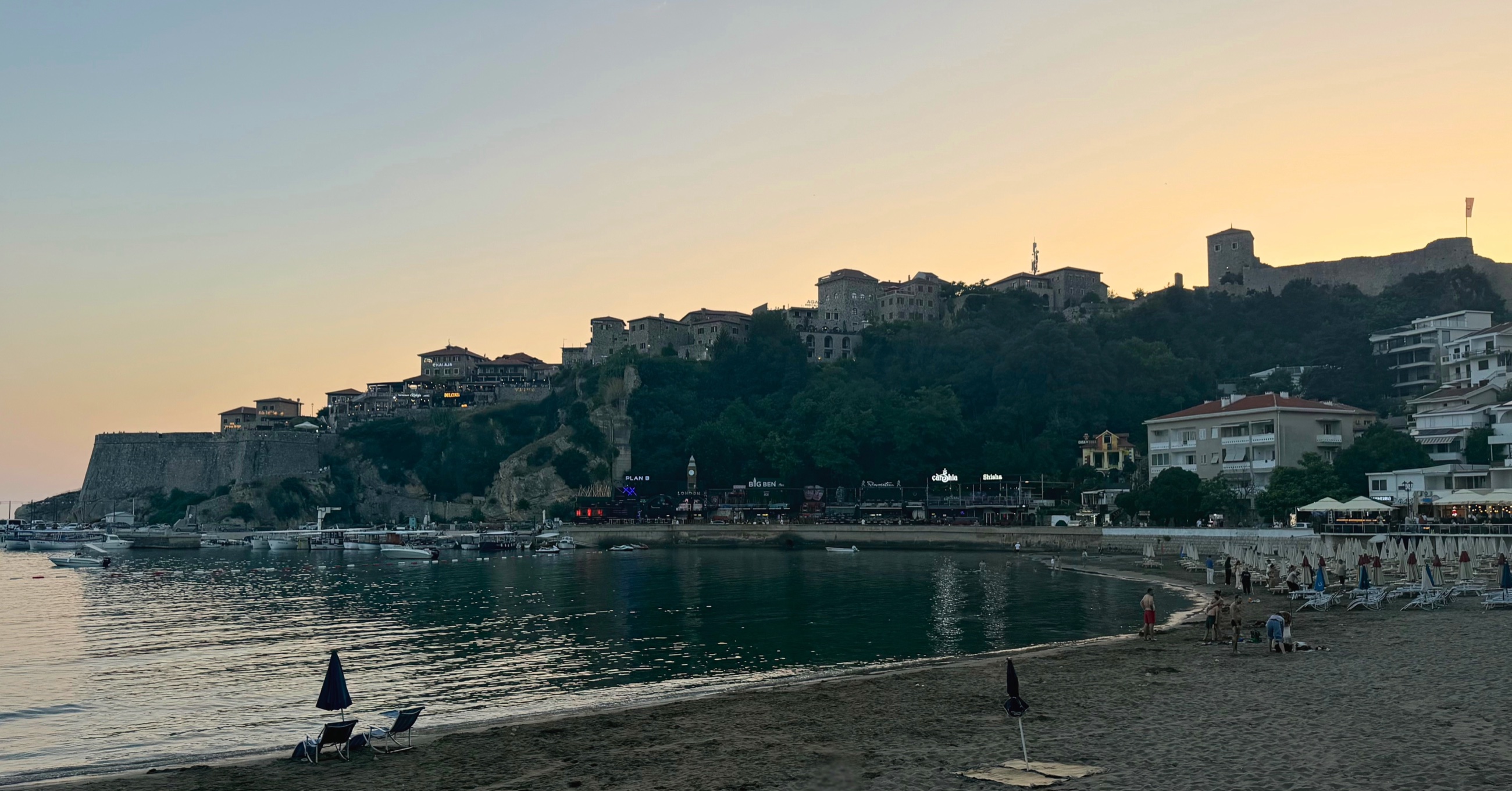 Ulcinj’s fortified Old Town rises above Mala Plaža as evening settles over the waterfront.
Our final substantial excursion from Bar took us south to Ulcinj, the coastal city where Montenegro’s cultural geography begins to lean more visibly toward Albania.
The change was apparent before we had learned much of its history. Mosques appeared more frequently across the city. The call to prayer carried above the traffic. Albanian was spoken and written alongside Montenegrin. Restaurant menus, architecture, and the density of the streets placed Ulcinj within the Adriatic world, while giving it a character distinct from Bar, Kotor, or Budva.
Ulcinj has been inhabited for more than two millennia, with layers tracing back to Illyrian settlement, Roman and Byzantine administration, medieval Serbian rule, and a Venetian period. After the Ottoman conquest in 1571, the city developed into a semi-autonomous maritime center whose corsairs raided shipping across the Adriatic. Captives taken from Italian and Dalmatian coastal communities were brought to the square still known as Trg Robova, or Slave Square, where they could be sold or held for ransom.
Ottoman authorities moved to suppress piracy after the 1718 Treaty of Požarevac, and Ulcinj’s seafarers increasingly turned toward commercial shipping. That maritime history remains central to the city’s identity, even though the fortified Old Town now contains guesthouses, homes, a small museum, and restaurant terraces instead of ships and captives.
One of the more enduring local traditions connects Ulcinj to Miguel de Cervantes. A sculpture inside the Old Town commemorates the theory that the future author of Don Quixote was held captive here after being seized by corsairs in 1575, and that a woman from the town inspired the name Dulcinea.
Most historical accounts place Cervantes’ actual five years of captivity in Algiers rather than Ulcinj, so the local story is better understood as legend than settled biography.
The legend’s staying power fits a place with a genuinely tangled record of its own. Ottoman rule here did not end cleanly in 1878 as it did along much of the rest of the coast. Ulcinj was not handed over to Montenegro until November 1880, after Britain, France, Germany, Russia, Italy, and Austria-Hungary anchored a joint naval fleet off the coast to force the transfer. Albanian irregulars resisted the handover for months before it finally occurred.
We began several kilometers away at Miami Beach, one of the organized sections of Velika Plaža, or Long Beach.
After weeks of stone and pebble shorelines, the sand was a marked change. Velika Plaža extends for roughly eight miles (thirteen kilometers) south of Ulcinj, making it the longest beach in Montenegro. The sand is very fine and darker than the pale Mediterranean beaches many visitors expect.
The shallow entry continues far from shore. We could walk well into the water while it remained around our knees, making the beach especially suitable for families and for people less comfortable with the abrupt depths found along rockier coves.
Around us, some visitors coated their arms and legs with wet sand or partially buried themselves at the shoreline. Local tourism material frequently attributes therapeutic properties to Ulcinj’s mineral-rich sand. We cannot assess the medical claims, but the practice clearly remains part of the beach culture.
Mid-afternoon, we waded out to a small water taxi and paid €5 each for the thirty-minute trip toward the Old Town. The boat let us off at Mala Plaža, the city beach directly beneath the walls.
The Old Town rises abruptly from there. Its lanes are short, steep, and heavily polished by foot traffic, with restaurant terraces extending toward the sea from inside the fortifications.
Ulcinj was busier and more commercially oriented than Bar, its Old Town more polished for visitors, and its streets more crowded late into the evening.
It was also the Montenegrin city that most clearly anticipated the next stage of our journey. Albania lay only a short distance away. In Ulcinj, the transition had already begun.
🏠 Behind the Nomad Curtain
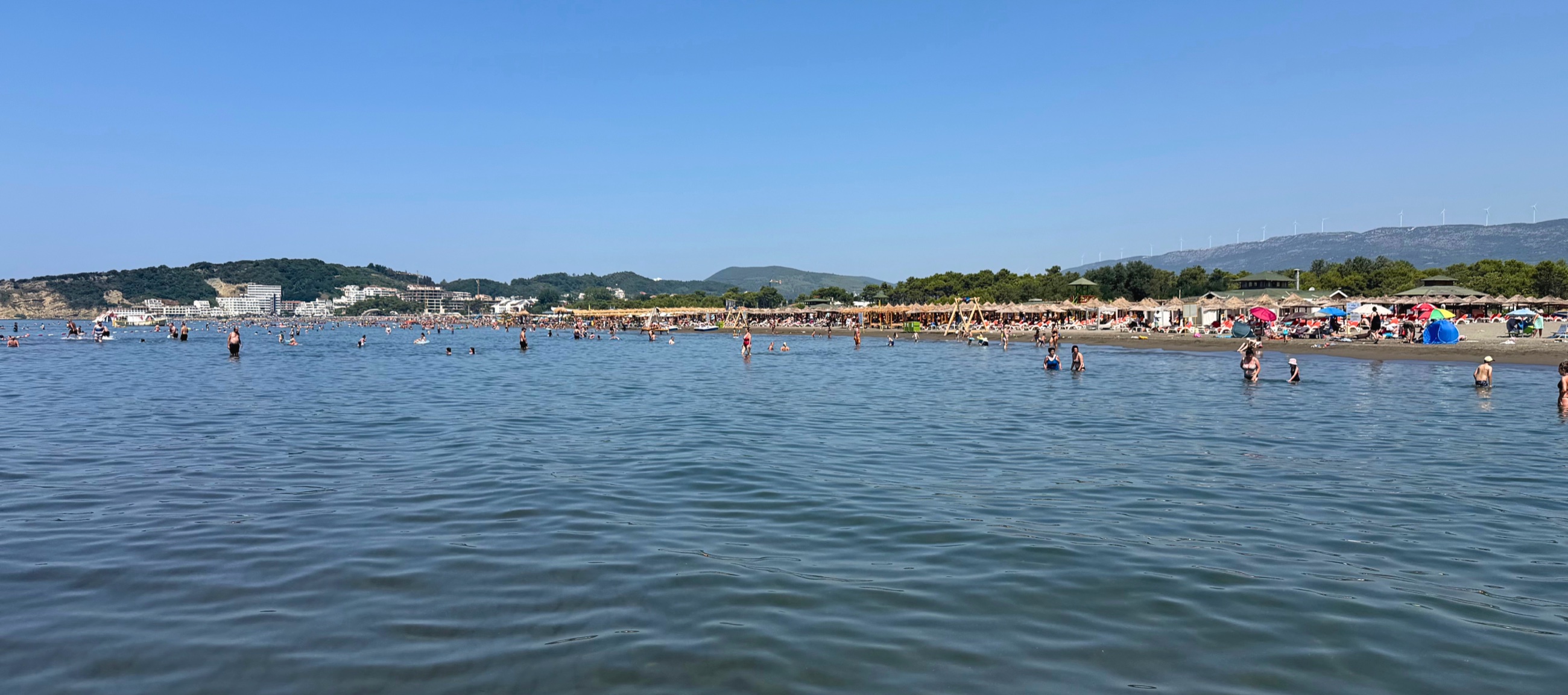 Velika Plaža stretches south of Ulcinj, with shallow water, miles of dark sand, and a long line of summer beach clubs.
The most useful transportation lesson of the month arrived during our Ulcinj trip.
Intercity coach travel in Montenegro appears formal when viewed online. Routes begin at central bus terminals, schedules list designated cities, and large coaches have ticket counters and luggage compartments.
In practice, the system retains considerable informality.
Rather than dealing with the additional cost and time delays of traveling to Bar’s main station, we waited beside the coastal road in Šušanj and flagged down an approaching coach. We confirmed Ulcinj with the driver, stored no luggage, paid €5 each in cash, and took our seats.
On the return, we asked the driver to let us off in Šušanj as opposed to continuing to the Bar terminal. He did.
These roadside pickups and requested drop-offs are common enough to be understood locally, but they are not guaranteed the way a published station stop is guaranteed. The driver has to see you, have space, and be willing to stop safely.
Cash is essential, and a traveler needs enough confidence to identify the correct bus and communicate the destination quickly. When it works, it removes a transfer and saves a considerable amount of time.
A similar lesson applied closer to home. The bus between Šušanj and Red Beach costs only €1, but there is no dependable posted timetable at our nearest stop. During summer congestion, waiting for a bus can take longer than walking the thirty minutes along the coast.
Cheap transportation is valuable. Predictable transportation is often more valuable.
By the fourth week, we had learned when to rely on the bus and when to start walking.
🍽️ Local Flavor
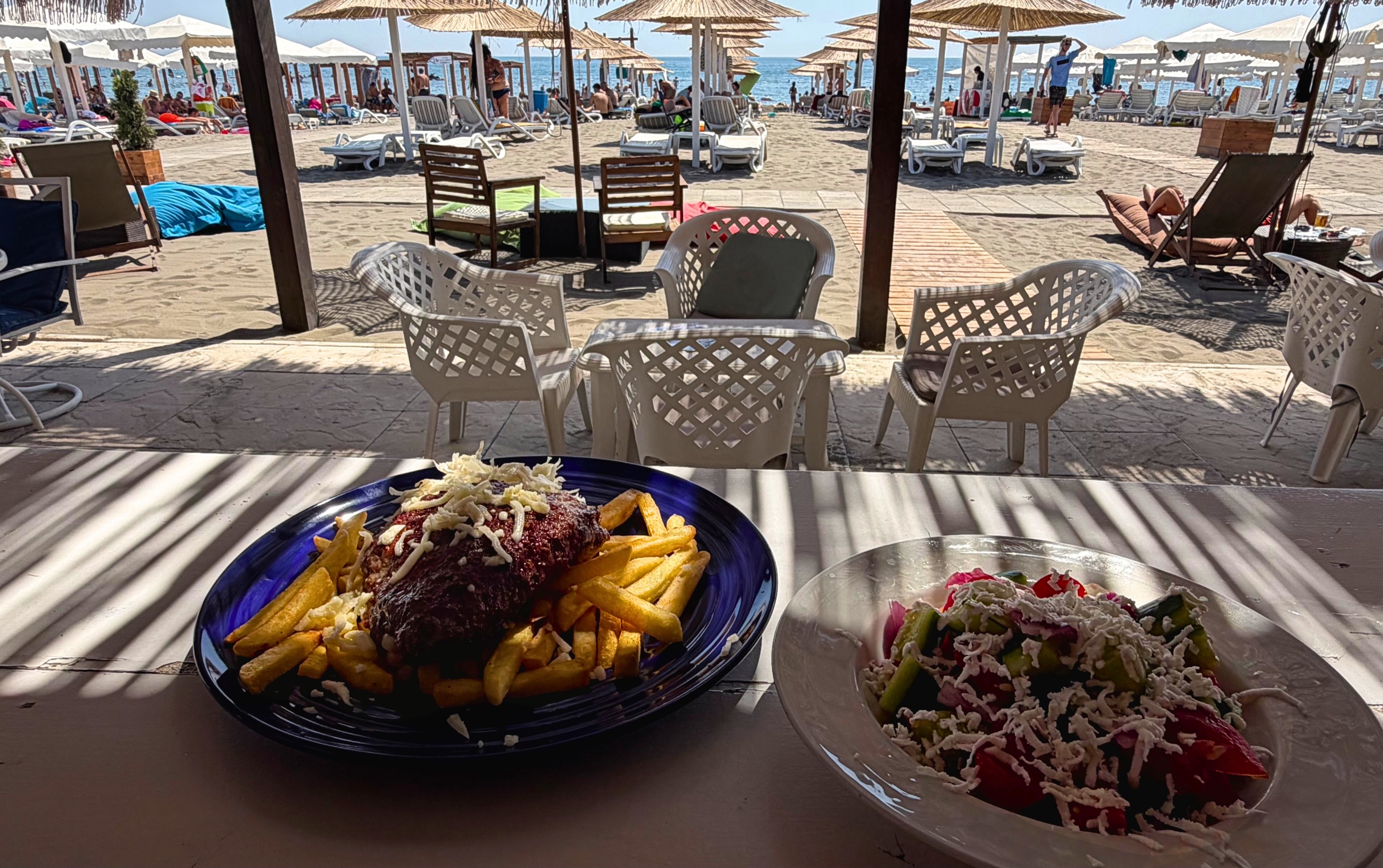 Punjena pljeskavica and shopska salad at Miami Beach, served in the shade just beyond the sand.
Ulcinj gave us two meals suited to the day rather than destinations in themselves.
At Miami Beach, we shared a shopska salad and a pljeskavica stuffed with cheese. Pljeskavica appears across the western Balkans in numerous forms, usually as a broad grilled patty made from seasoned ground meat.
The stuffed version, commonly called punjena pljeskavica, may contain cheese, ham, or kajmak before being grilled and served with bread, onions, fries, or salad.
It is sometimes translated as a hamburger, though that undersells both its size and its place within Balkan grill culture.
Later, after swimming at Mala Plaža, we ate döner wraps at a casual spot overlooking the city beach.
The Turkish influence was unsurprising. Ulcinj’s Muslim community remains one of the largest in Montenegro, and it continues to give the city a culinary and religious identity more pronounced than in the coastal towns farther north.
Across our month in Bar, some of the most reliable meals came from this overlap of regional traditions: Turkish wraps, Balkan grilled meats, Italian-style pizza, shopska salad, seafood, and Montenegrin home cooking.
Bar’s restaurant scene is less polished than Kotor’s and less concentrated than Ulcinj’s. Its strength is casual abundance. Most days did not require a reservation or a plan. Coffee, pizza, grilled meat, salads, pastries, and abundant seafood were available in the course of walking through town, which suited the month we were living.
💰 Nomad Real Talk
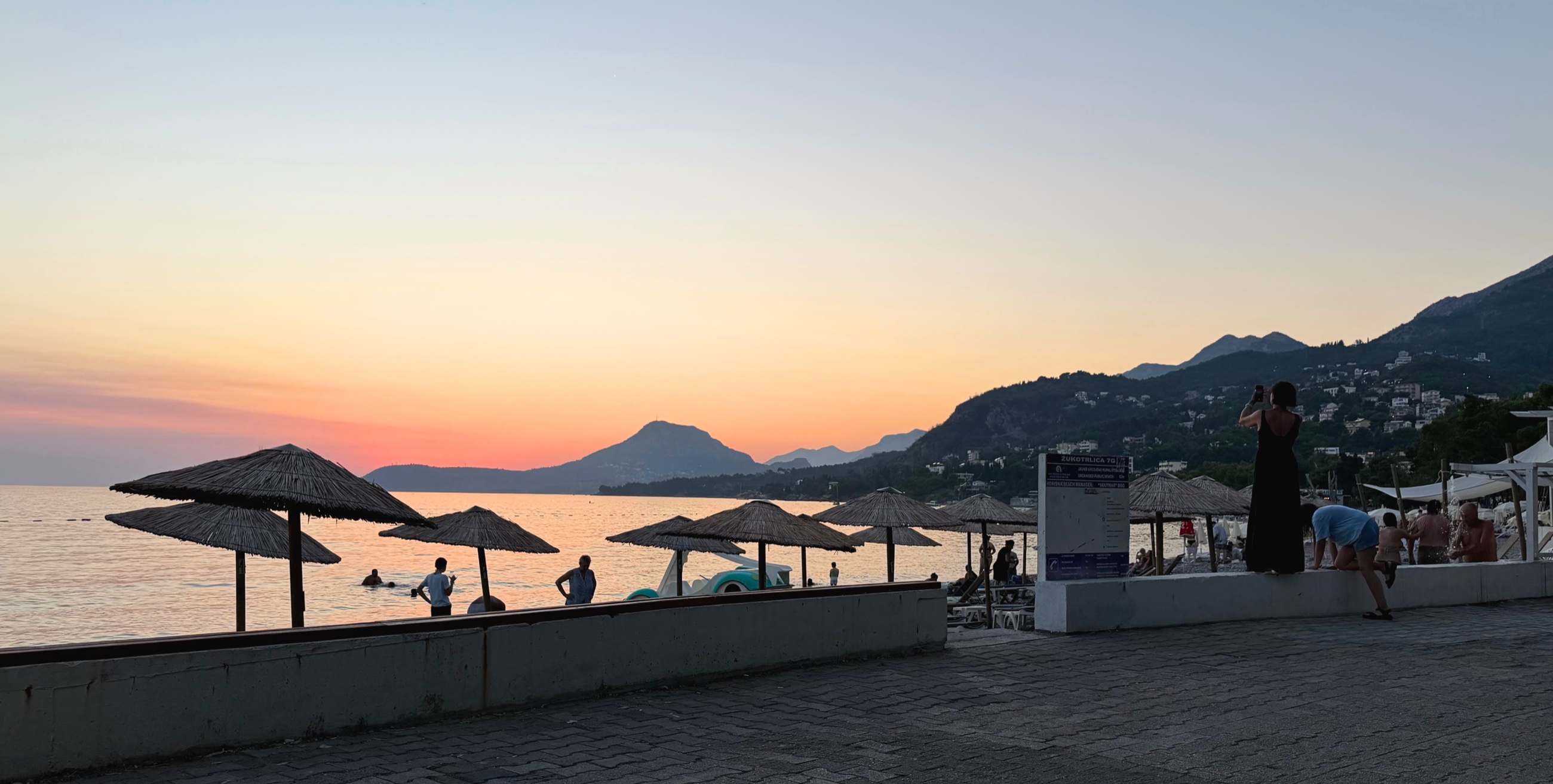 Sunset over Šušanj Beach, where the promenade, straw umbrellas, and easy access to the water shaped daily life in Bar.
After four weeks, Bar earns a recommendation, with real qualifications.
It is an excellent summer base for travelers who place swimming, beach sunsets, affordability, and practical daily life above architectural beauty, fine dining, or a highly developed cultural calendar.
Our modest apartment in lower Šušanj cost $1,465 for the month, ten minutes from the water.
Including the apartment, groceries, excursions, the gym, coffee, dining out, and other day-to-day spending, the month had reached roughly $2,850 by the time this issue was prepared. That excludes recurring costs that follow us everywhere, such as insurance and subscriptions, as well as our final days in Bar and transportation onward to Albania.
The gym was fifteen minutes away and cost €40 per person, cash only.
Our regular coffee order was espresso sa mlijekom, veliki, a large espresso with milk that locals sometimes called “the Deutsch.” It generally cost between €2.25 and €2.40.
Local buses cost €1 or €2. Intercity routes such as those to Ulcinj or Kotor generally ran from €5 to €10.
The area also provides considerable variety without changing accommodations. Stari Bar, Čanj, Red Beach, Budva, Ulcinj, Lake Skadar, Podgorica, and Kotor can all be reached as day trips or short overnight excursions.
Bar itself is a working maritime city. The Port of Bar is Montenegro’s principal commercial seaport, and the railway connects the coast directly with Podgorica and onward through the mountainous interior.
That transportation role helps explain the city’s character: wide modern avenues, apartment blocks, a marina, a rail line, and an industrial port built for commerce and everyday residence as much as tourism.
The trade-offs are equally clear.
Bar does not have Kotor’s preserved medieval center, Budva’s resort infrastructure, or Ulcinj’s dense summer energy. The strongest restaurants and shops sit closer to central Bar, farther from many Šušanj apartments. The coastal road becomes heavily congested in July. Local bus information is limited. Long midday walks are unpleasant during heat waves.
Šušanj was still our preferred base. It gave us closer beach access, a more relaxed shoreline, and enough separation from central Bar to make the month feel residential, provided we planned around the heat.
Bar won’t satisfy travelers who need a beautiful urban center outside their door every morning, and it isn’t trying to. It works better for people willing to trade some polish for low-friction access to the sea. That balance may not hold for long.
Montenegro is now the most advanced candidate in the EU accession process, aiming to close its remaining negotiating chapters this year with membership targeted for 2028, and a working port city already investing in new development is a likely candidate for the growth that follows.
By the end of the month, we had become regulars at no single grand institution. Our familiarity was distributed across a gym, grocery stores, bus stops, café tables, stretches of promenade, and several places where we knew we could leave our towels during a swim.
📸 Photo Story
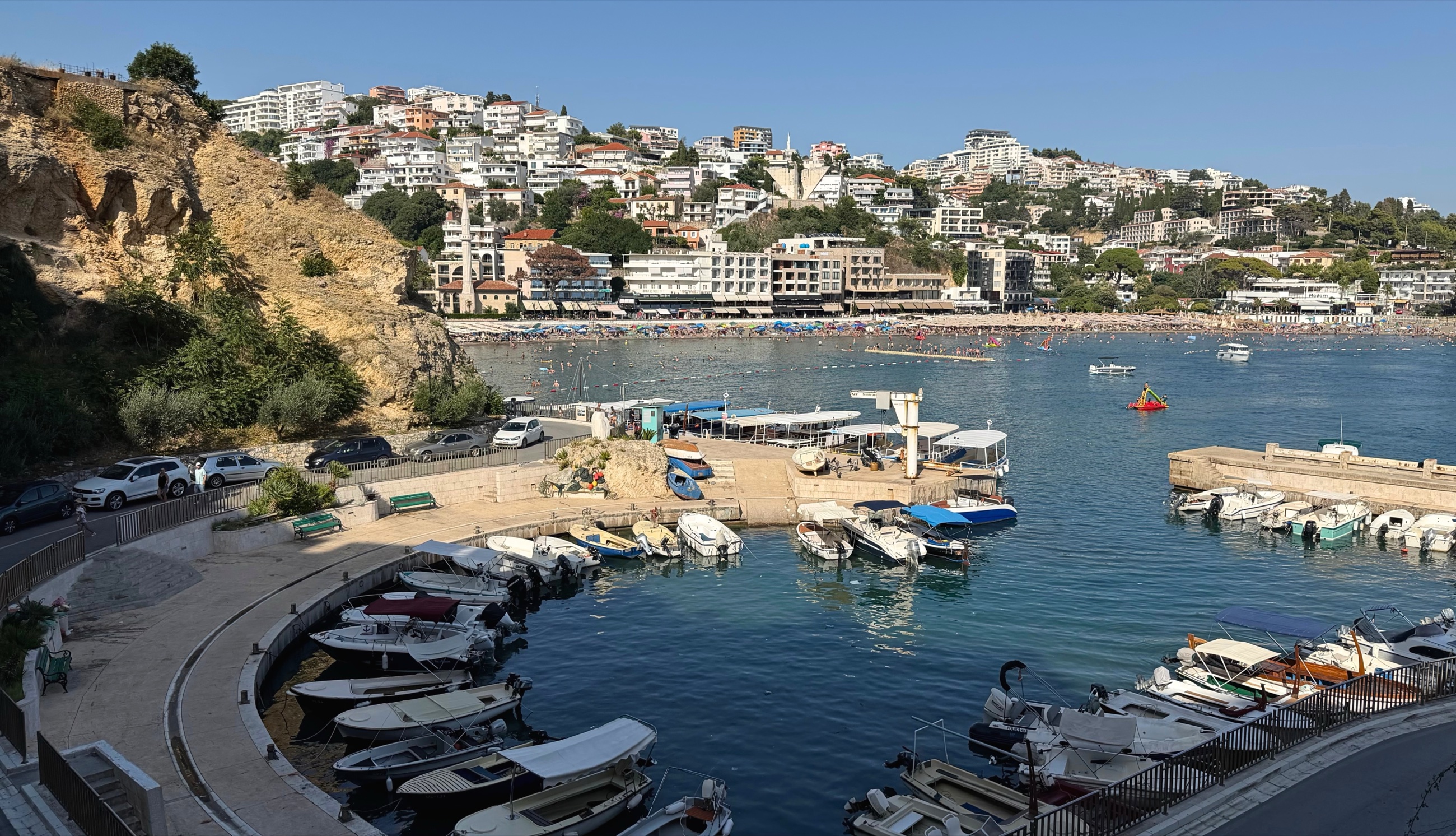 Ulcinj’s waterfront gathers the marina, Mala Plaža, hillside apartments, and Old Town into one crowded sweep of the coast.
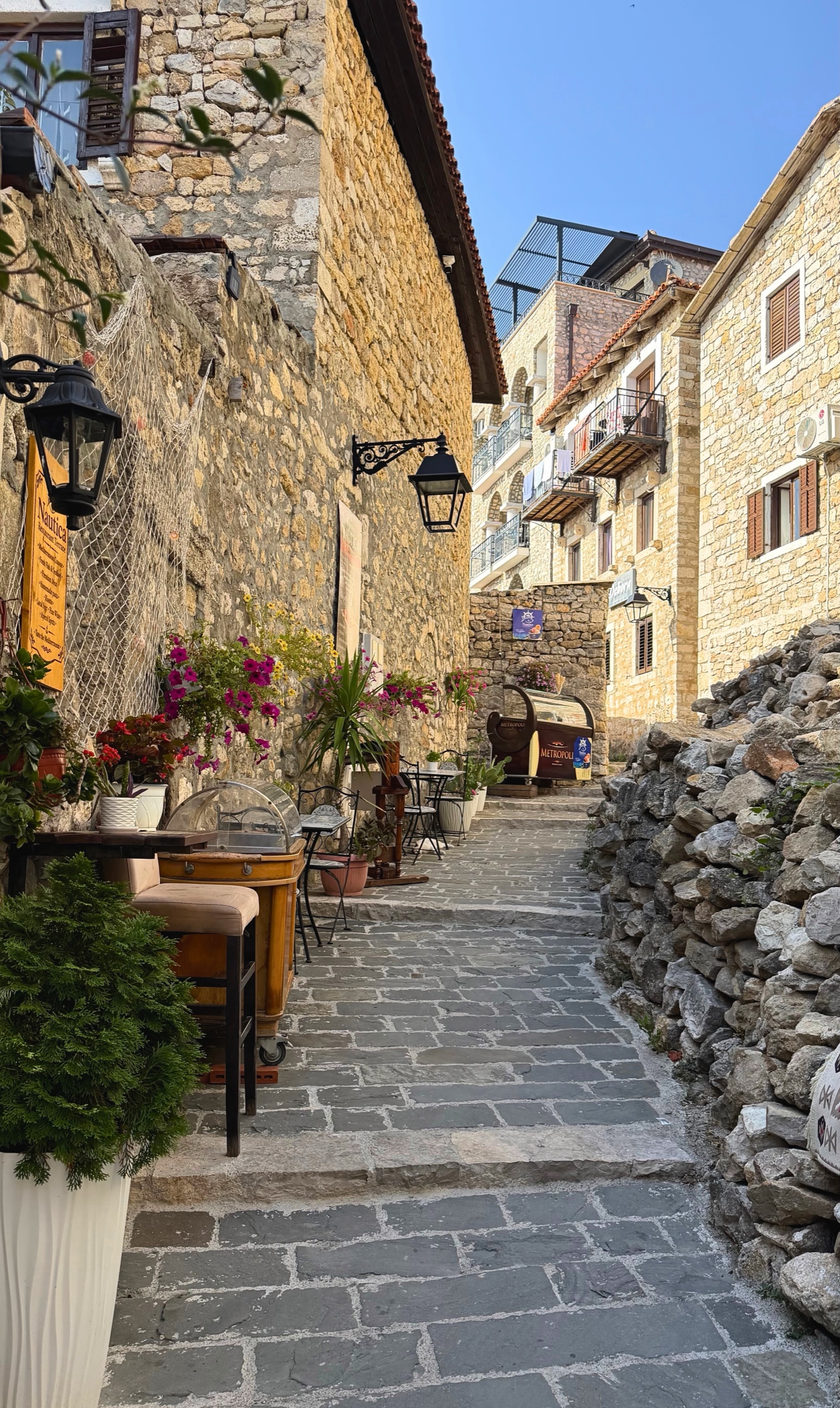 A stone lane inside Ulcinj’s Old Town, where cafés, balconies, and flowering vines continue the life of the fortified quarter.
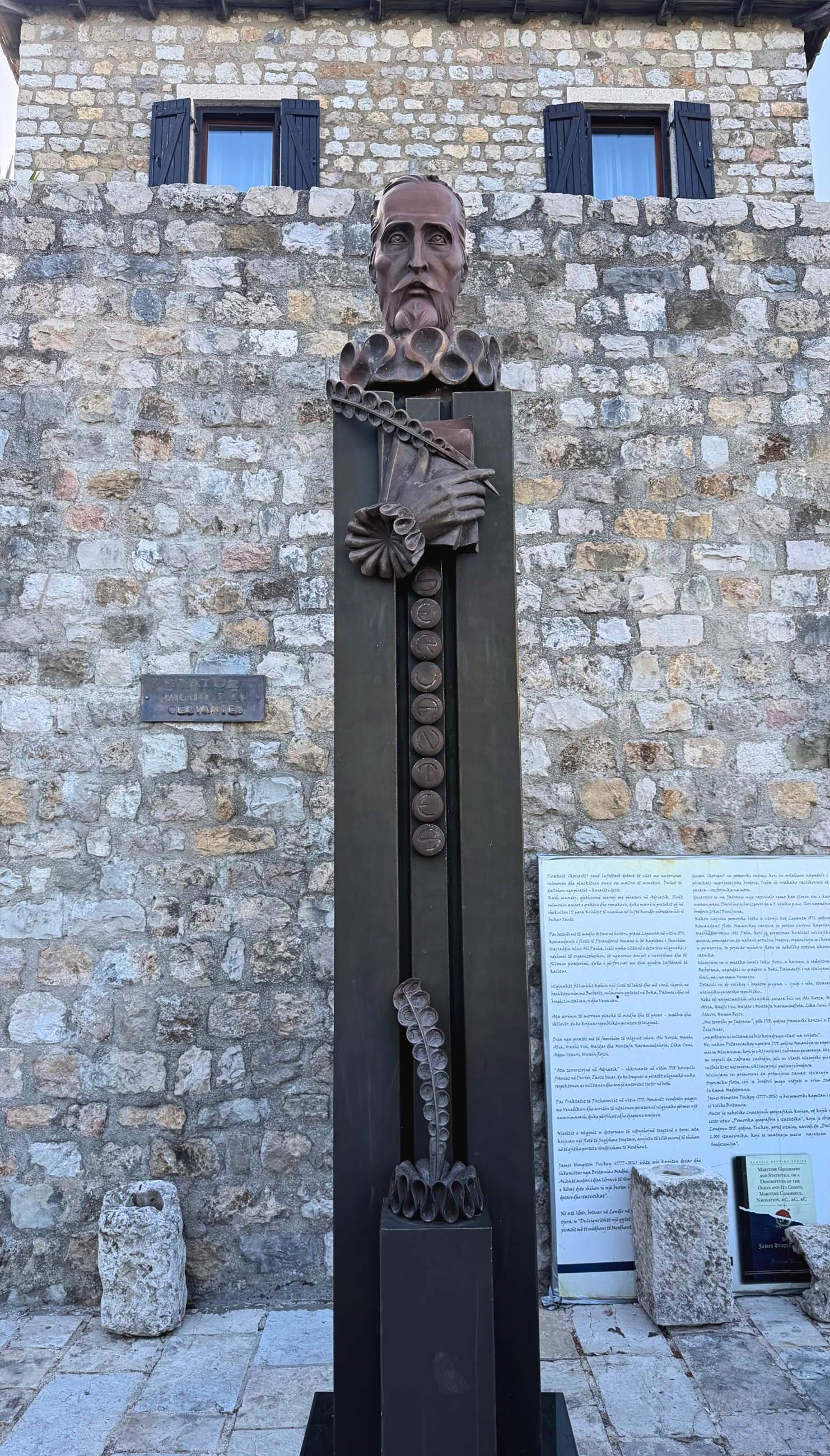 A sculpture of Miguel de Cervantes in Ulcinj’s Old Town, recalling the local tradition that links the Spanish writer to the city.
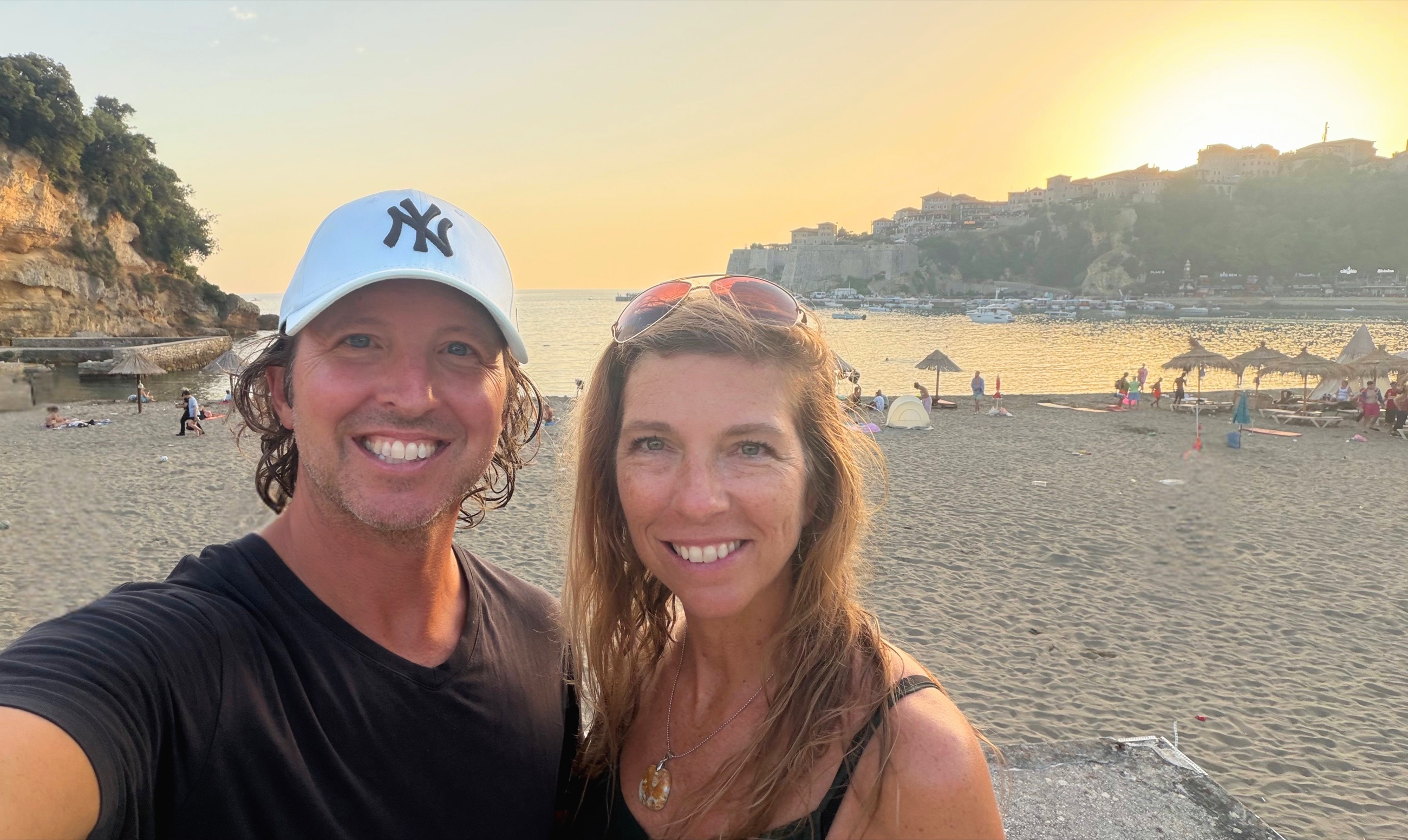 Above Mala Plaža at sunset, with Ulcinj’s Old Town rising behind us.
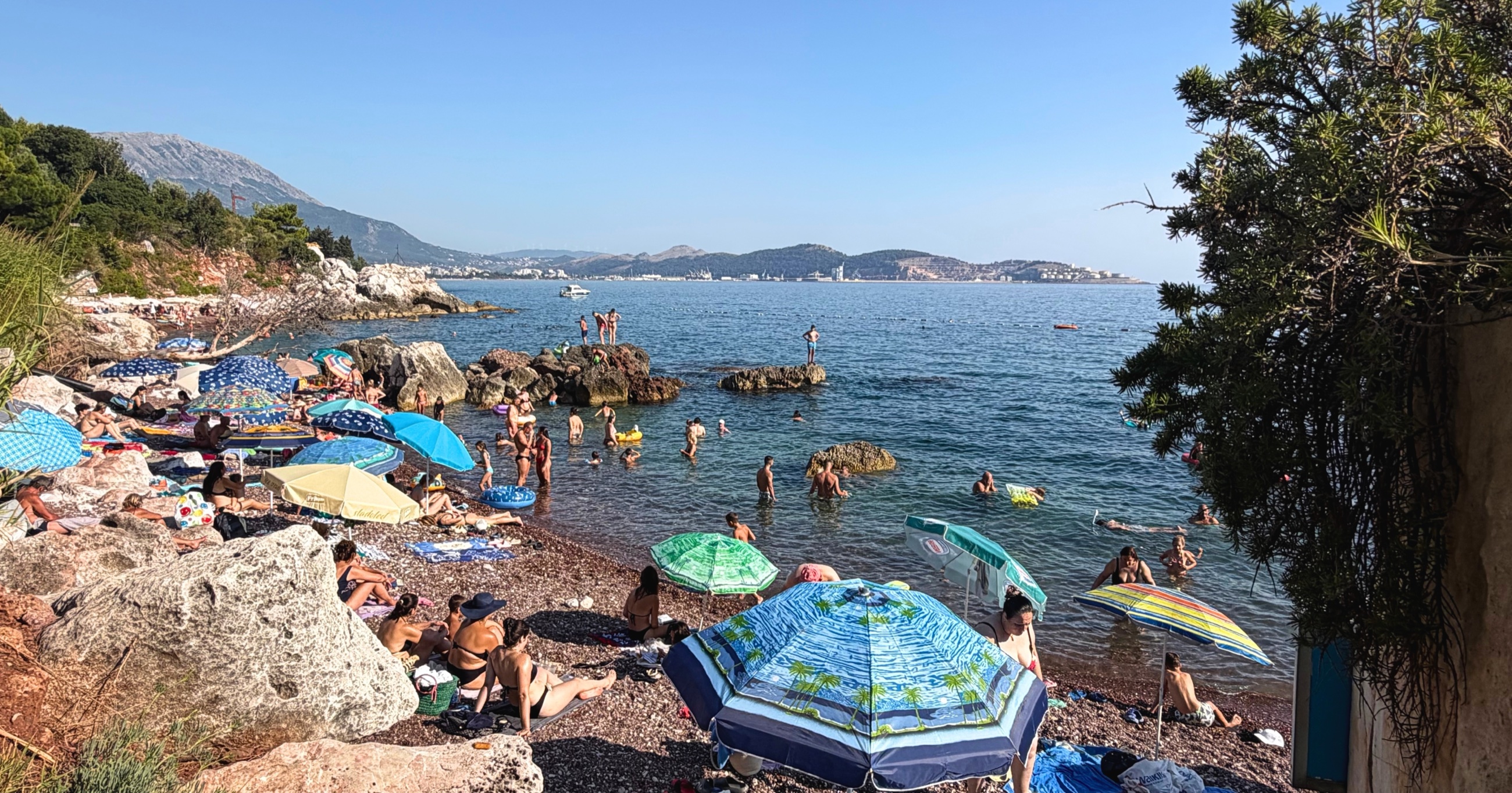 Red Beach near Bar, a small rocky cove shaped as much by local summer routines as by its rust-colored cliffs.
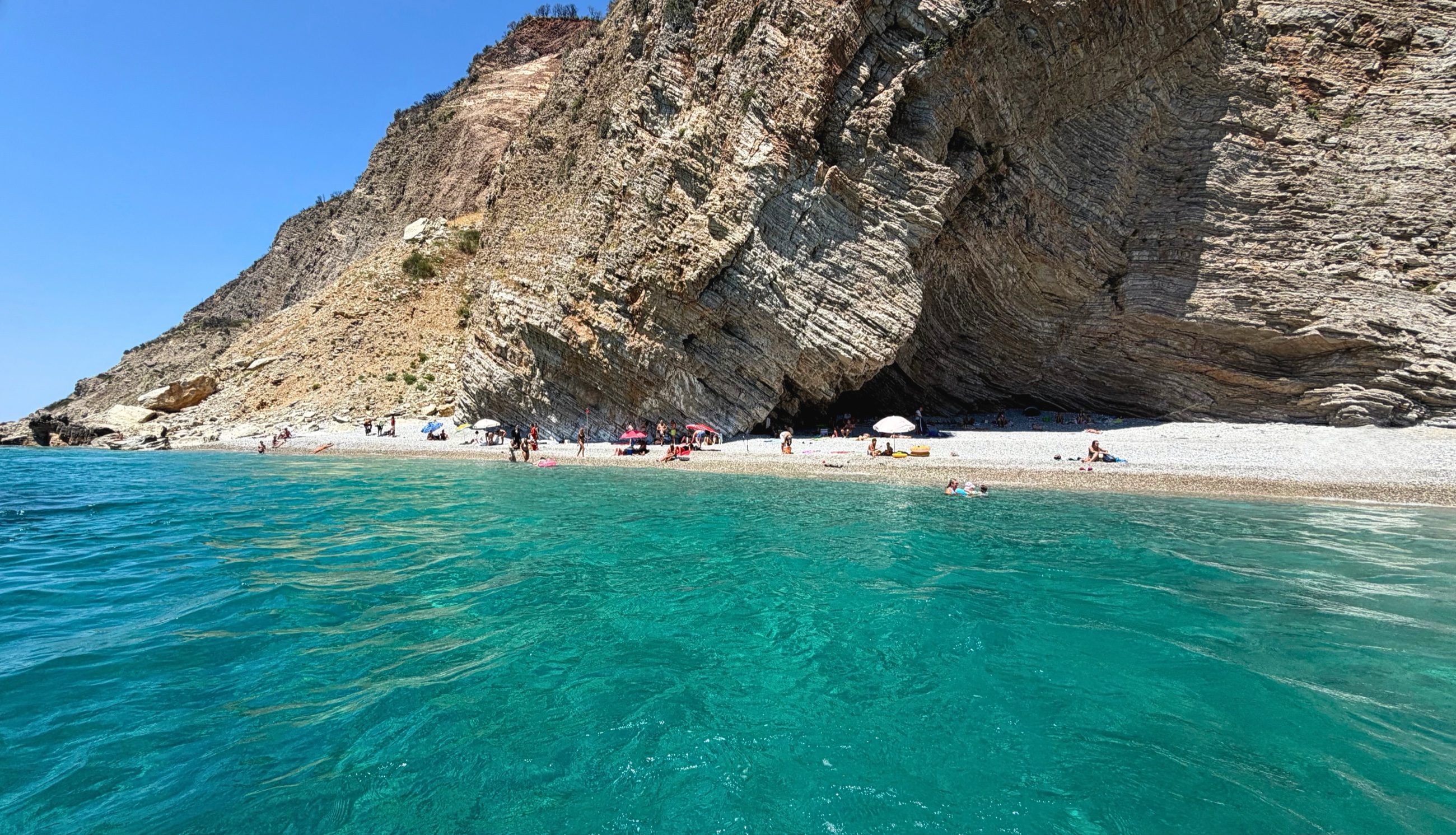 Approaching Vezirova Beach by boat to swim and lounge beneath the cove’s steep, folded cliffs.
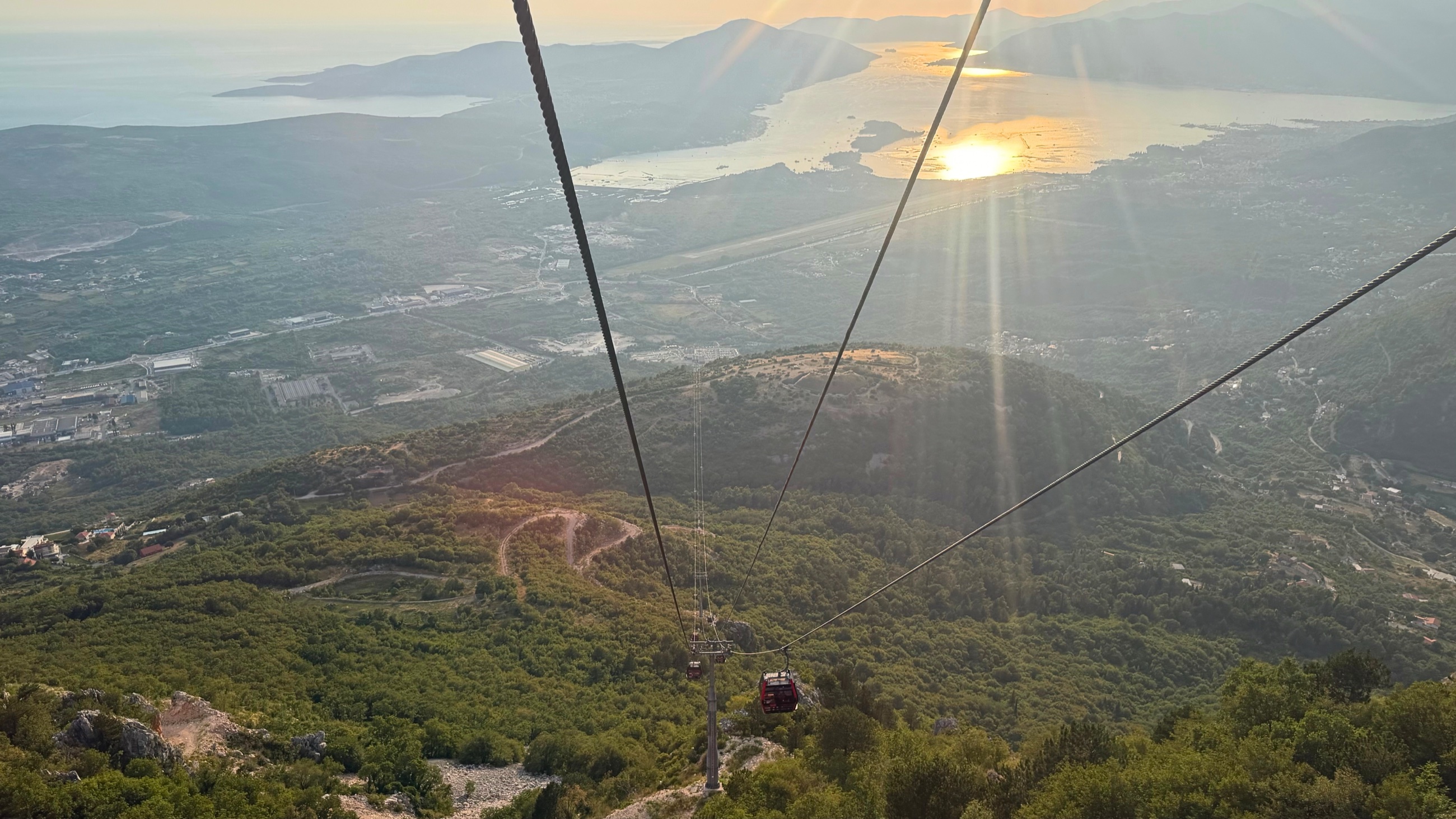 The Kotor cable car climbing above the bay, with the city and surrounding mountains receding below.
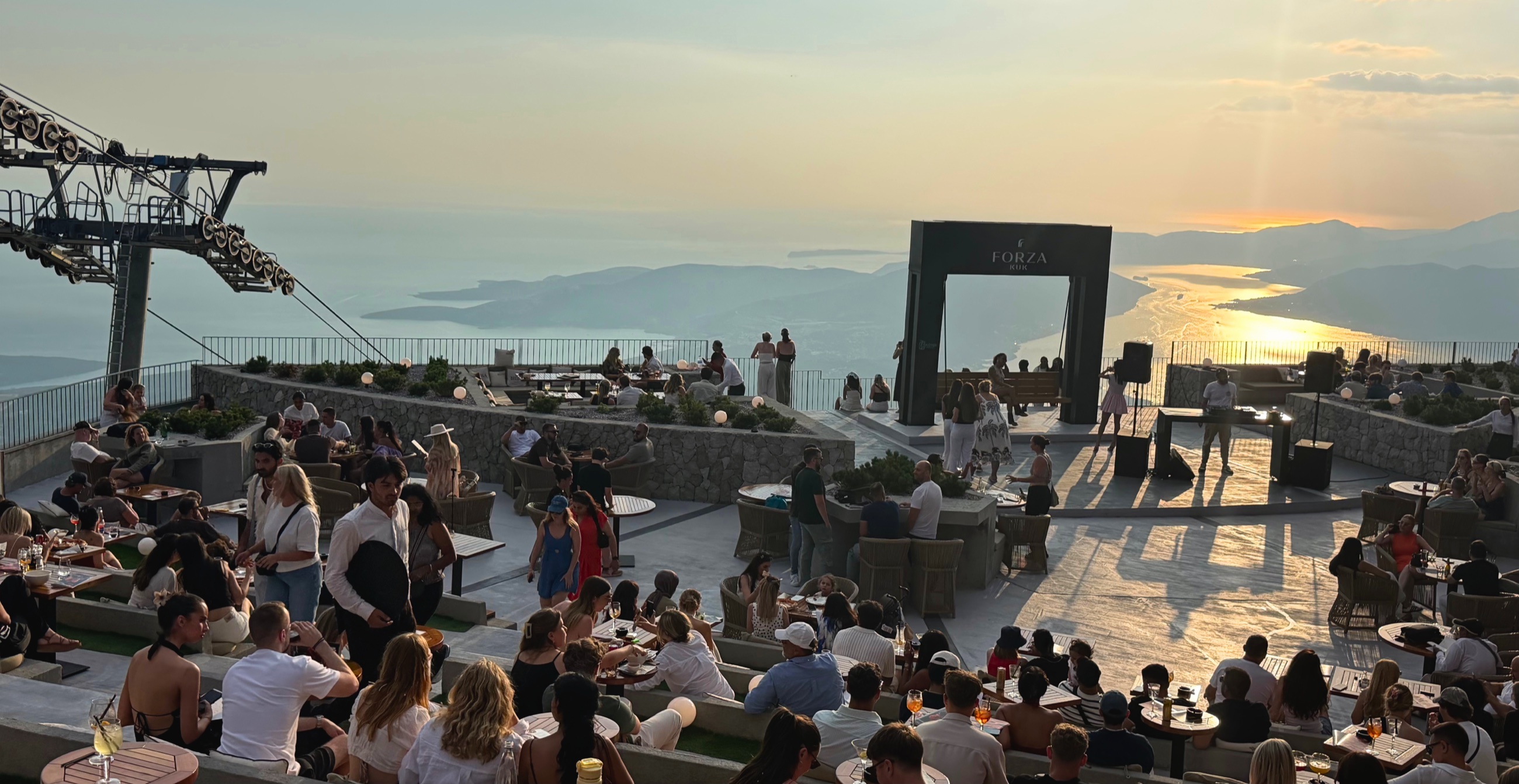 Evening drinks at Forza Kuk, with the Bay of Kotor and the Adriatic visible in the distance.
🎯 Next Week Preview
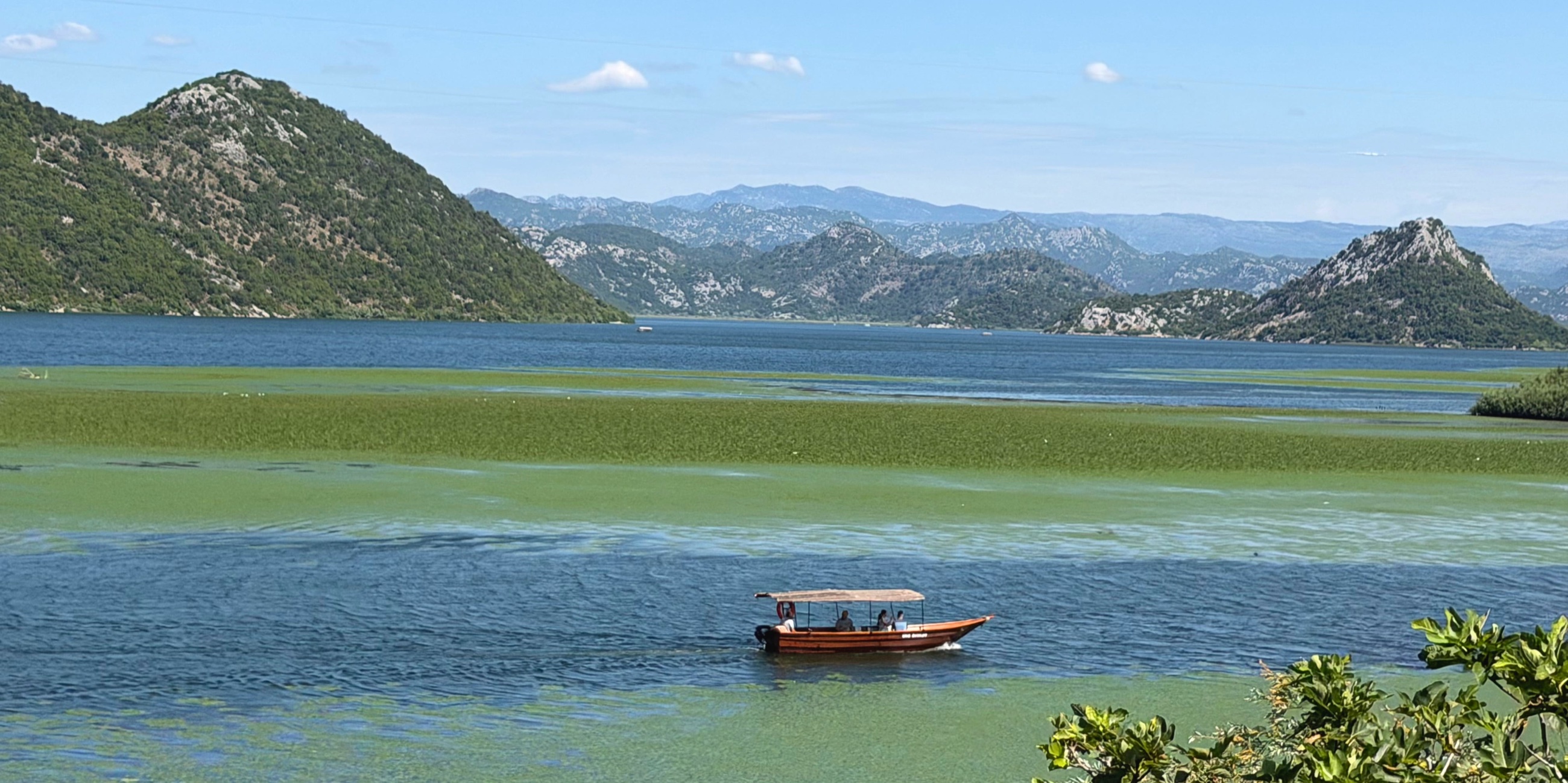 Lake Shkodër from the Bar–Podgorica railway, a glimpse of the landscape surrounding our next overnight stop.
On Tuesday morning, we leave Montenegro and take the bus to Shkodër, Albania.
We will spend one night there near Lake Shkodër before continuing to Tirana for the next month. Shkodër has long served as one of northern Albania’s principal cultural and commercial centers, and our brief stay should allow time for the pedestrian streets, coffee, dinner, and a first look at a country that we have been heading toward gradually since arriving in Croatia in May.
Tirana will be a larger transition. After a few months along the Adriatic, we are moving inland to a capital shaped by Ottoman rule, Italian planning, communist isolation, and rapid development since Albania reopened to the wider world. There will be no beach ten minutes from the apartment. The city itself will have to organize the month.
💌 Personal Connection
On Sunday evening, we carried a couple of glasses and some wine down to our local beach.
After 5:00 p.m., the loungers were free. By 7:30 PM, the worst of the heat had passed, though the stones still held the day’s warmth. A few families remained in the water. People walked beneath the pines. The promenade bustled and the beach bars prepared for another crowded evening.
After sunset, we moved to a nearby bar to watch Spain defeat Argentina 1-0 in the World Cup final. Spain controlled the match, while Argentina failed to record a shot during regulation time before Spain’s Ferran Torres finally scored in extra time.
We watched a global event from a modest outdoor beach bar on the Montenegrin coast, surrounded by people who had spent the day in the same sea.
Bar’s best case accumulated slowly: the first sunset drink on the beach after arriving, the daily walks, the discovery of a better grocery store, the €1 bus, the train to Podgorica, the climb above Stari Bar, the Old Olive Tree, the cold pool beneath the waterfall, the boat-only coves at Čanj, and the long beach at Ulcinj. Together, they gave the month its range while keeping the sea at the center of it.
We arrived in a practical port town beneath a heat wave. We leave knowing the beaches, the buses, the distances, the trade-offs, and a month of beach life we’d take again in a heartbeat.
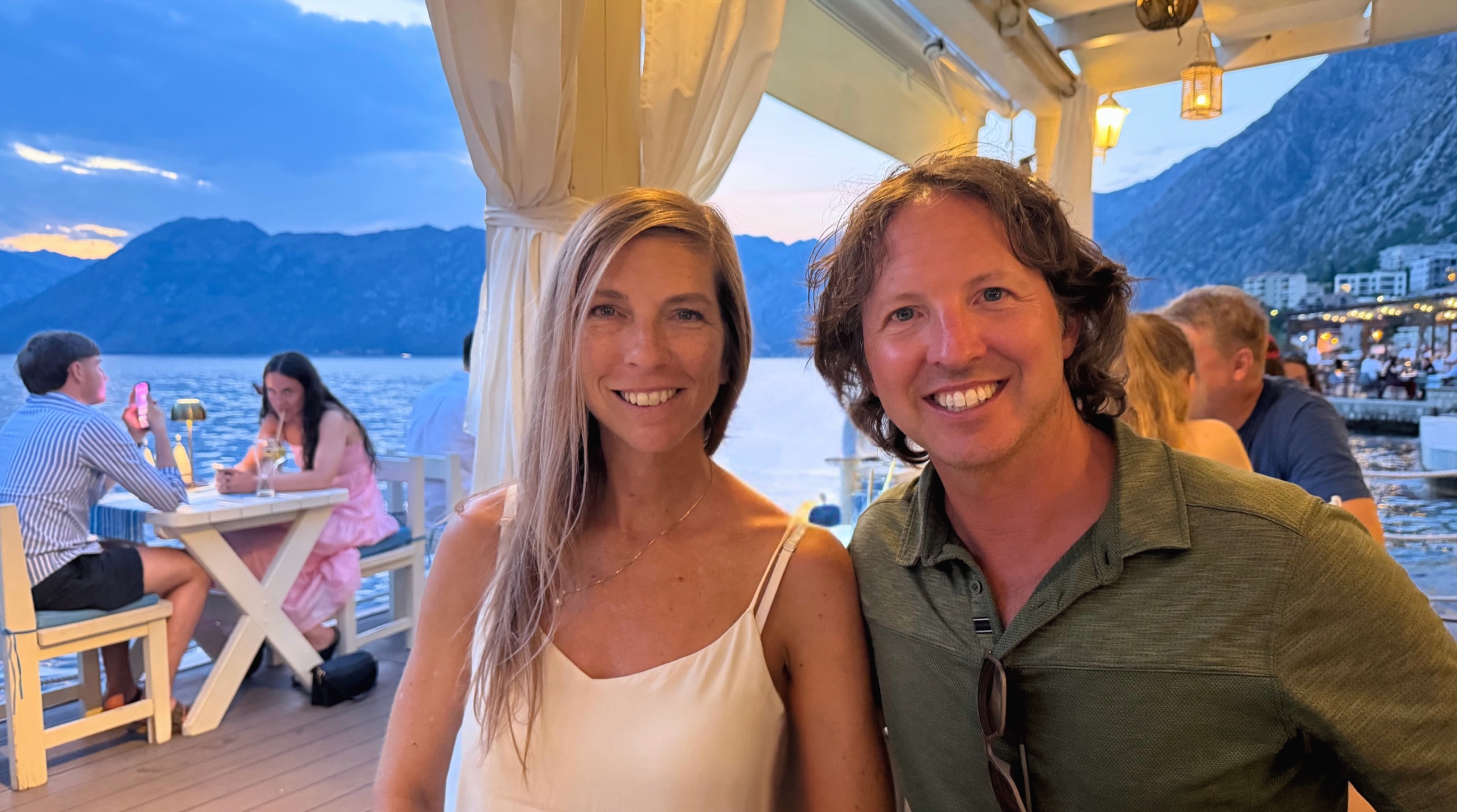 Dinner at Konoba Portun, beside the Bay of Kotor, closing a day shared with our people.
Until next week,
S&S
Some Great Place · Living Local in a Global World · somegreatplace.com