📍 This Week in Bar
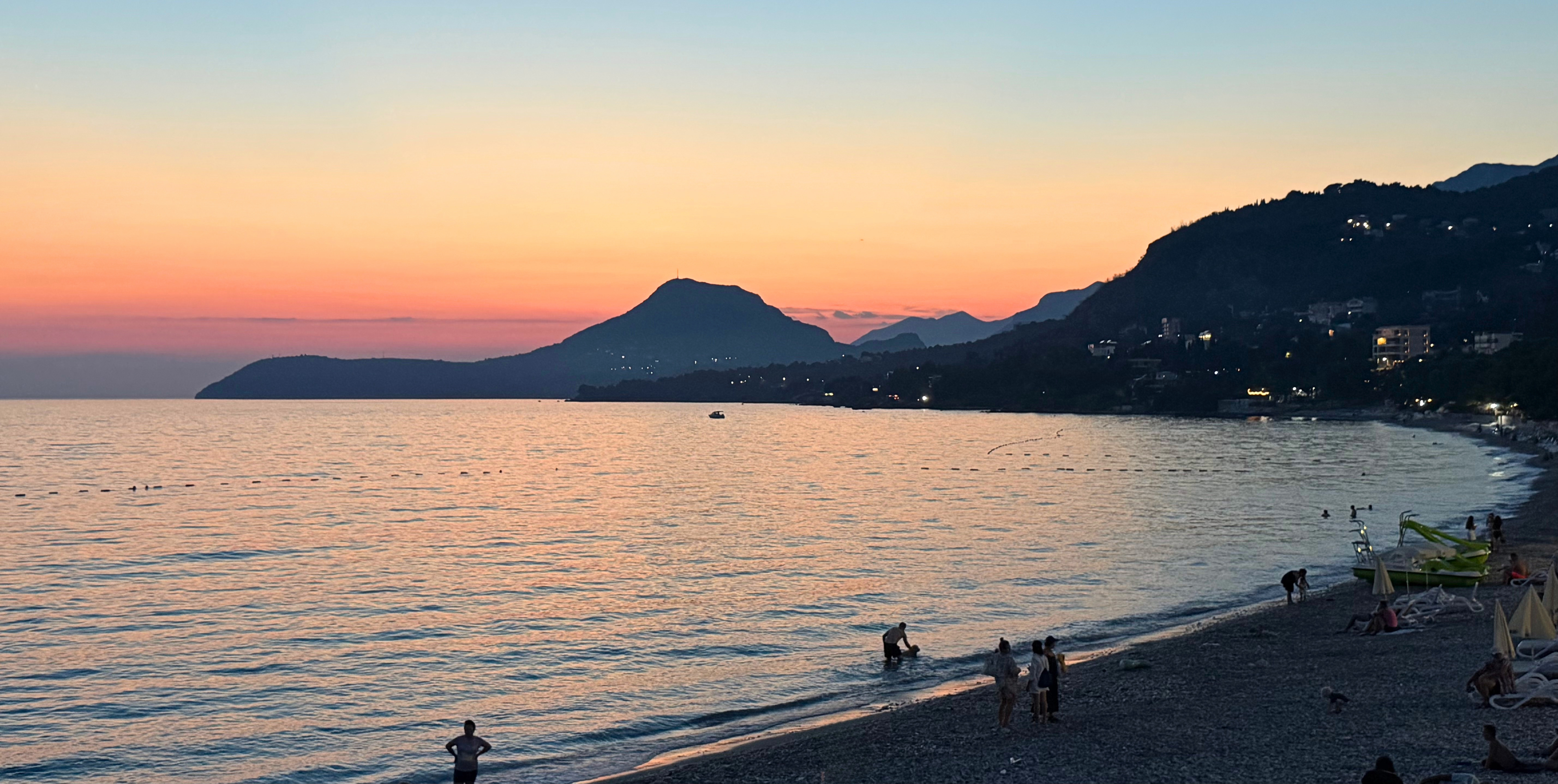 Sunset over Šušanj Beach, where Montenegro’s southern coast settled into a simple summer rhythm.
Our last days in Kotor ended the way most of our months end now. One more walk along the waterfront in Dobrota, a dip in the water, a slow round of packing, and then the logistics of a travel day: a taxi to the bus station, a ticket south, luggage stowed under the coach.
This was one of the easier transitions of the year. No airport. No border crossing. No transfer between countries. Just a few hours down the coast with the window doing most of the work, the mountains falling toward the water on one side and small towns sliding past on the other. By mid-afternoon we were in Bar.
The arrival itself was plain. We came into the station, flagged a taxi, and wound toward our apartment, which sits on a few narrow side streets in lower Šušanj, just north of the city center. The driver could not find the door, so we called Mina, our host, who came out to meet us. She lives in the same building, and had the place ready. She is from Serbia and has settled in Bar to put some distance between herself and the politics back home.
She said it plainly, the way you mention a thing you have already made your peace with, and then she handed us the keys and showed us how the water heater worked.
The heat introduced the town before we had unpacked. We had landed in the middle of a heat wave running across much of Europe, and the numbers tell the shape of it better than any description. It was 80 degrees by seven in the morning and climbing toward 90 by afternoon, then easing only to the mid-80s by sunset. On paper that reads as relentless. In practice it bends around a week that already has its own structure.
Our mornings are spoken for, the gym three days a week and sightseeing on the others, so the heat mostly makes itself felt in the afternoons, when the work happens indoors with the air-conditioning running. By evening, once the sun is off the water and a breeze comes in off the Adriatic, it turns genuinely pleasant, and the promenade fills with people who waited the day out the same way.
That first evening set the tone. Following an initial grocery run, we walked down the promenade and found Terraza Beach Bar, a relaxed second-floor patio looking down over the beach with the mountains behind it. We ordered a small bottle of Serbian white wine, poured over a glass of ice the way they serve it here, and sat through the sunset as the worst of the heat lifted off the water. It was not a grand arrival.
It was a cold drink, a warm breeze, and the Adriatic going gold, and it was the right welcome to a town we did not know yet.
We are ten minutes on foot from the water, which turns out to be the fact the whole month organizes around. Before we understood anything else about Bar, we had the shape of the days available to us: down to the beach, a swim, coffee, groceries on the way home, the evening walk once the light softened and the worst of the heat had gone. For a month-long stay, that is a strong place to start.
Bar is not on the American or British map in quite the same way as the coastal towns farther north. But regional tourists fill it, most of them from Serbia, Russia, and Bosnia. Families, mostly, who know how to do July on this coast: umbrellas, towels, shade, and long hours by the water. It gives the town a worked-in, seasonal feel, different from the more polished resorts farther north.
The city beach and promenade stretch for a long way, palms and pines holding what shade they can, with beach bars, ice cream stands, cafes, and gear vendors lining the shore. It is not built only to be admired. The beach is built to be used, and all day long people use it fully until the sun sets.
🏠 Behind the Nomad Curtain
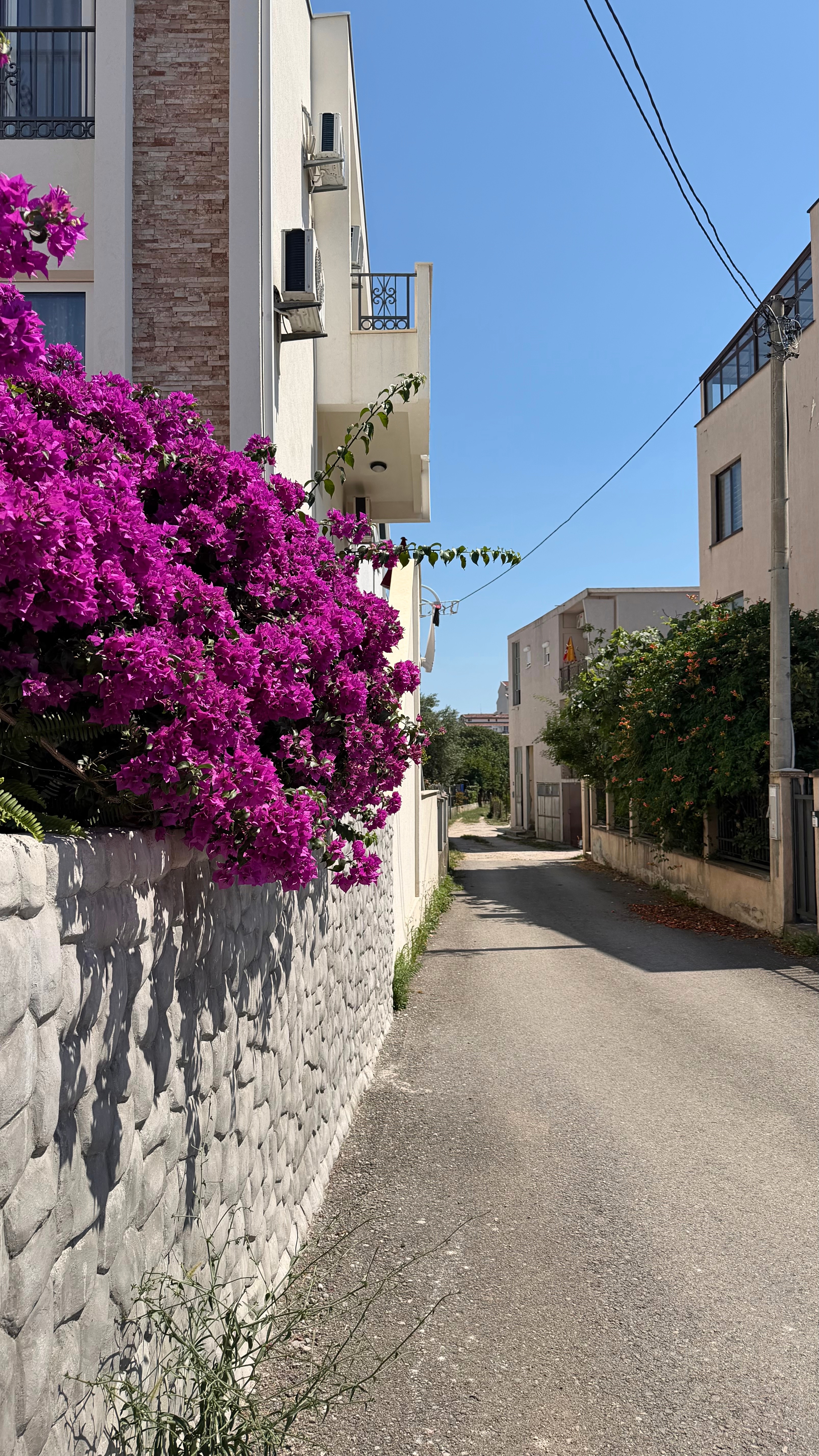 Our street in lower Šušanj, the kind of ordinary lane where the walk to the beach becomes an almost daily routine.
Some of the first week is the kind of errand rarely photographed. One of them was registration.
Montenegro asks visitors to register with the local tourist authority, and Mina drove us over to handle it. The office was barely an office: a propped-open door, a room with hardly enough floor to stand in, a woman behind a sheet of plexiglass. Mina did the talking, her Serbian and the clerk’s Montenegrin close enough to be one conversation. We did our part by sliding our passports through when asked, and then by smiling when the word came back that we owed nothing. We will get to why in Nomad Real Talk.
What stayed with us was how small and ordinary the room was, the whole transaction handled in a few sentences we did not understand, in a space the size of a large closet, with our host carrying the load for us.
That is most of what a first week actually is. You arrive somewhere that means nothing to you yet, with the map in your head still mostly blank, and you fill it in one unglamorous task at a time. A grocery store becomes our grocery store. A path to the beach becomes our walk. A cafe becomes the one Mina pointed us toward. By the end of the week the blank places have names, and the town has quietly become usable. Long travel is not only learning to see new places.
It is learning how to begin again, and then again after that.
🎨 Cultural Deep Dive
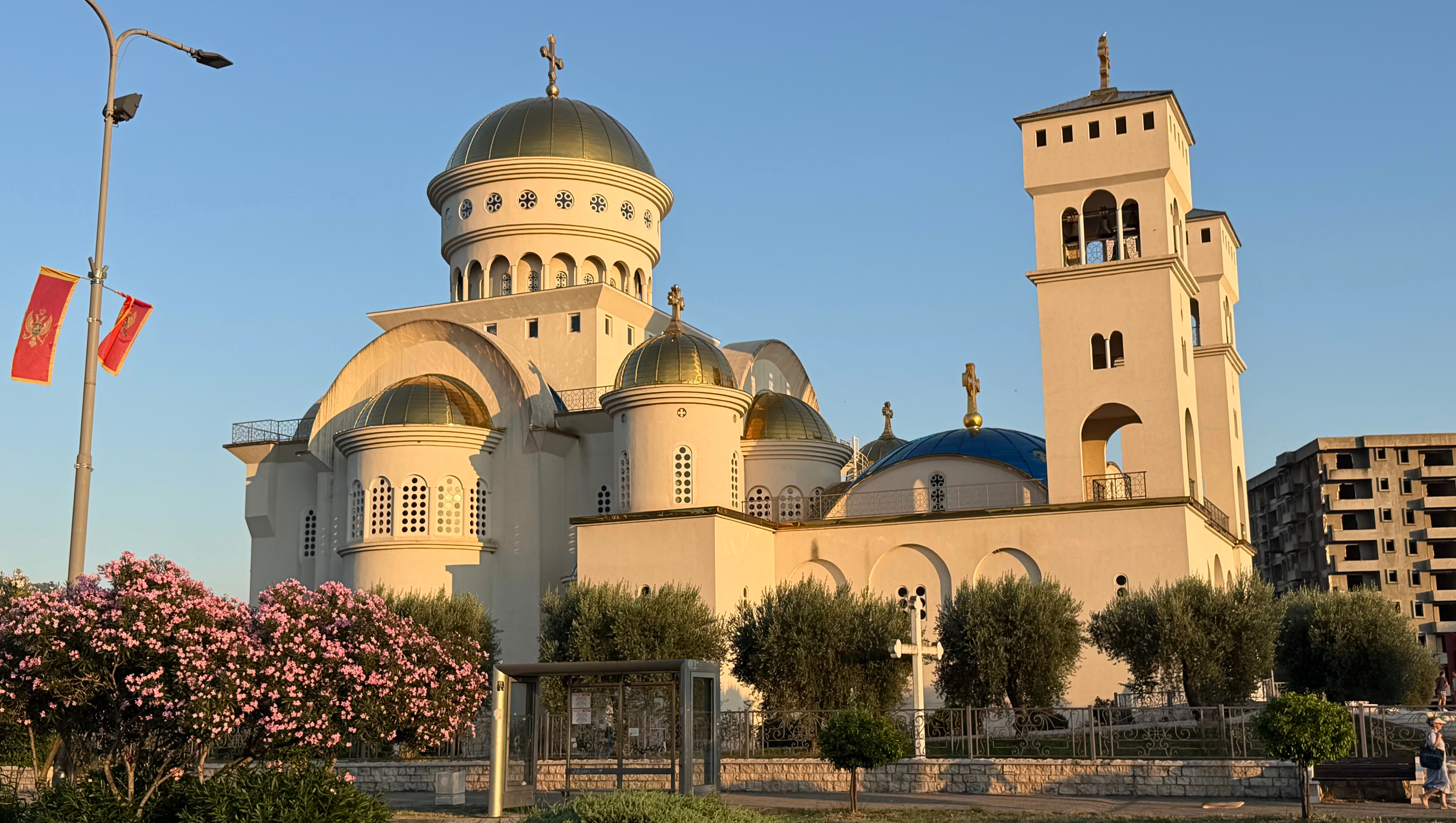 The Church of St. Jovan Vladimir, a modern landmark honoring the eleventh-century ruler and saint whose story still sits close to Bar’s civic identity.
Bar wears its history differently from the towns we have been living in. In Kotor and Split the old stone is the whole point, right there underfoot. Here the layers are more spread out, and you have to go looking for them. This week we mostly walked past them, which is its own honest way to start.
The most visible landmark in the modern city is the Church of St. Jovan Vladimir, built between 2006 and 2016 in a neo-Byzantine style, large and pale against the hills. We have only seen it from the street so far, and photographed it, and made a note to go inside. It honors Jovan Vladimir, an eleventh-century ruler of Duklja, the medieval principality that covered much of present-day Montenegro. He is venerated as the region’s first saint, and Bar keeps him as its patron.
That a town this modern in feel is named around an eleventh-century saint tells you something about how close the old and the new sit here.
What you notice quickly, even just walking, is the religious mix. Bar holds Orthodox, Catholic, and Muslim communities together in one small place, and the closer you get to the southern border the more pronounced that mix becomes, as the coast runs toward Ulcinj and Albania beyond it. Montenegro is a small country, but its cultural and religious geography shifts fast as you cross it, and Bar sits on one of the seams. You feel it in passing this week. We expect to feel it more as the month goes on.
On the waterfront stands King Nikola’s Palace, the Villa Topolica, built in 1885 as a royal summer residence and now the city museum. It has been closed for renovation since 2023, with the reopening pushed back more than once, so for now it is a building to notice from the promenade rather than a place to walk through.
And then there is the older story, the one we are saving for another day. Four kilometers inland and uphill, beneath Mount Rumija, the medieval city of Stari Bar stands in ruins, its long history still legible in the old fortified walls and the archaeological remains spread across the hillside. Near it grows the Stara Maslina, an olive tree at Mirovica estimated at more than 2,000 years old and counted among the oldest in Europe. We have not climbed up to either yet.
They are first on the list for a cooler morning, and they are where next week’s deeper look at Bar will begin. For now it is enough to know they are up there, holding a far longer calendar than the one we are keeping down by the beach.
💰 Nomad Real Talk
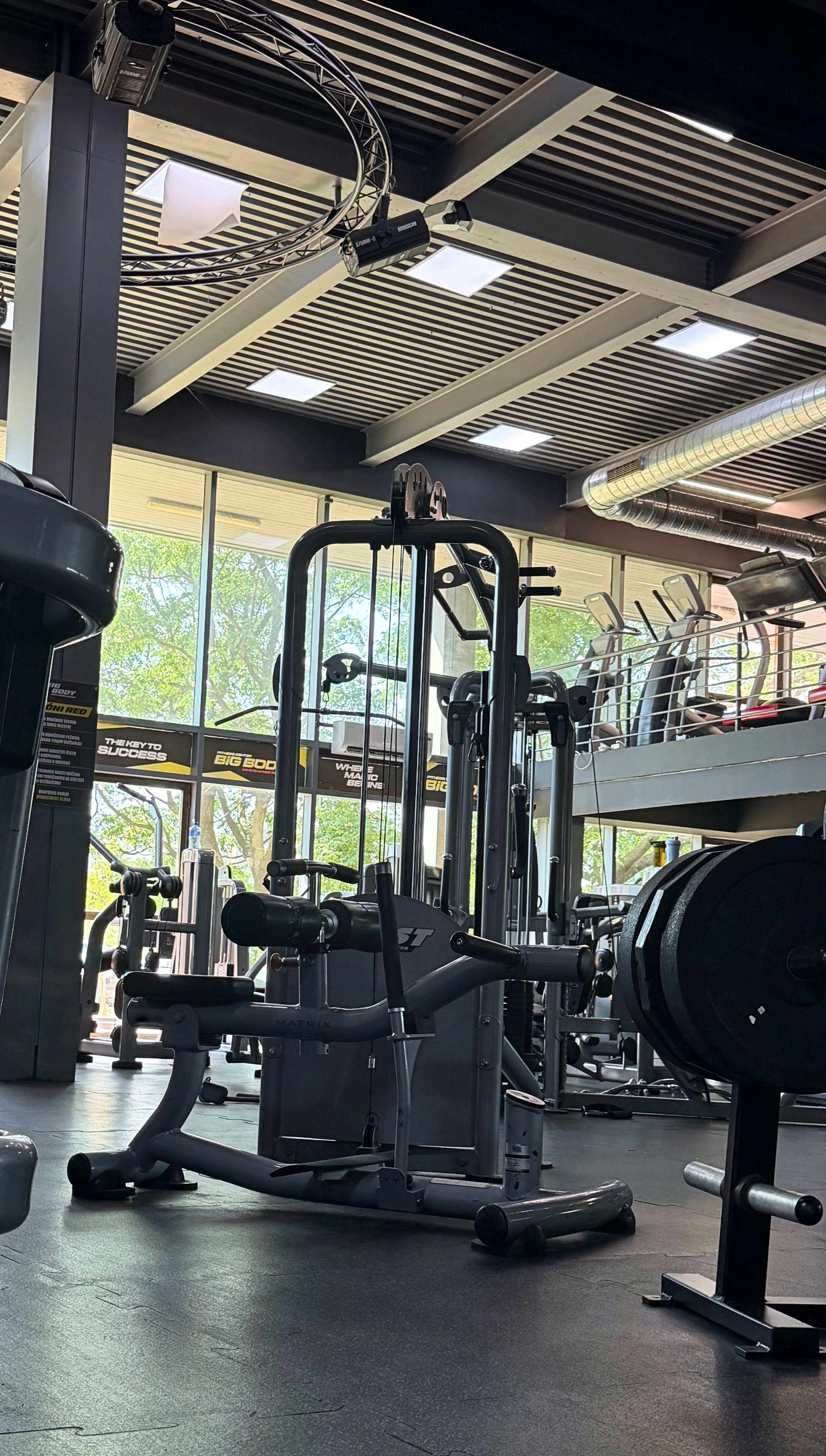 Our Bar gym for the month: well-equipped, reasonably priced, and an easy walk from our apartment, with house music setting the pace.
Bar is shaping up to be one of the better-value bases of our coastal stretch, and the daily numbers are where you feel it. After Split, Dubrovnik, Kotor, and Budva, the cost of an ordinary day here drops noticeably, landing closer to what we paid inland at Ohrid than to the busier towns farther north on this coast.
Start with coffee, since we drink a lot of it. Espresso-based drinks run roughly 1.50 to 2.25 euros. We have had excellent cappuccinos at 1.80 and a flat white at 2.00, the kind of pricing that makes a morning café habit an easy decision rather than a small indulgence. The shawarma wraps that are a favorite fast lunch are five euros each. The small bottle of white wine at Terraza, poured over ice, was also five euros.
The gym settled one of our recurring long-stay errands: we tried three and took the one that balanced equipment, price, and walk, at 40 euros per person for the month, about fifteen minutes from the door.
The apartment anchors all of it. We are paying $1,465 for the month of July, peak season here, for a small one-bedroom up a flight of stairs, no elevator, with an open kitchen and dining area, a two-seat bar between, a cozy living space, and a patio big enough for two. Mina lives in the building and is quick to answer our many questions.
For July on the Adriatic, with the water ten minutes away by foot, that is a genuine value, and it is a large part of why Bar earns a full month rather than a long weekend.
The registration from Behind the Curtain pays off here. Montenegro charges a tourist tax of one euro per person per day, but it caps at the first thirty days of a continuous stay in the country. We had already paid our thirty each in Kotor, so registering in Bar cost us nothing. A small thing, but after a year of travel logistics the small things land. Staying two months in one country turns out to have a quiet financial edge nobody advertises.
The beaches come with one firm piece of advice. Our nearest are Žukotrlica and Šušanj, and they are not sand. This part of the coast is rock and pebble, and water shoes are not optional. The rule that holds along most of the Montenegrin shore holds here too: the clearest water tends to sit where the entry is roughest. Accept the rocks and you stop fighting them. As the weeks allow, we want to work north toward Skerović Plaža and Red Beach, where the coves look rockier and the water better still.
🍽️ Local Flavor
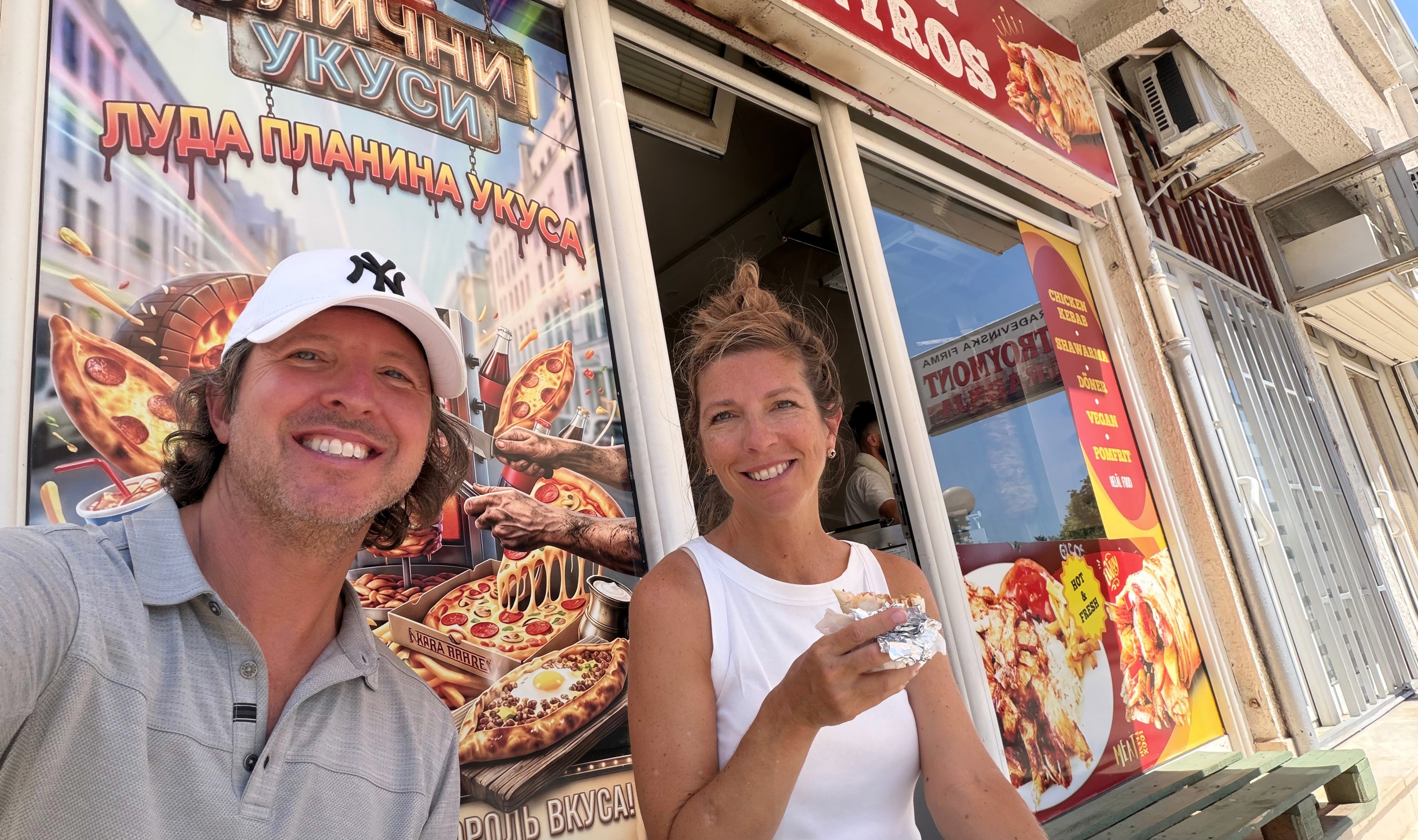 Outside King Gyros, where a Turkish family runs a small side-street shop serving simple, satisfying wraps and more made to order.
The best early find was a shawarma shop called King Gyros, on a side street in town, run by a Turkish family who had the whole operation running between them. The dad worked out front, building the wraps. Inside, the young kids were helping their mother with the dough, and they were the ones who brought us our waters when we asked. The place is small enough to take in at a glance: one table inside, and out front under a small awning a narrow bench with two cushions, which is where we sat.
We waited about ten minutes while the food was made, and in that time a line formed behind us, all locals. That is usually the only review you need. The wraps came out warm and generous, five euros each, and we ate them on the bench under the awning while the street went about its day. Not a destination restaurant, not a recommendation polished for visitors, just a family making good food at a fair price with the kids underfoot.
In a town that holds Orthodox, Catholic, Muslim, Balkan, Mediterranean, and Turkish threads together, a shawarma wrap on a side street is as honest a piece of Bar as anything we will photograph.
Le Petit Macaron, near the marina, was the other early anchor, and it carries the small weight of being the first place a local sent us. There is real use in arriving somewhere new and being handed one good spot for coffee. It gives the first disoriented days a fixed point to walk toward.
Beyond those two, the promenade food scene is relaxed and unbothered: cafes, ice cream, beach bars, simple kitchens, places to stop between swims. The town feels less like it is cooking for an audience and more like it is feeding the summer crowd already here, and that is what makes the small finds feel like ours.
📸 Photo Story
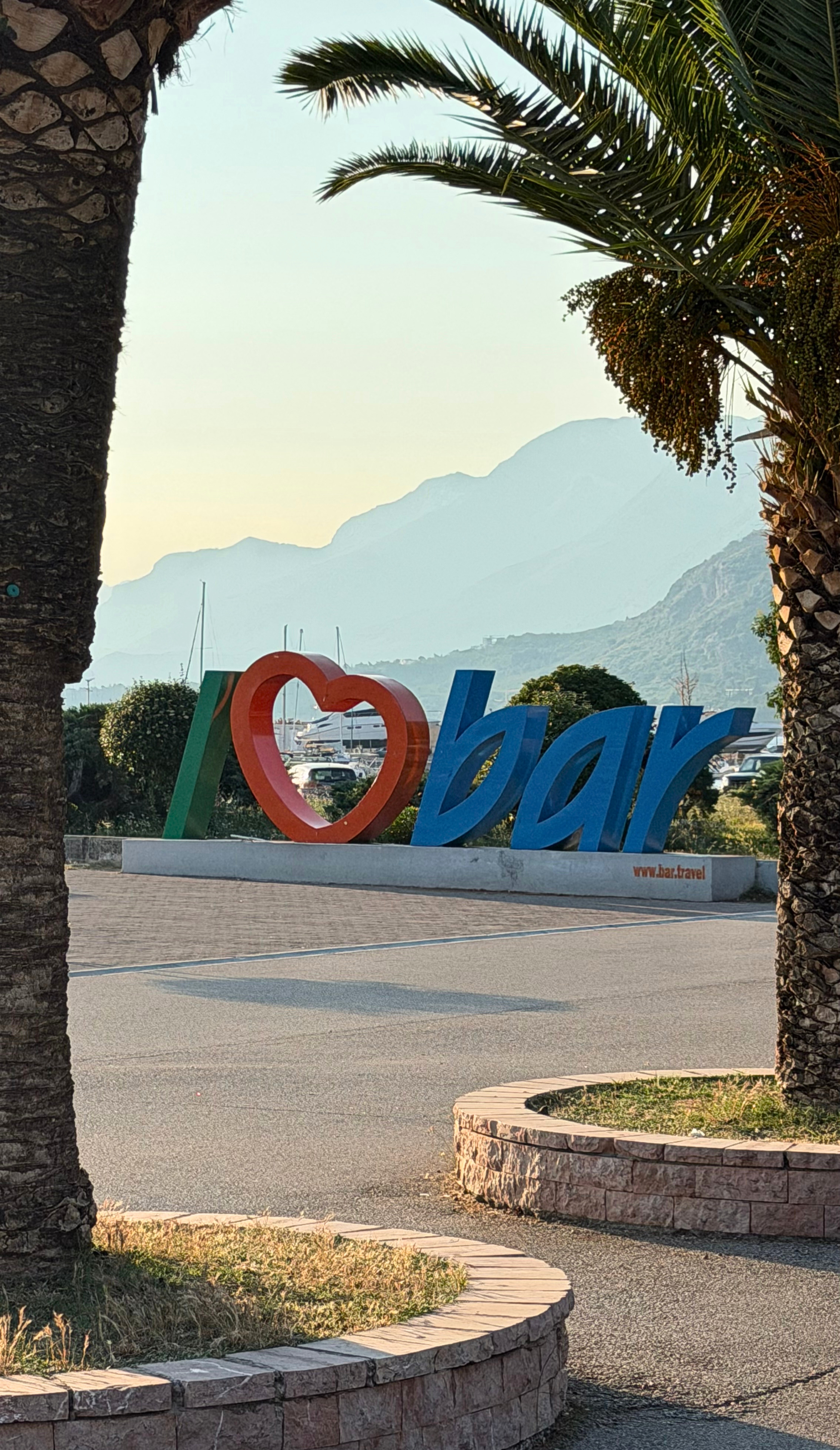 The Bar sign near the marina, framed by palms and mountains in the soft evening light.
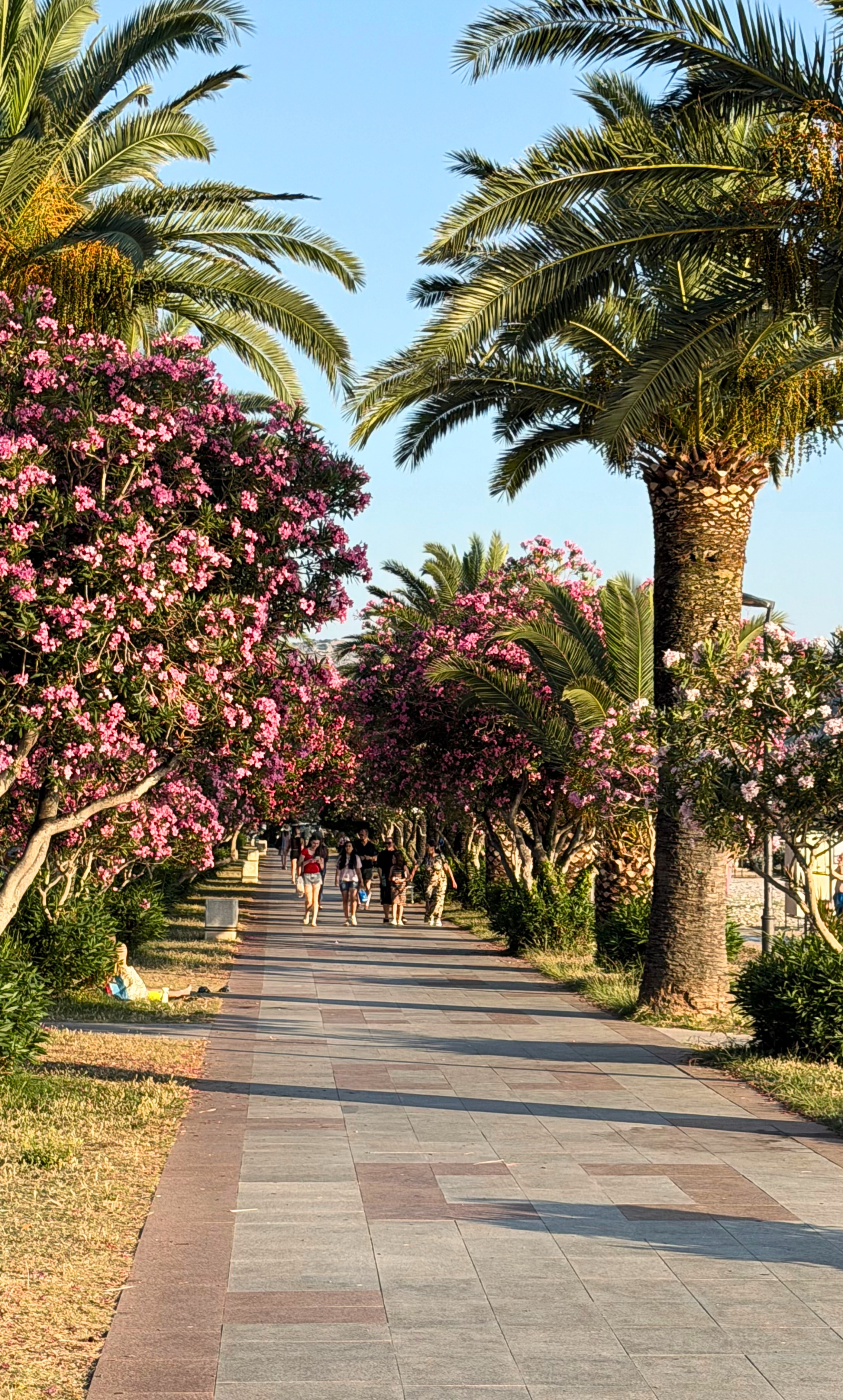 The promenade in Bar, where palms, flowering trees, and evening walkers gave the city its first familiar rhythm.
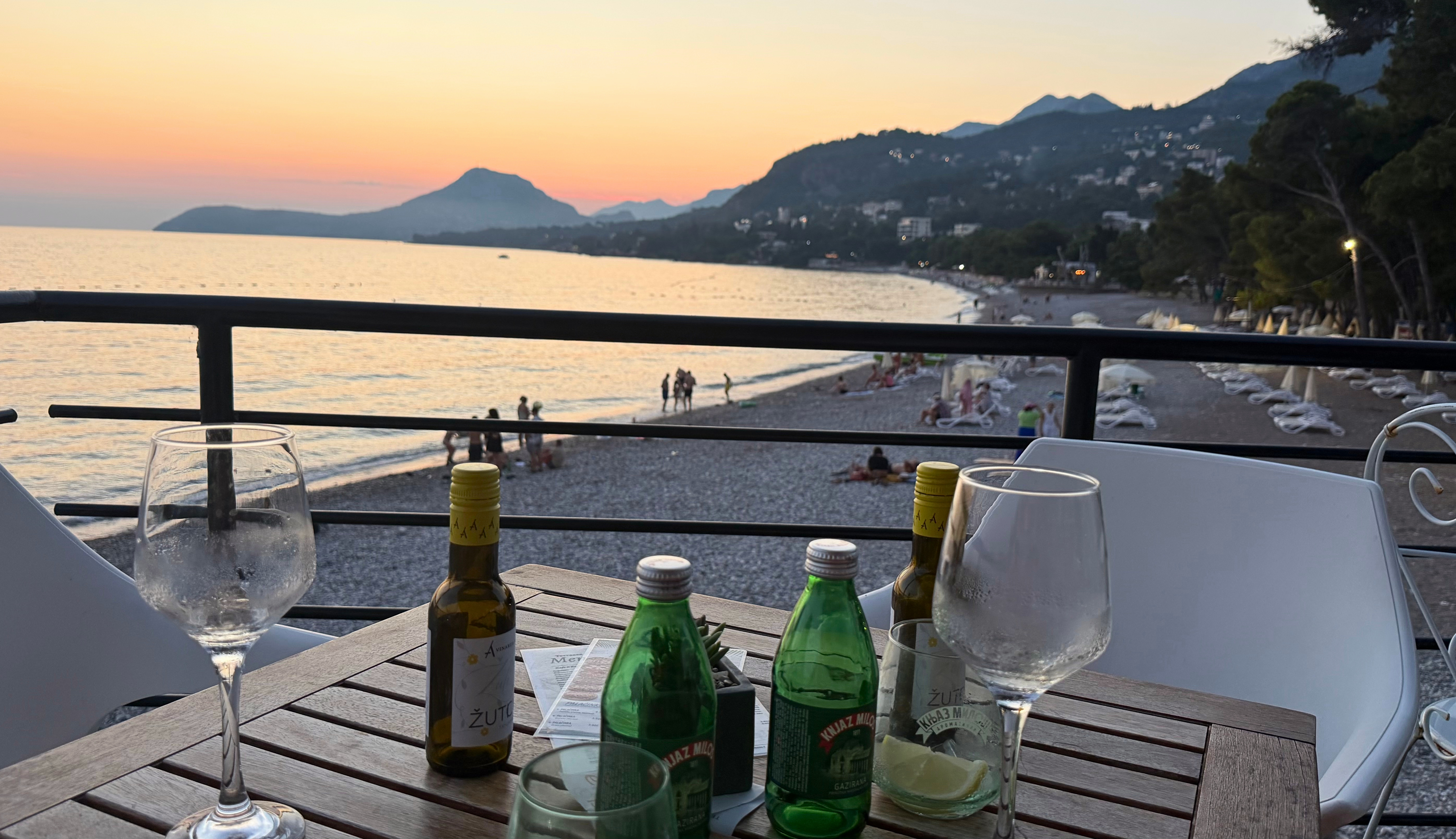 A simple sunset table above Šušanj Beach, with local wine, mineral water, and the coastline settling into evening.
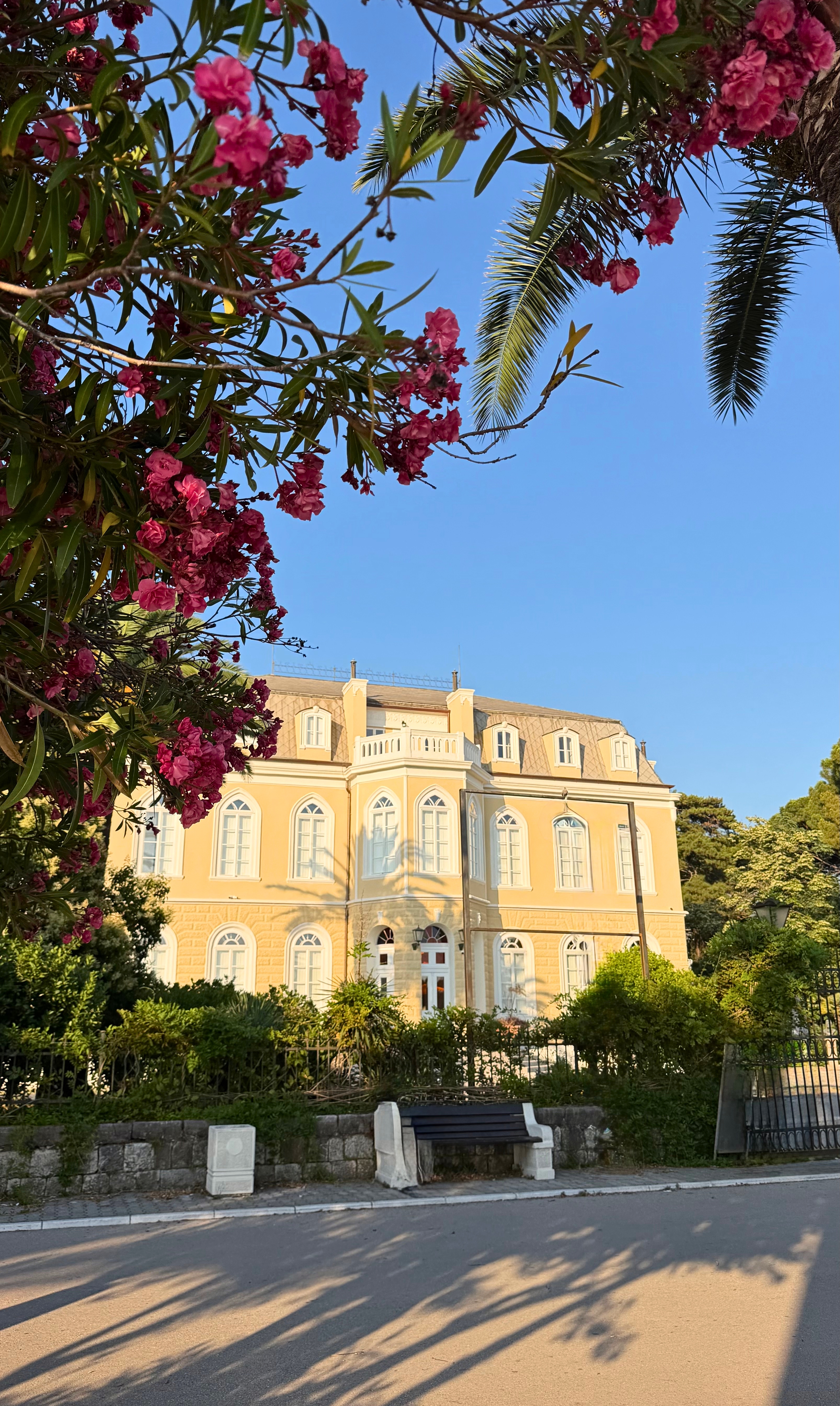 King Nikola’s Palace, framed by palms and summer flowers along Bar’s promenade, a reminder of the city’s older civic and royal history.
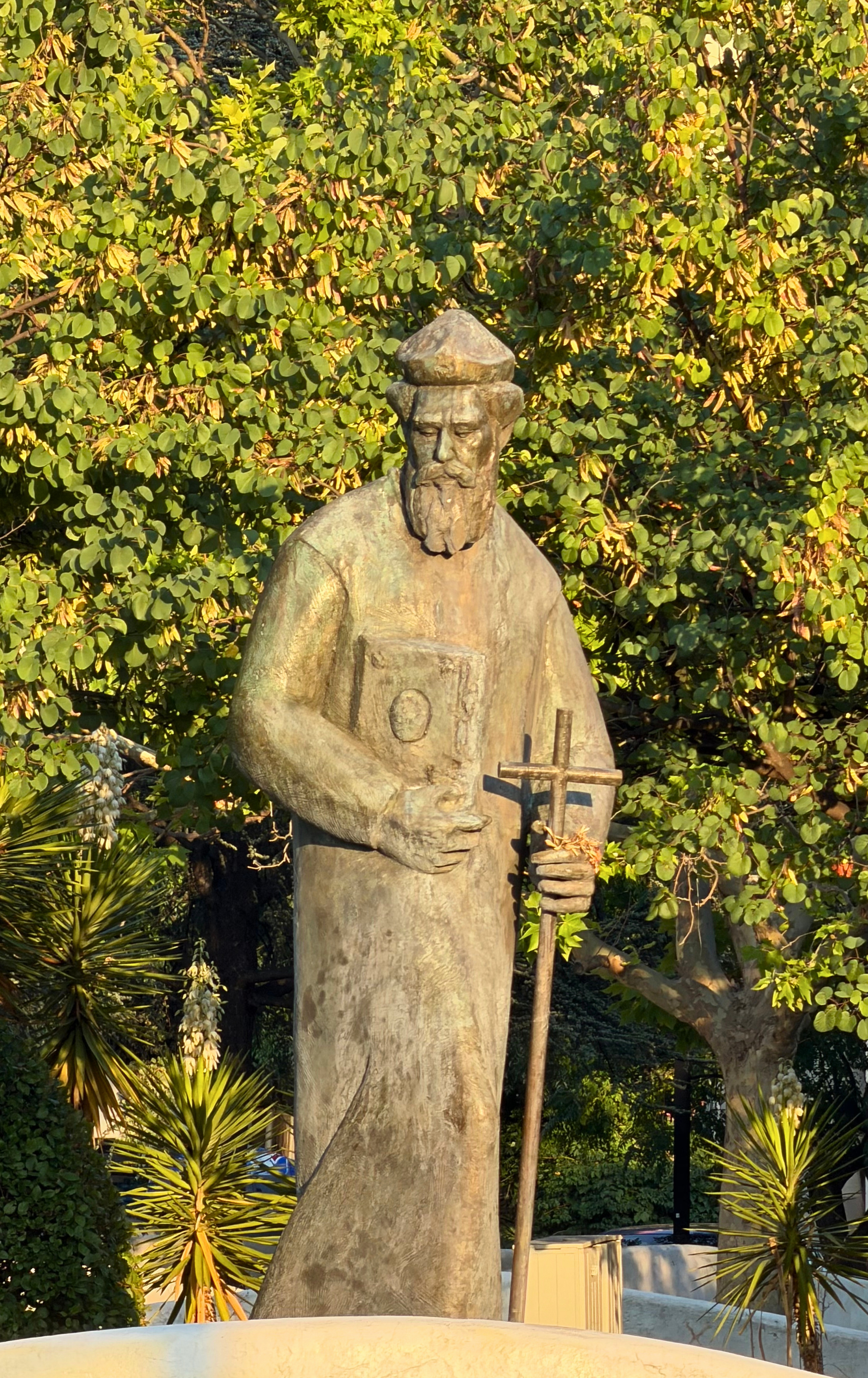 A statue of St. Jovan Vladimir, set quietly among the greenery near Bar’s civic center.
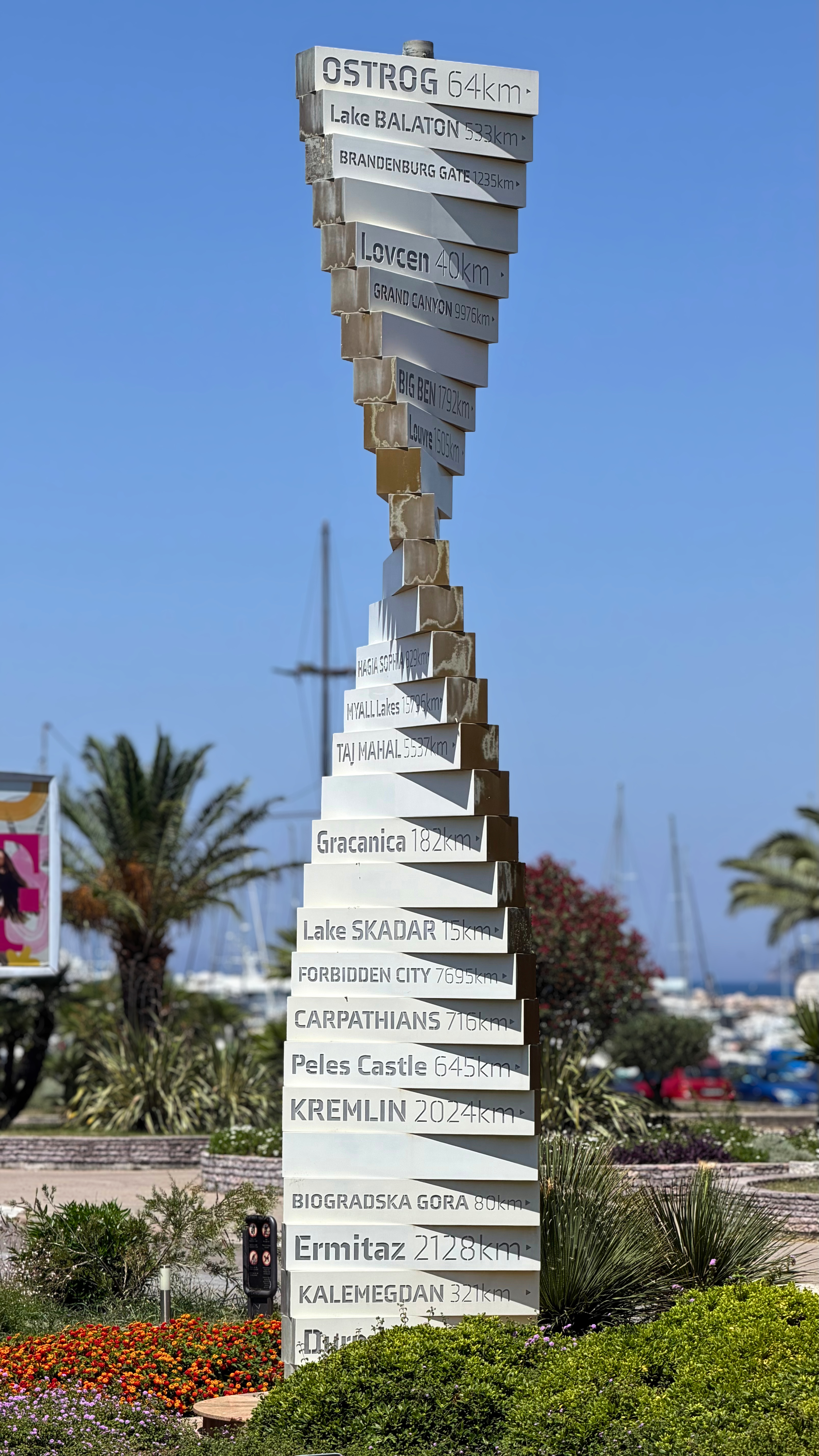 A wayfinding sculpture near the marina, where Bar places itself between local landmarks and the wider world.
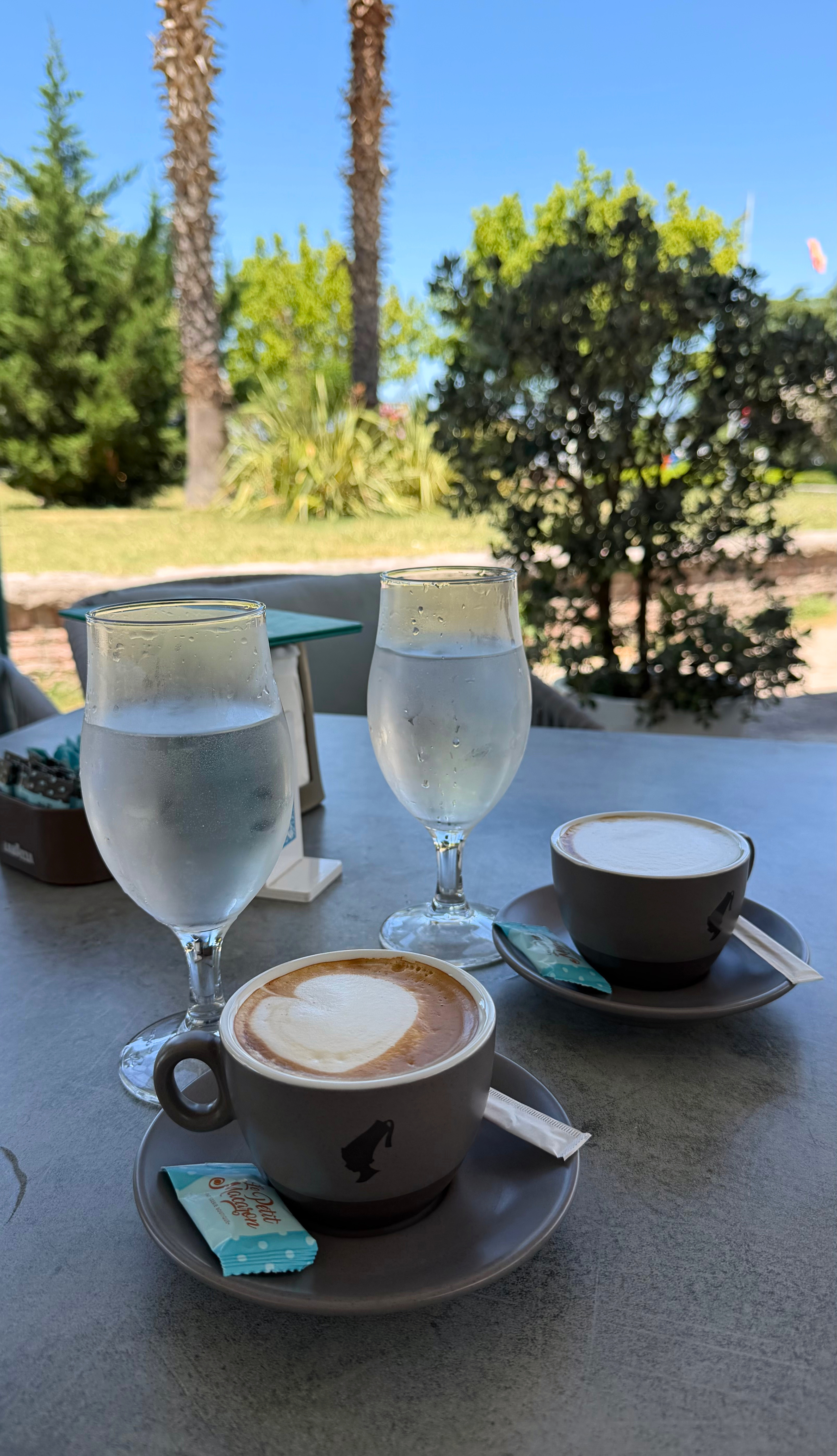 Morning coffee at Macaron, one of the early café stops that helped us get settled.
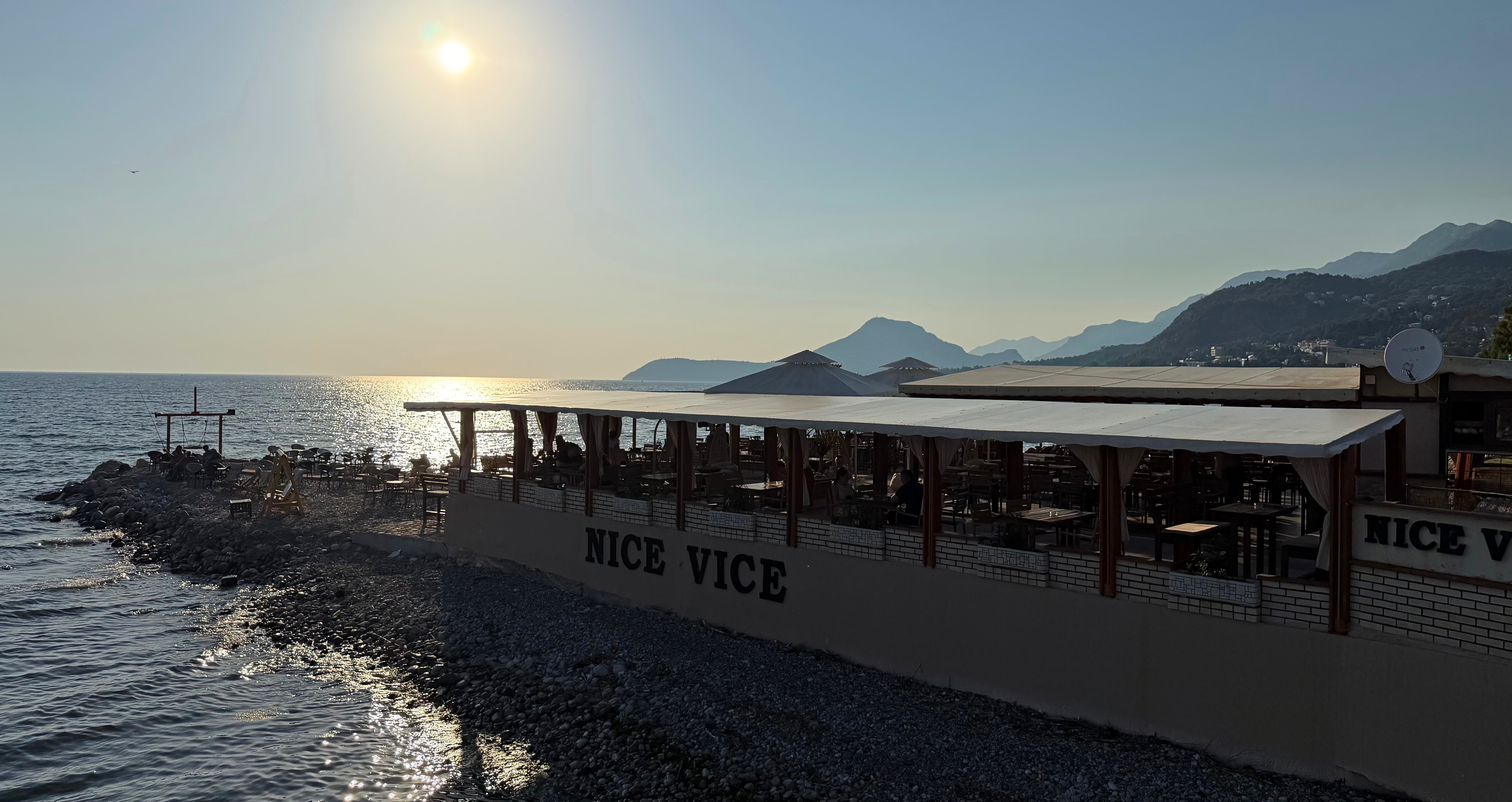 One of the beach bars along Bar’s promenade, where the rocky shoreline, low tables, and late-afternoon light give the coast its easy summer rhythm.
🎯 Next Week Preview
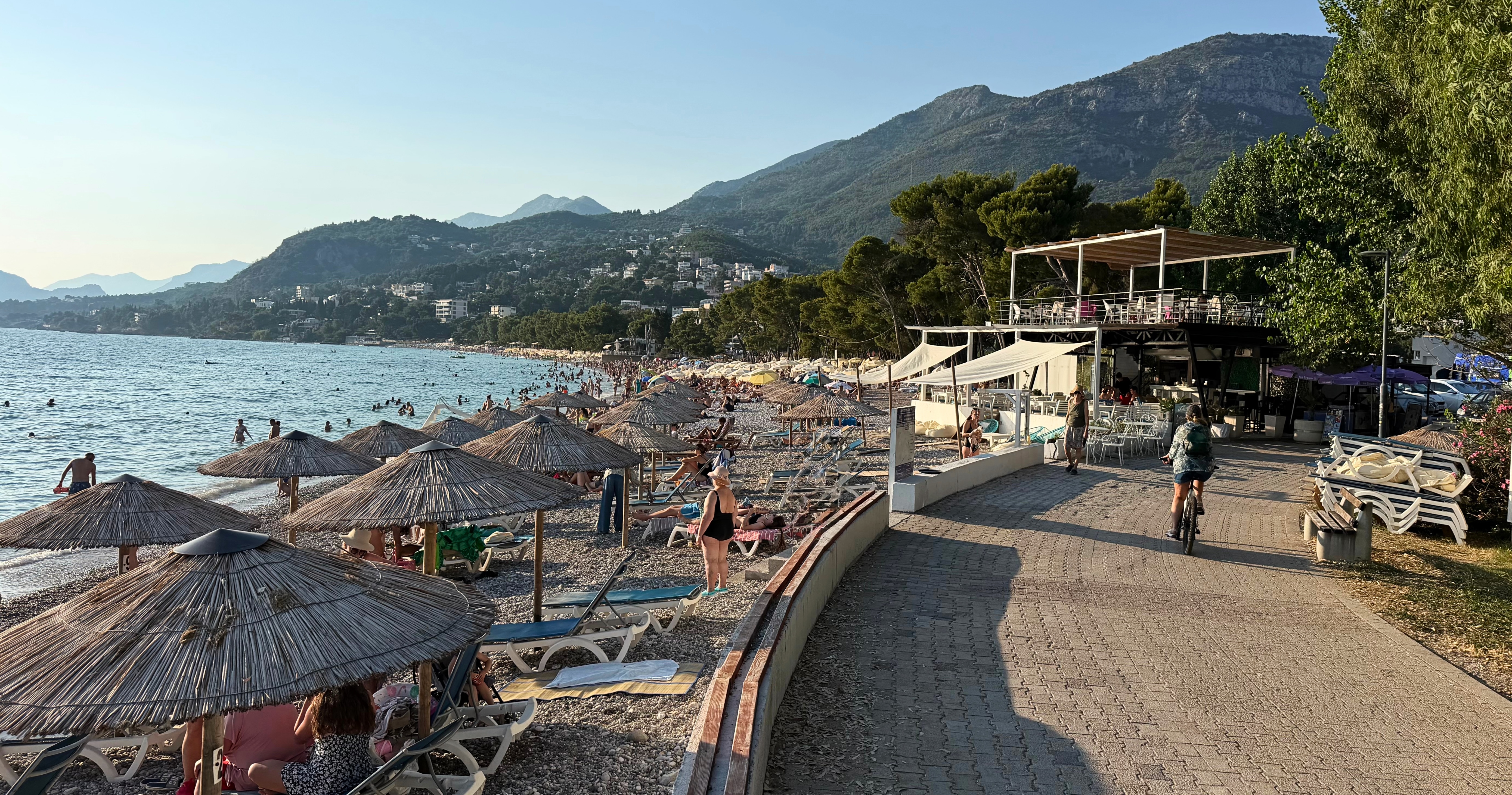 Along Šušanj Beach, with Terraza Beach Bar perched above the water and more of Bar’s shoreline still ahead of us.
Now that we have landed, next week is about watching Bar take shape once the practical map fills in. We’d like more mornings in the water before the heat builds, and a push north along the shore toward the rockier coves and the clearest water. Stari Bar is the one we are most looking forward to, the ruined fortress and the old olive tree both, saved for a morning cool enough to climb. That is where next week’s deeper look at the town will start.
Farther out, Ulcinj is on the horizon for a weekend, south toward the Albanian border, with its old town and its long sandy beach and a different feel from here. Podgorica, the capital, is an easy day trip inland whenever we want it. But we are not in a hurry. This month looks less like a run of cultural set pieces and more like a stretch of ordinary days by the sea, which is the right shape for July.
💌 Personal Connection
This week also brings the Fourth of July, and this year it is the 250th anniversary, which lands a little differently from a distance.
We are marking an American milestone while living among countries whose histories run much further back. The olive tree up at Stari Bar was already ancient when the Declaration was signed. There is something clarifying in that. Two hundred and fifty years reads as young here, set against medieval walls and an eleventh-century saint the town still keeps as its own. It does not shrink the anniversary. It sets it in proportion, and proportion is one of the things a year abroad keeps handing us.
We are not sure yet how we will mark the day. Quietly, most likely, and near the water. A swim in the Adriatic, a drink somewhere along the promenade, a little gratitude for home and a little homesickness alongside it. Distance does that. It makes home more complicated and more precious at once, and it lets you see your own country from an angle you never get while standing inside it.
For now we are here in Bar. Warm, well-priced, full of local summer life, with clear water nearby and a host around the corner who left a harder situation to make a quieter life on this coast. Bar offers something plainer than Kotor or Split: a southern-coast pace, a beach within reach, a shawarma shop on a side street, a long promenade in the evening, cold wine over ice at sunset. For us, a place to settle in, swim often, and live the ordinary days well.
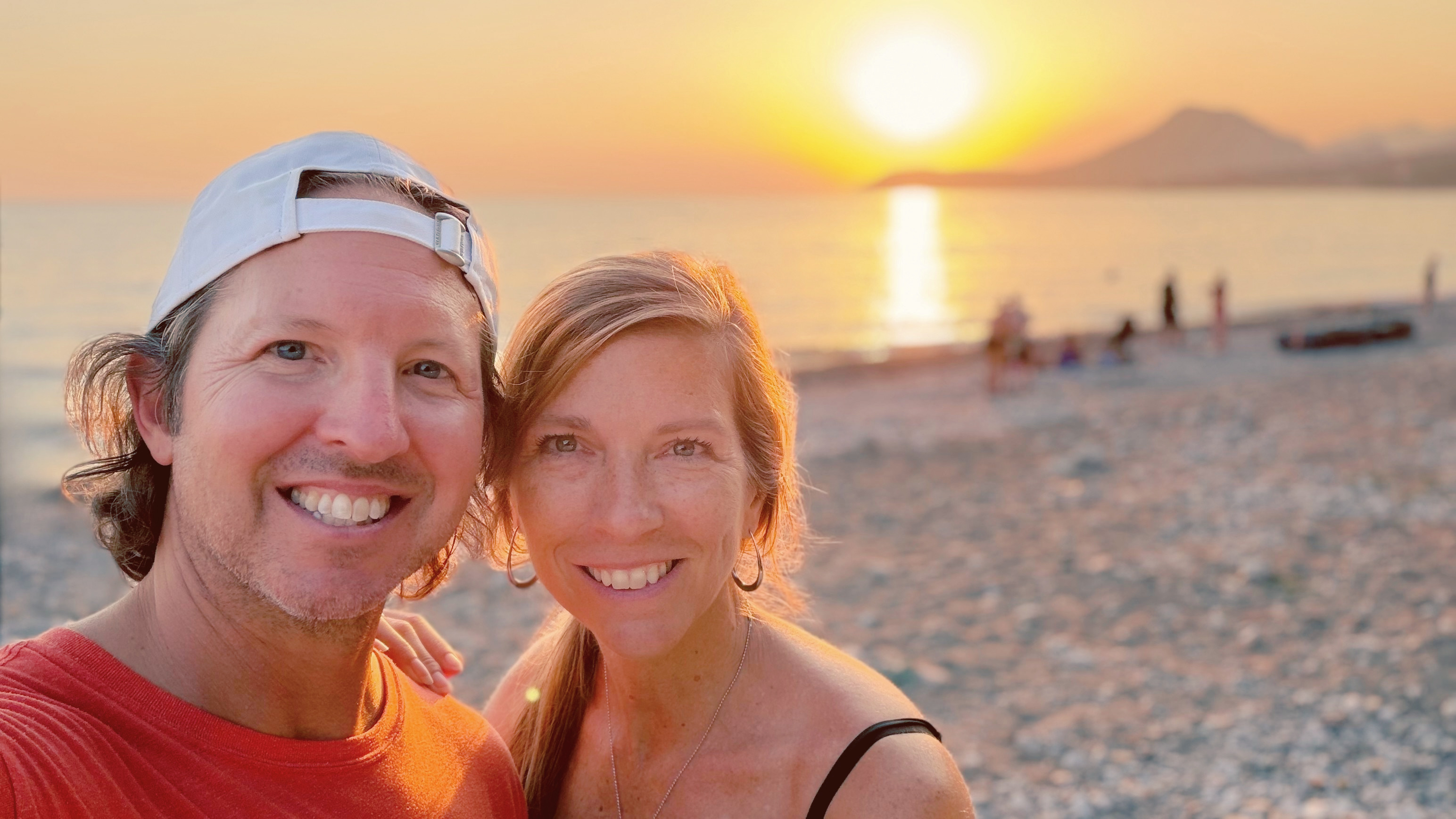 Our first visit to Šušanj Beach, with the Adriatic at our backs and the month in Bar just beginning to take shape.
Until next week,
S&S
Some Great Place · Living Local in a Global World · somegreatplace.com