📍 This Week in Bar
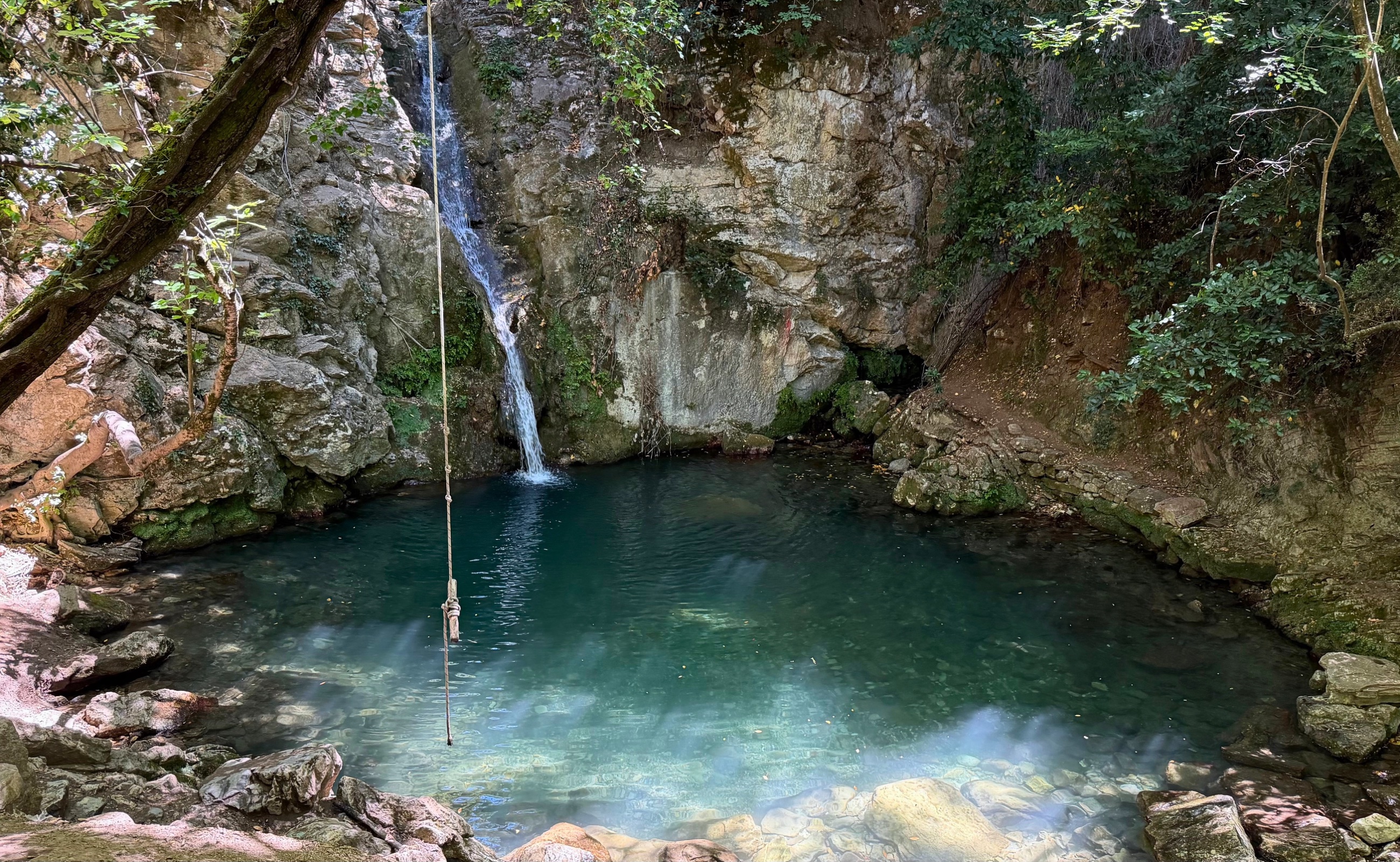 Vrteljak waterfall and the Blue Lagoon above Stari Bar, reached after a steep climb through the hills.
The road above Stari Bar climbed through old orchards and exposed hillsides before turning into the woods. Much of the route was paved, steep, and narrow enough that we listened for approaching cars as carefully as we watched where we stepped.
A small herd of goats, with a sheep and ram among them, had already found the sensible place to spend the afternoon. They rested beneath a rocky overhang while we continued upward in the July sun.
By the time we reached the pool beneath Vrteljak waterfall, known locally as the Blue Lagoon, we were hot enough from the climb that we got in without hesitating. The walk up from Stari Bar takes about an hour and climbs roughly 750 feet, and the water was cold enough to make us pause once we were in, then refreshing enough that we stayed.
After the exposed climb, the shaded pool felt removed from everything around it: clear mineral water gathered beneath the trees, only an hour’s walk from the walls of an old fortified city. The downhill return journey was considerably more comfortable after the swim.
Our third week in Bar moved repeatedly between two parts of the city. One sits inland beneath Mount Rumija, where the remains of Stari Bar rise above a narrow street of restaurants and small shops. The other stretches along the modern coast, where apartment buildings, cafés, pine trees, beaches, and the Port of Bar face the Adriatic. We have been living mostly in the second. This week, we spent some time understanding the first.
That movement also took us north to Red Beach, a small cove about a thirty-minute walk from our apartment. Its shoreline is made of reddish pebbles rather than sand, and the water is exceptionally clear. There is one small beach bar, which was closed during our visit, although there were a few loungers available for rent. We brought water, found a place on the shore for our things, and swam. It cost nothing to visit and made for a carefree summer afternoon.
🎨 Cultural Deep Dive
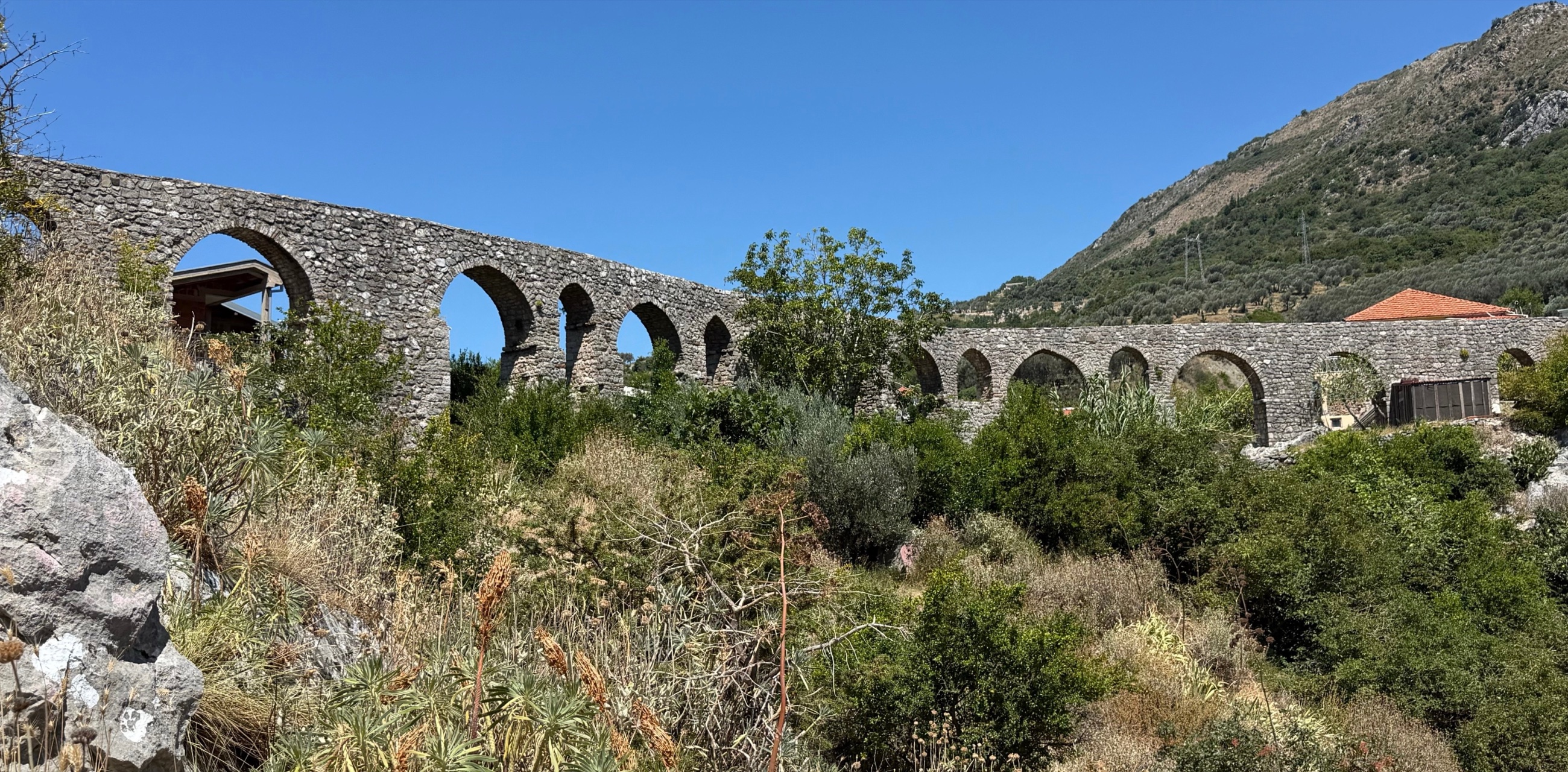 The Ottoman aqueduct below Stari Bar, rebuilt after the 1878 siege and damaged again in the 1979 earthquake.
Modern Bar developed along the coast, but the city’s older center stands several kilometers inland. Stari Bar occupies a fortified site beneath Mount Rumija, settled continuously for close to a thousand years under a succession of rulers: Byzantine oversight, medieval Serbian control, a period under Venice, and finally about three centuries of Ottoman rule, which left mosques, a bathhouse, and the aqueduct that still runs along the hillside outside the walls.
The Ottoman era ended by force. In 1878, the same year Montenegro’s independence would be recognized at the Congress of Berlin, Montenegrin forces besieged the garrison and broke its resistance by destroying the aqueduct, cutting off the water supply until the town surrendered. The aqueduct was rebuilt and the town continued. What finally emptied it was an earthquake in 1979, which destroyed the aqueduct a second time and left much of Stari Bar structurally unsound.
Most of the remaining residents relocated down to the coast, to the Bar we live in now, and the old town became the open-air ruin we saw this week.
The approach follows a compact settlement built along a rising stone lane. Restaurants, guesthouses, and small shops line the route toward the fortress entrance. Above them stand portions of the walls, towers, and churches that survived conflict, abandonment, the earthquake, and decades of exposure since.
We did not enter the archaeological complex on our visits. We had spent much of the first morning walking to the waterfall, stopped for lunch, and needed to catch the bus home. We were quoted €5 per person for admission, and rushing through the ruins before leaving would have reduced the visit to a hurried circuit.
We returned another morning to see more of the surrounding area, including the short path along the outside of the walls that runs beneath the aqueduct itself, the same structure twice destroyed.
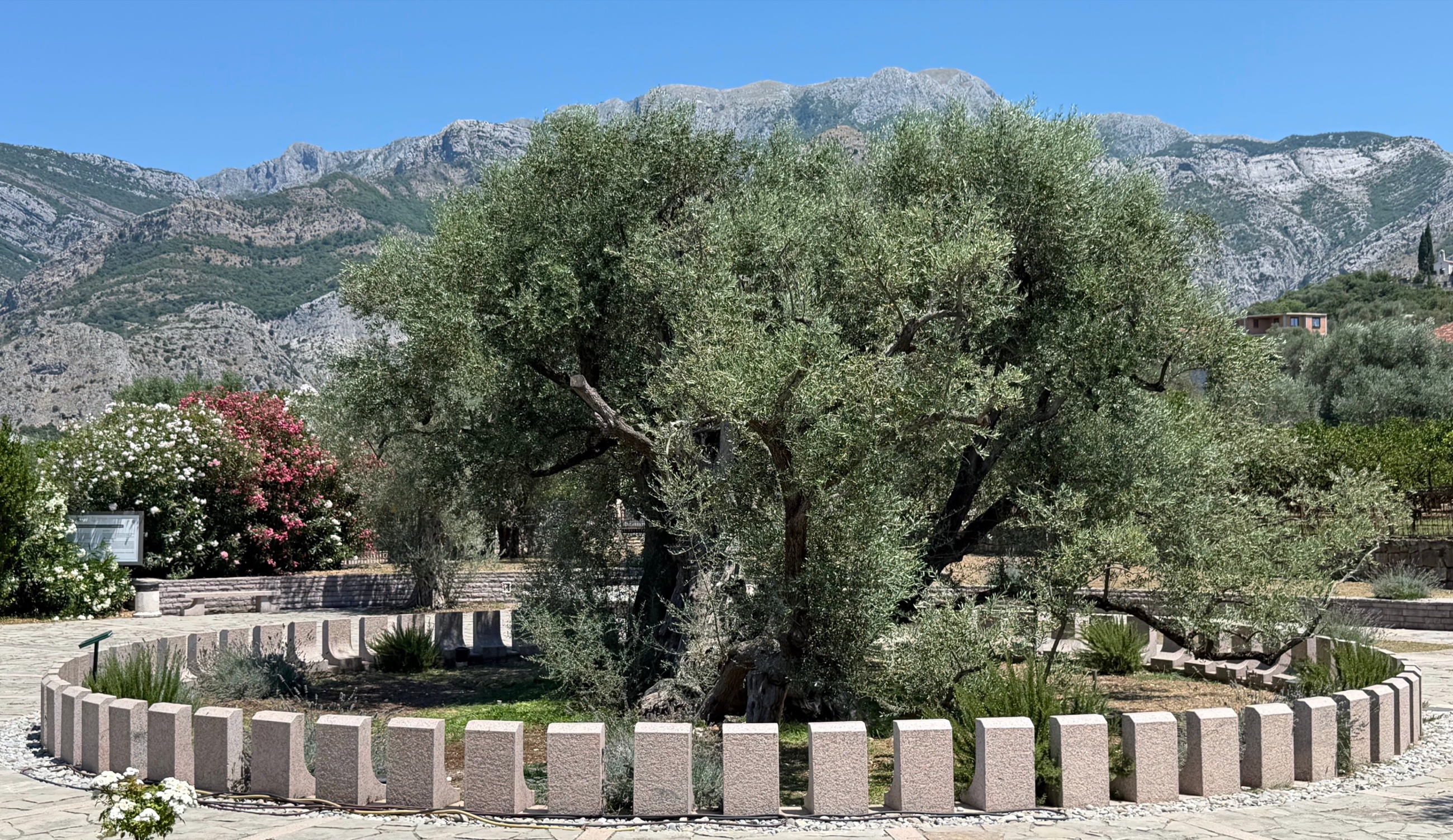 The Old Olive Tree at Mirovica, estimated to be about 2,250 years old, with Mount Rumija rising behind it.
From there, we walked roughly thirty minutes toward Mirovica and the Old Olive Tree. Mirovica takes its name from the local word for peace, tradition holds, because feuding families once met beneath the tree to settle their disputes. The tree has been under state protection since 1957. A 2015 study by the Faculty of Forestry at Istanbul University sampled fifty olive trees across the Bar and Ulcinj area and dated this one at roughly 2,250 years, the oldest of the group by a wide margin.
Its age is not the only story running right now. Rising groundwater linked to nearby development had been damaging the tree, and it went four years without a harvest before drainage work at the site improved its condition. It bore fruit again this past October for the first time since, a recovery that took deliberate, unglamorous work from people tending a tree none of them planted and none of them will outlive. Its trunk is deeply weathered, split, and folded into itself.
Visitors can walk around it within the protected grounds, though the tree cannot be touched. Admission normally costs a few euros, but entry happened to be free when we arrived.
It is a modest attraction in the practical sense. There is one ancient tree, a small enclosed site, and no elaborate presentation. Its value depends largely on whether age itself holds meaning for the visitor. For us, it did. The tree was already alive when the fortress above us was still centuries from its first stone, and it has outlasted every ruler that fortress ever answered to.
Olive cultivation belongs to Bar’s working history. Trees of significant age remain throughout the surrounding area, and olive oil has long connected the land to household food, trade, and inheritance. Standing beside a living tree whose life reaches back beyond most surviving structures in the region gave that history a physical scale.
The tree is much easier to reach by car. There is no convenient local bus stop beside it, so our choices were to walk uphill again to Stari Bar or continue the longer route toward home along the road. We walked home.
That walk produced one unexpected discovery. Near the old shipyard outside the harbor, we passed an enormous wooden vessel with three tall masts taking shape behind the fence. We later learned it is the Sveti Stefan Providenca, an elaborate reconstruction of a seventeenth-century Adriatic galleon.
Boatbuilder Miloš Knežić has been converting a thirty-meter Turkish-built wooden gulet from 1986 into the three-masted vessel, working from plans found in Dobrota, where we stayed by Kotor, for the Providenca, a large armed merchant ship built in Boka Kotorska in 1629. Work began in 2016 and continues still, conceived partly as a working cultural and film vessel rather than a static replica.
Even unfinished, it looked striking beside the industrial edges of modern Bar, an older maritime form emerging within sight of the commercial port.
🏠 Behind the Nomad Curtain
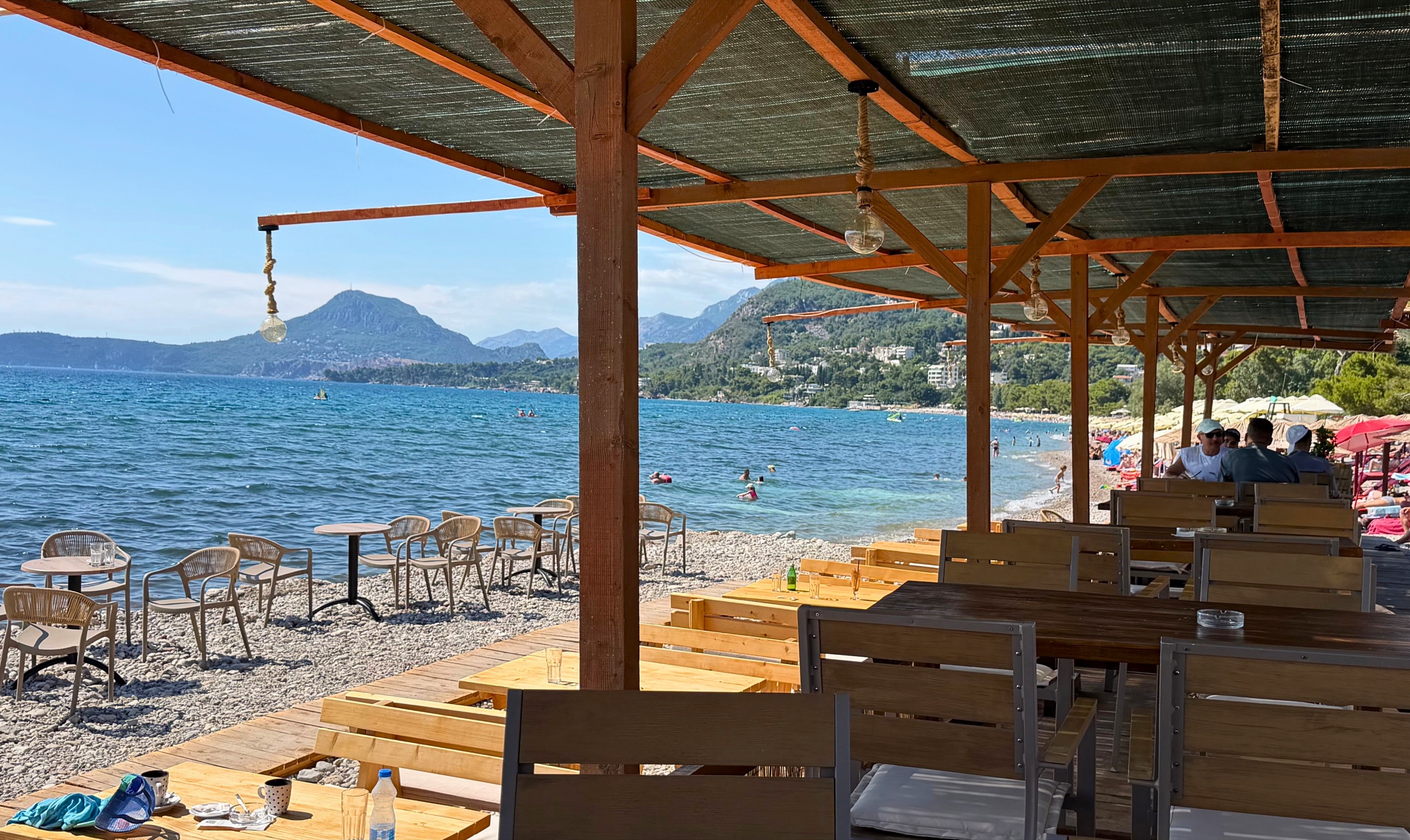 A stop for a cold drink at a beach bar along our local shoreline, part of an unhurried Statehood Day weekend in Bar.
Three weeks in, our days have settled into a dependable shape.
On gym mornings, we walk into Bar, work out, continue toward the sea for a swim, and choose one of the cafés along the promenade before walking home for lunch. Work occupies most of the afternoon and evening. Grocery trips are smaller and more frequent than they were in the U.S., since everything has to be carried back on foot.
Montenegro’s Statehood Day added a wrinkle to that shape this week. The holiday falls on July 13, and many stores and businesses closed for several days around it. We stocked groceries in advance. Our gym remained open with limited hours. The sea, fortunately, required no schedule adjustment.
🍽️ Local Flavor
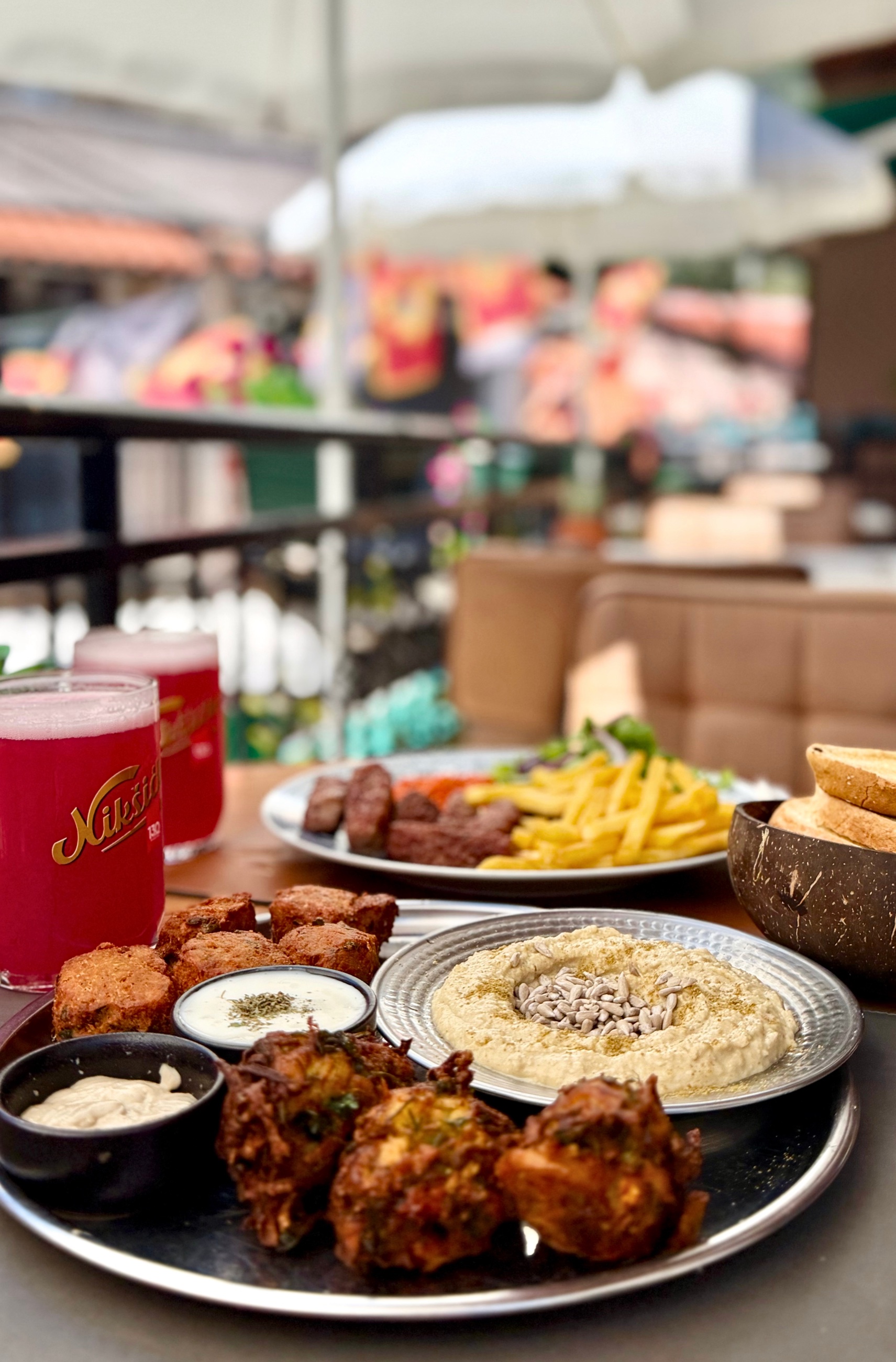 Lunch at The Son’s Eatery in Stari Bar: ćevapi, hummus, falafel, mücver, and pomegranate beer on the upstairs patio.
Stari Bar gave us one of our better meals since arriving in the city.
The Son’s Eatery is a small, family-run Turkish restaurant with an upstairs patio overlooking the stone lane. After the waterfall walk, shade and a satisfying lunch were equally welcome. We shared ćevapi with fries and a vegetable platter with falafel, hummus, dips, and mücver. Mücver are savory Turkish fritters made primarily from grated zucchini and herbs, fried until crisp around the edges.
We also tried a pomegranate-infused beer, a fitting choice in an area where pomegranates grow readily and fresh juice appears on restaurant signs throughout town. The total was €35.
Ćevapi have appeared regularly during our months in the Balkans, though the preparation and accompaniments vary. Here, the small grilled meat sausages came with bread and familiar regional condiments. The vegetable platter provided the better contrast, and the mücver gave the meal a character beyond the standard grill plates found throughout coastal Montenegro.
Later in the week, we returned to the shore for pizza at Pino Del Mar. The Neapolitan-style pizza had the soft, blistered crust we had been hoping to find. A pizza and a large bottle of sparkling water cost €18.50 for the two of us.
The two meals belonged to different parts of Bar: Turkish cooking beneath the old fortress and Italian technique beside the Adriatic. Together, they reflect the city’s position along a coast shaped by centuries of movement, settlement, and exchange. Mina, our Serbian host, has told us that Bar is obsessed with Italy. The menus support her point: the coffee shops use mostly Italian beans and pizza turns up on nearly every menu in town, bakeries included, and is eaten here in serious quantity.
💰 Nomad Real Talk
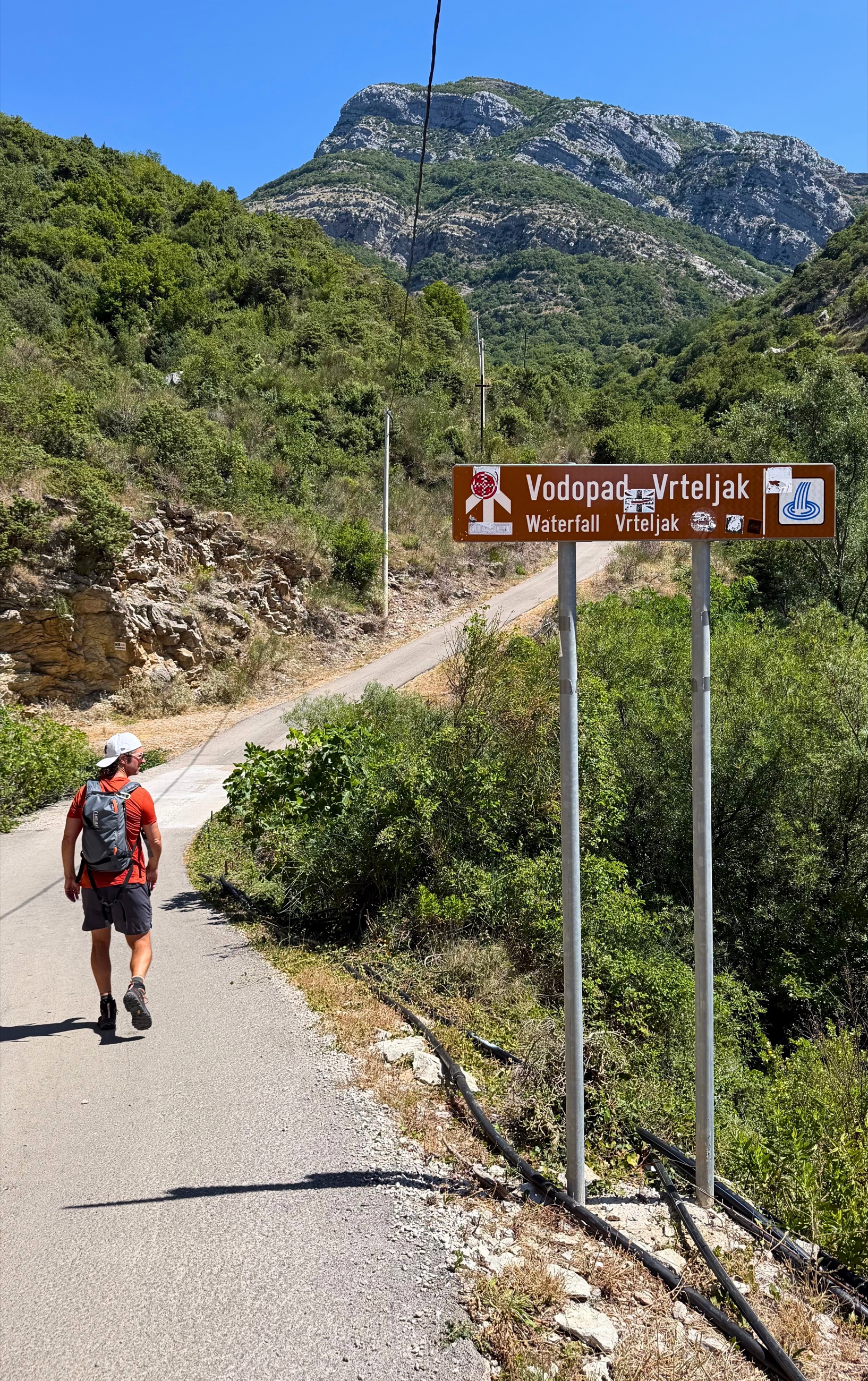 The paved climb toward Vrteljak waterfall, toward the slopes of Mount Rumija.
Bar remains inexpensive for everyday transportation, provided the bus happens to go where you need it.
The local bus between the coast and Stari Bar costs €1 per person each way. That makes the old town an easy and affordable outing from Šušanj.
The difficulty is coverage. We have identified the route serving Stari Bar and the coastal settlements, along with intercity buses from Bar’s main station to places such as Ulcinj, Budva, and Kotor. For many shorter movements within the wider city, the practical options are walking or taking a taxi. We used no taxis this week, which kept transportation costs low. It also meant covering considerable distances on foot in temperatures that make midday walking unpleasant.
The trip to the Old Olive Tree illustrates the tradeoff. The site is easy to reach by car and possible to reach on foot, but the road is exposed and there is no convenient local bus waiting nearby. The visit itself may take fifteen minutes. Reaching it and getting home can occupy much more of the day.
The waterfall route requires similar calculation. It is often described as a hike, though much of it follows a steep, winding paved road before entering the woods. The landscape and swimming pool make the outing worthwhile, but walkers must remain alert for cars on the narrow bends.
July heat has changed how we organize our days generally. Longer walks belong in the morning or evening whenever possible. Beaches and swims make the hottest hours manageable. Work moves indoors during the afternoon.
📸 Photo Story
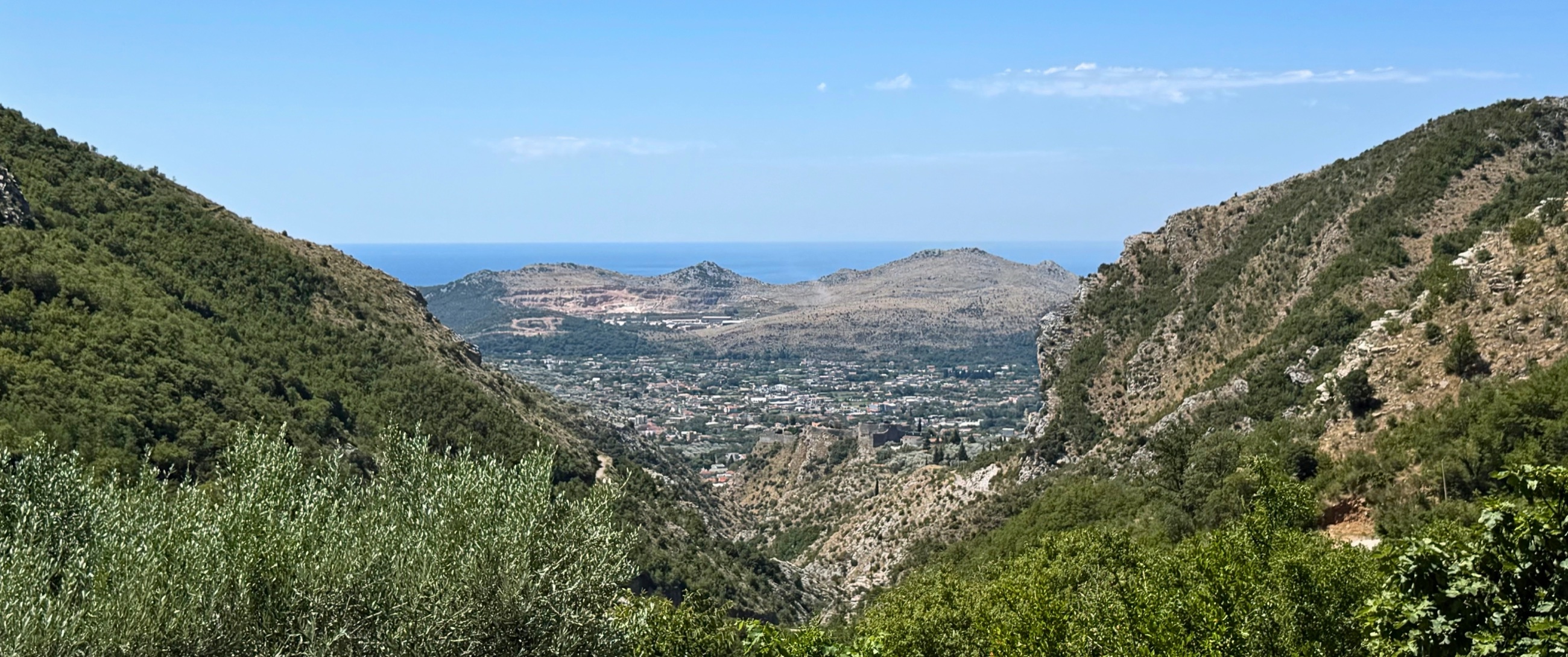 The valley opens toward Bar and the Adriatic, seen from the mountain road above Stari Bar.
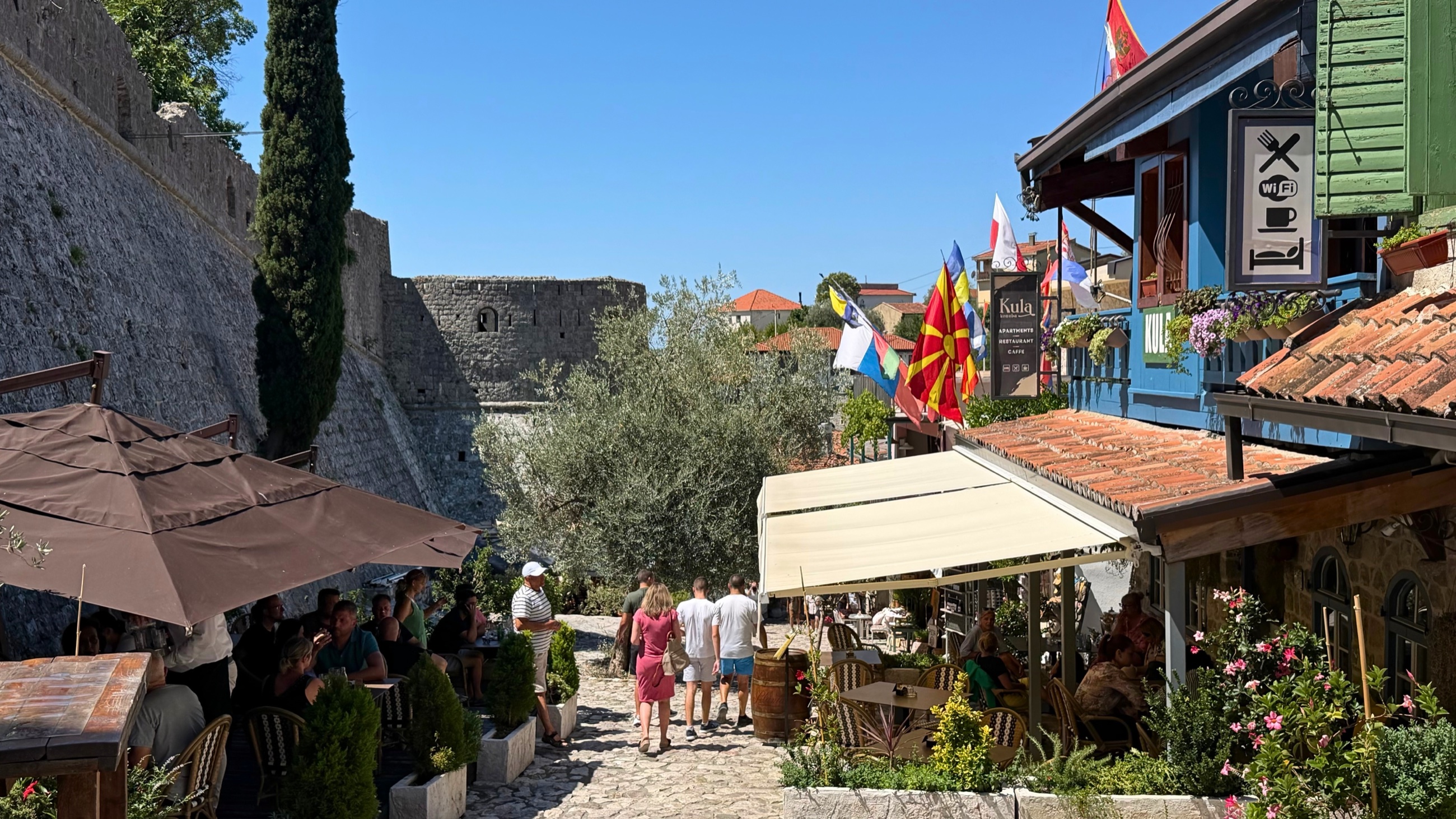 Cafés, flags, and stone lanes gather beneath the old walls of Stari Bar.
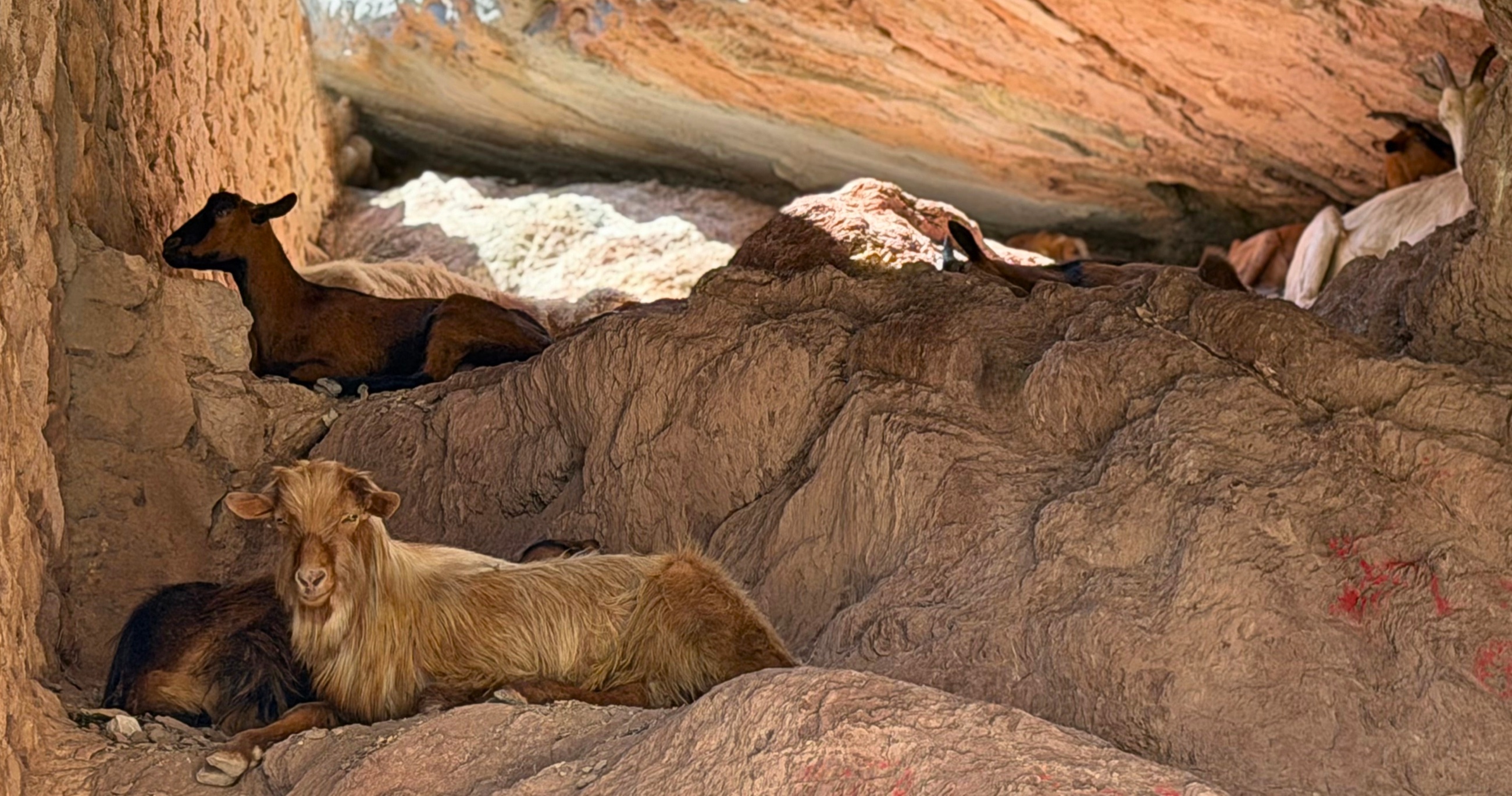 Goats resting in the shade of a rocky shelter above Stari Bar.
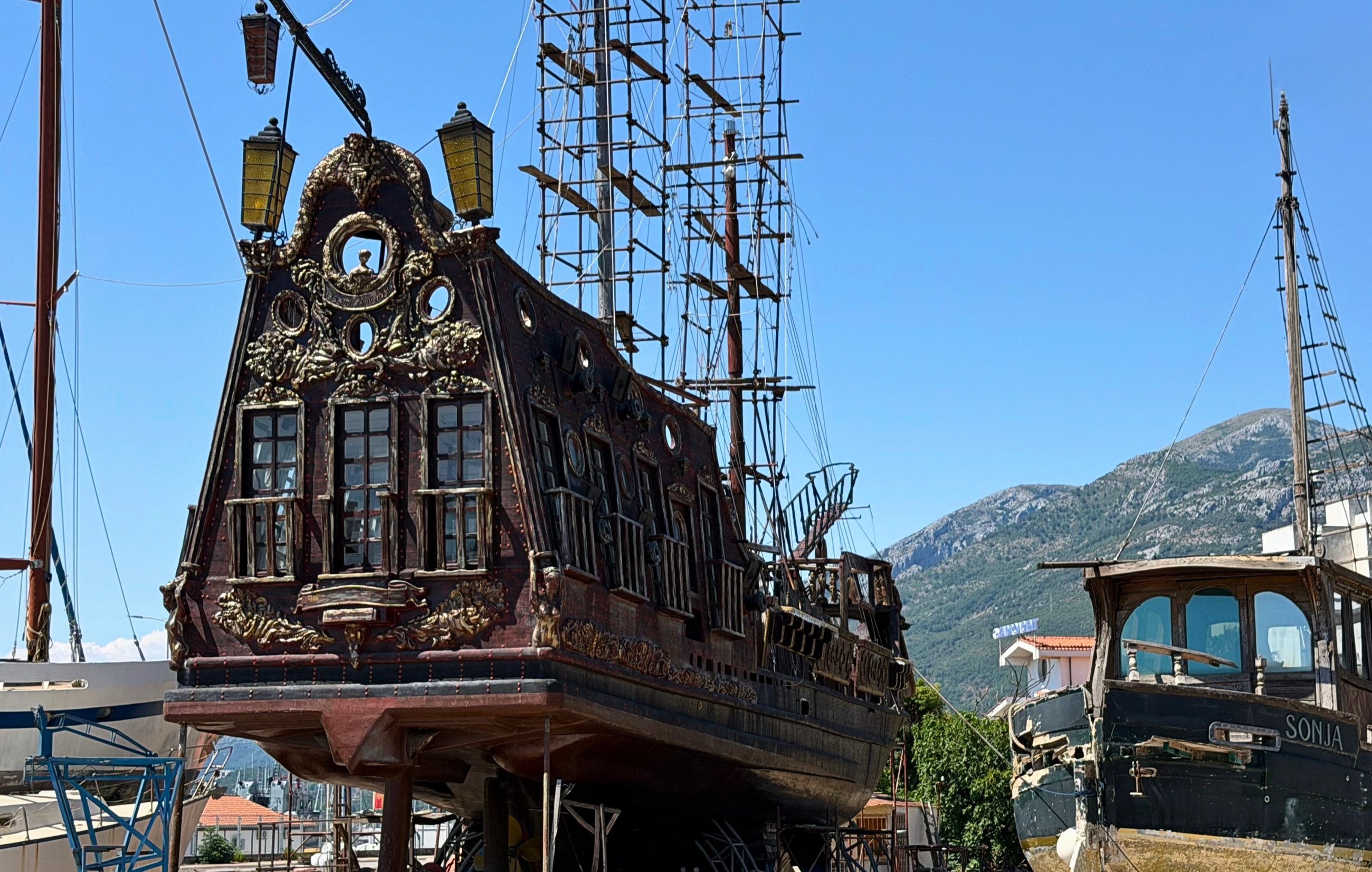 An ornate wooden vessel under repair in Bar’s working shipyard.
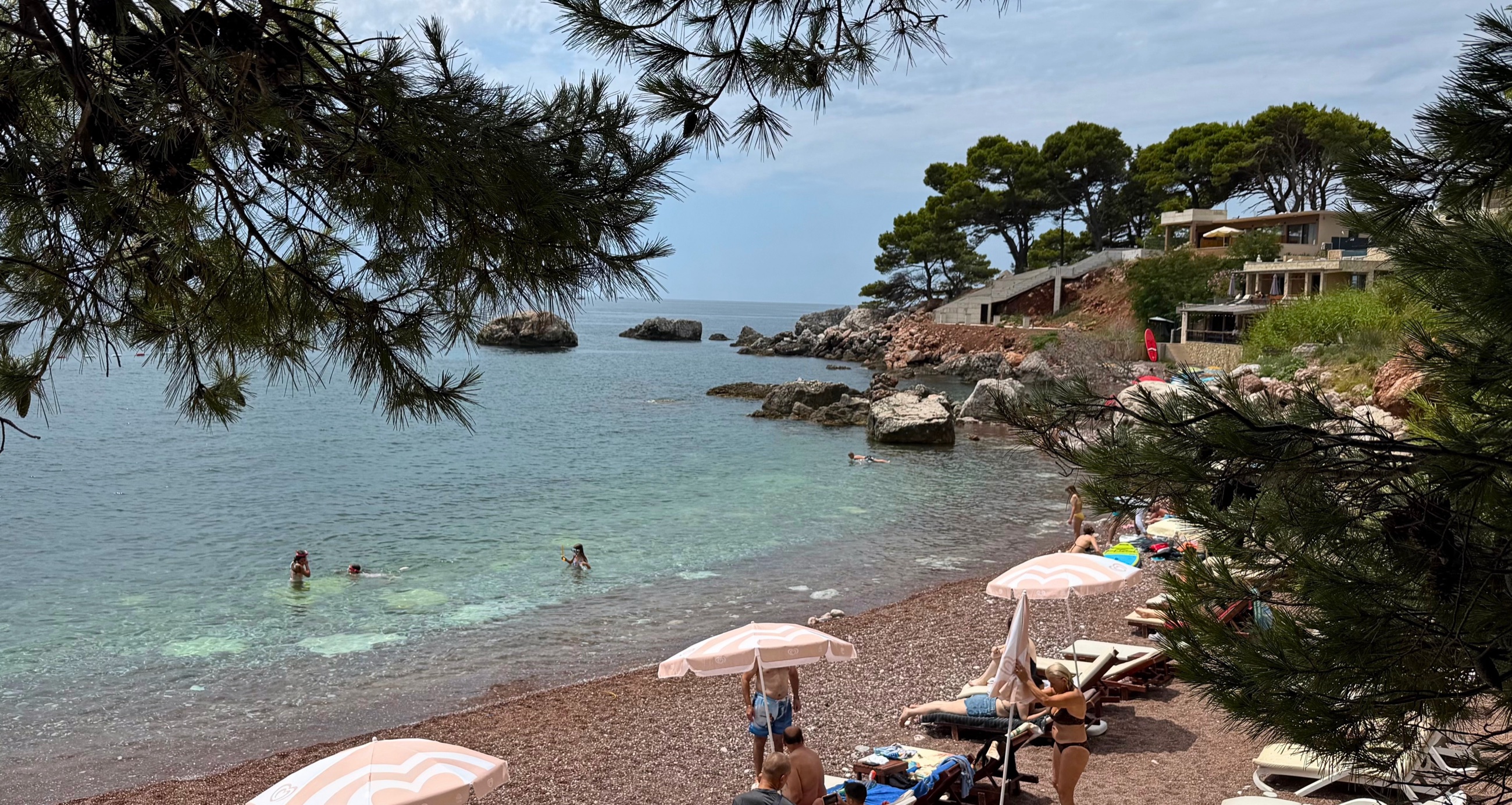 Pine branches frame the reddish pebbles and pale blue-green water of Red Beach.
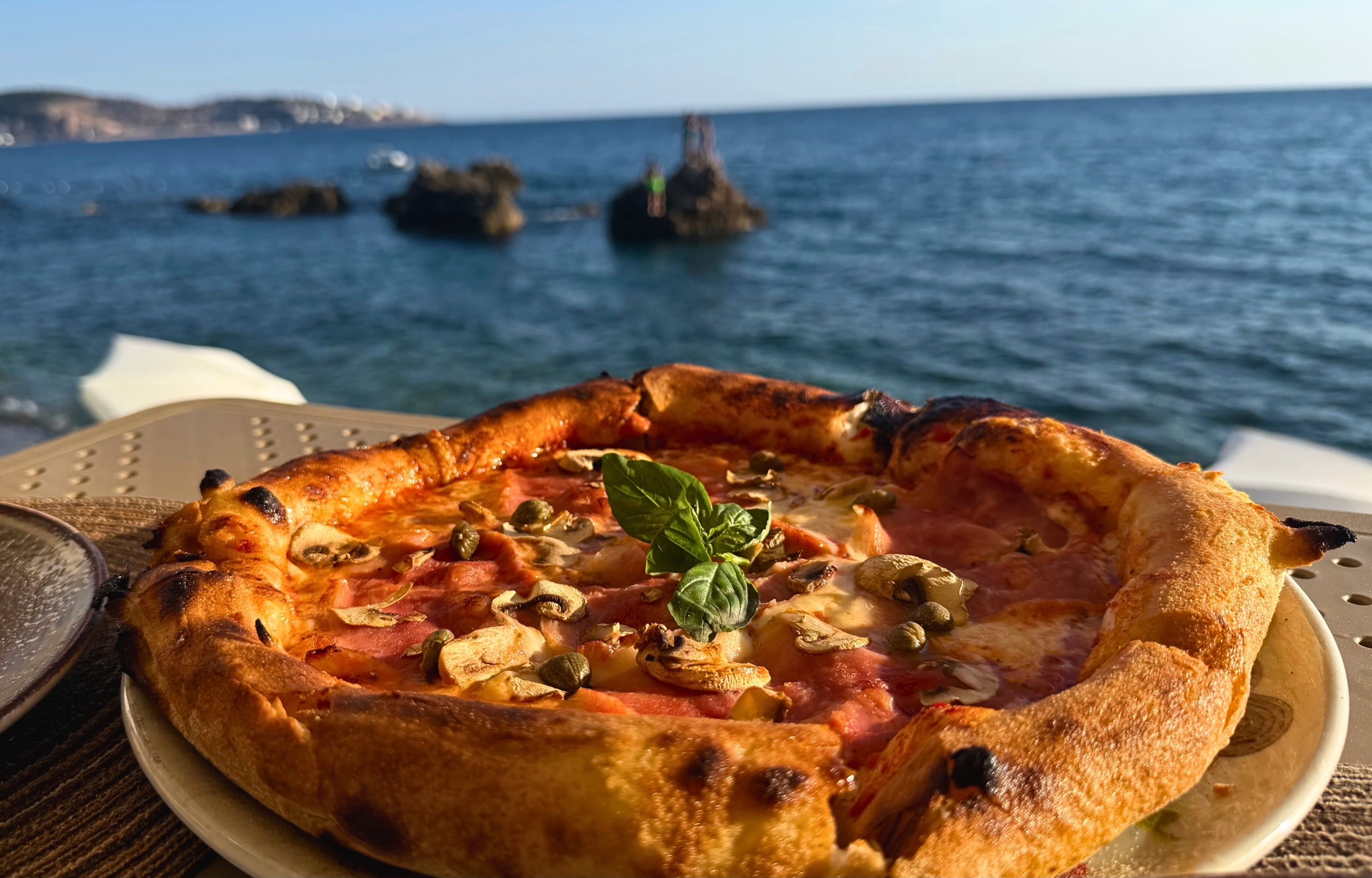 Italian-style pizza beside the Adriatic at Pino Del Mar.
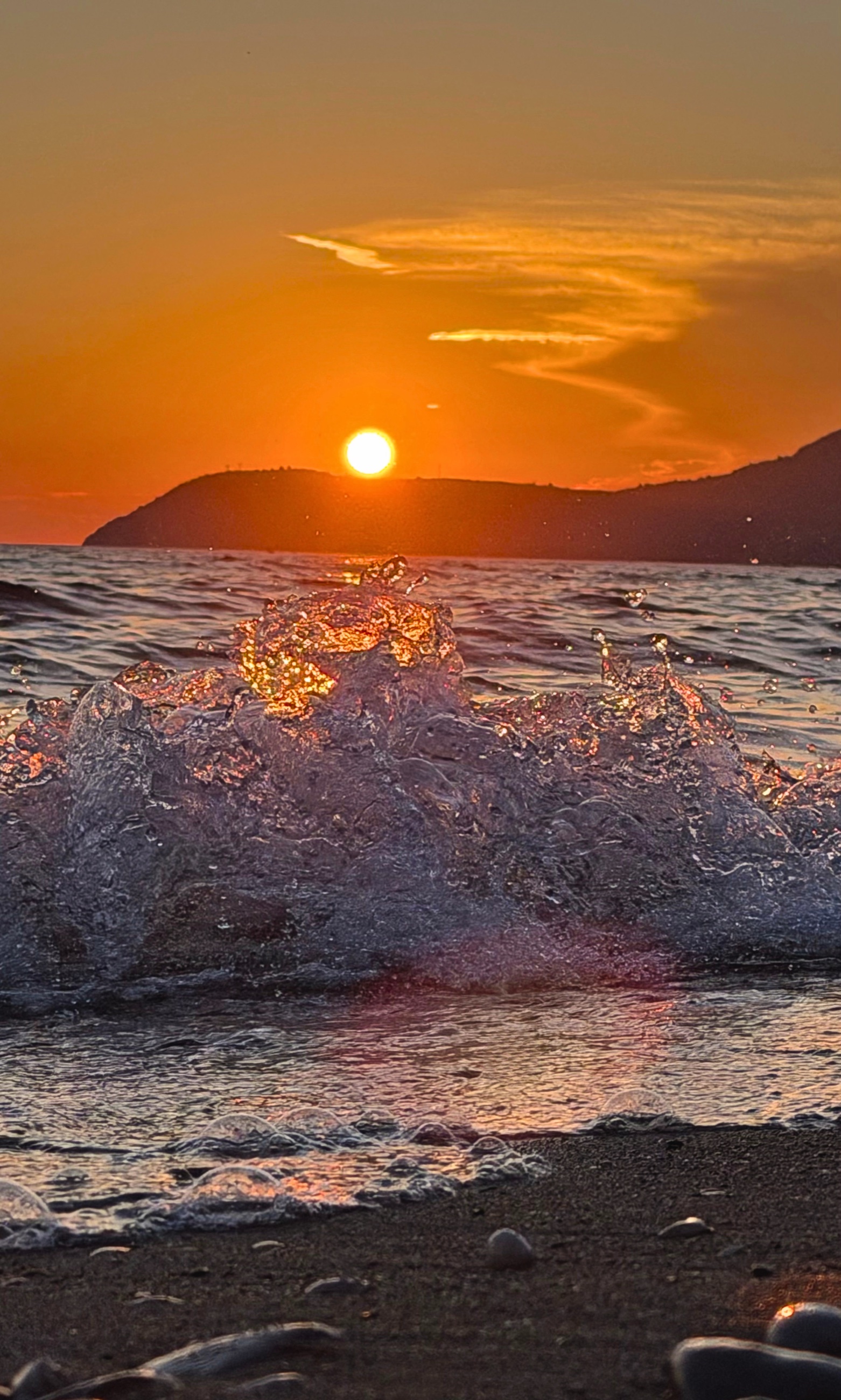 A wave splash catches the last light along Bar’s shoreline.
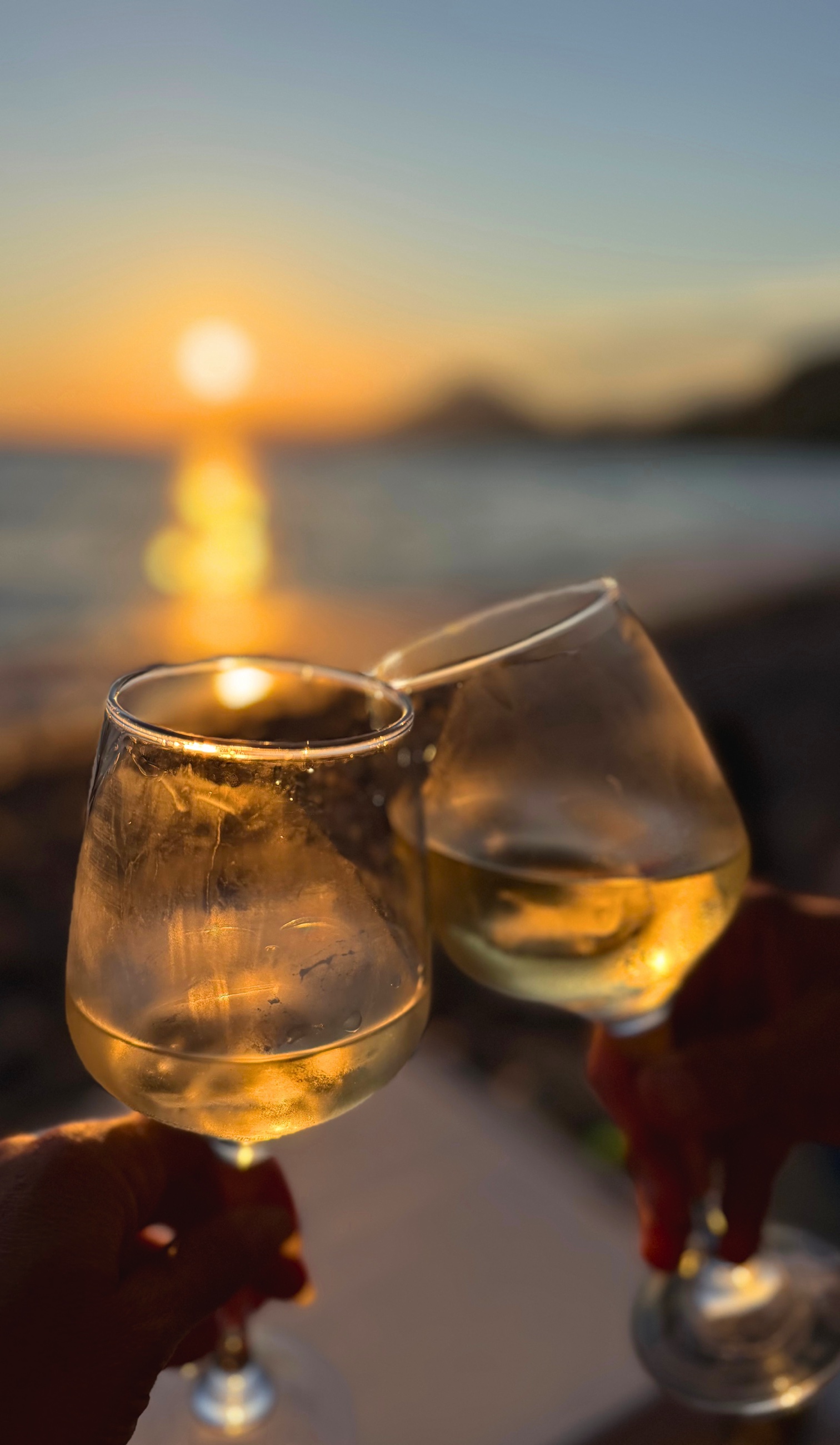 A glass of local wine as the sun lowers over the coast.
🎯 Next Week Preview
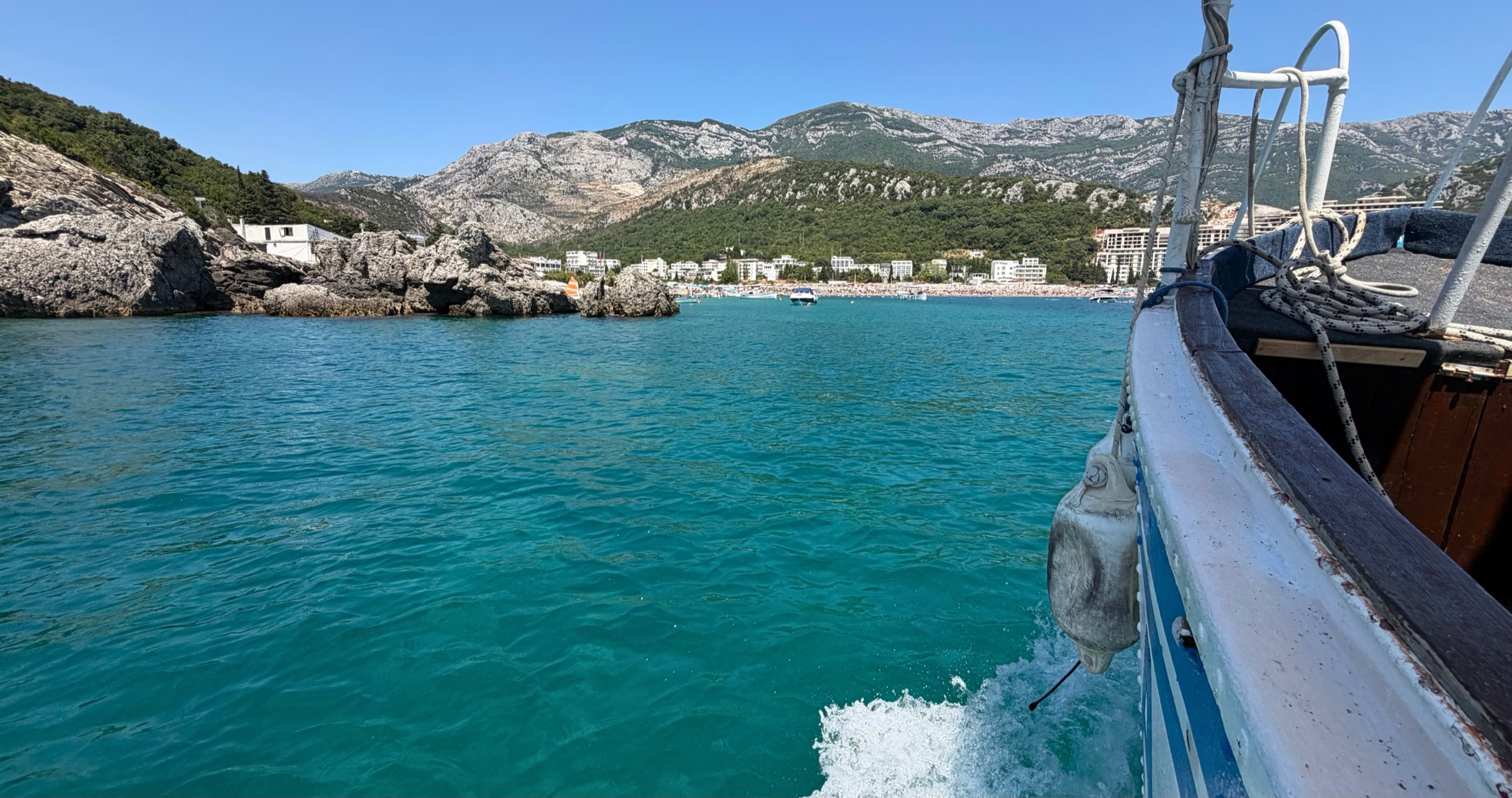 Čanj by boat, with the mountains rising behind the vivid blue-green Adriatic water.
The coming week includes two return visits. We’ll go back to Kotor for one overnight, since friends from the United States are arriving there on a Mediterranean cruise. We’re taking the bus north for a two-day, one-night trip, and this time we’ll stay inside Kotor’s walls for convenience rather than returning to Dobrota. We’ll also return to Čanj beach, this time to take a boat out to Queens Beach and Vezirova Beach, neither of which has a road down to the shore.
Both sit in cliff-enclosed coves with crystal clear water.
We also still hope to visit Ulcinj before leaving Montenegro. Its Albanian cultural character, fortified Old Town, mosques, and long southern beaches should make it distinct from both Kotor and Bar.
We have just under two weeks left on the coast, plenty of time to fit in Kotor, Čanj, and Ulcinj before we move inland to Tirana.
💌 Personal Connection
On Sunday evening, during the Statehood Day holiday weekend, we carried wine down to our local beach. After 5:00 p.m., beach operators stop charging for loungers and umbrellas, so we found two empty chairs near the water and watched the light change over the Adriatic. Swimmers remained in the sea. People walked beneath the pines. The cafés along the shoreline continued serving dinner and drinks as the temperature finally began to ease.
Much of this month has been shaped by practical adjustments to heat, transportation, work, and distance. The best parts of living here have needed little organization: walking down to the water, swimming before lunch, sitting beneath the pines with coffee, or returning to the beach near sunset.
The Old Olive Tree survived because people noticed its decline and did the patient work required to protect it. That care felt consistent with much of what we have seen in Bar, where old structures, working landscapes, and everyday summer life continue side by side.
Stari Bar gave us a clearer view of the city’s inland past. Šušanj continues to show us how summer life unfolds along its Adriatic present.
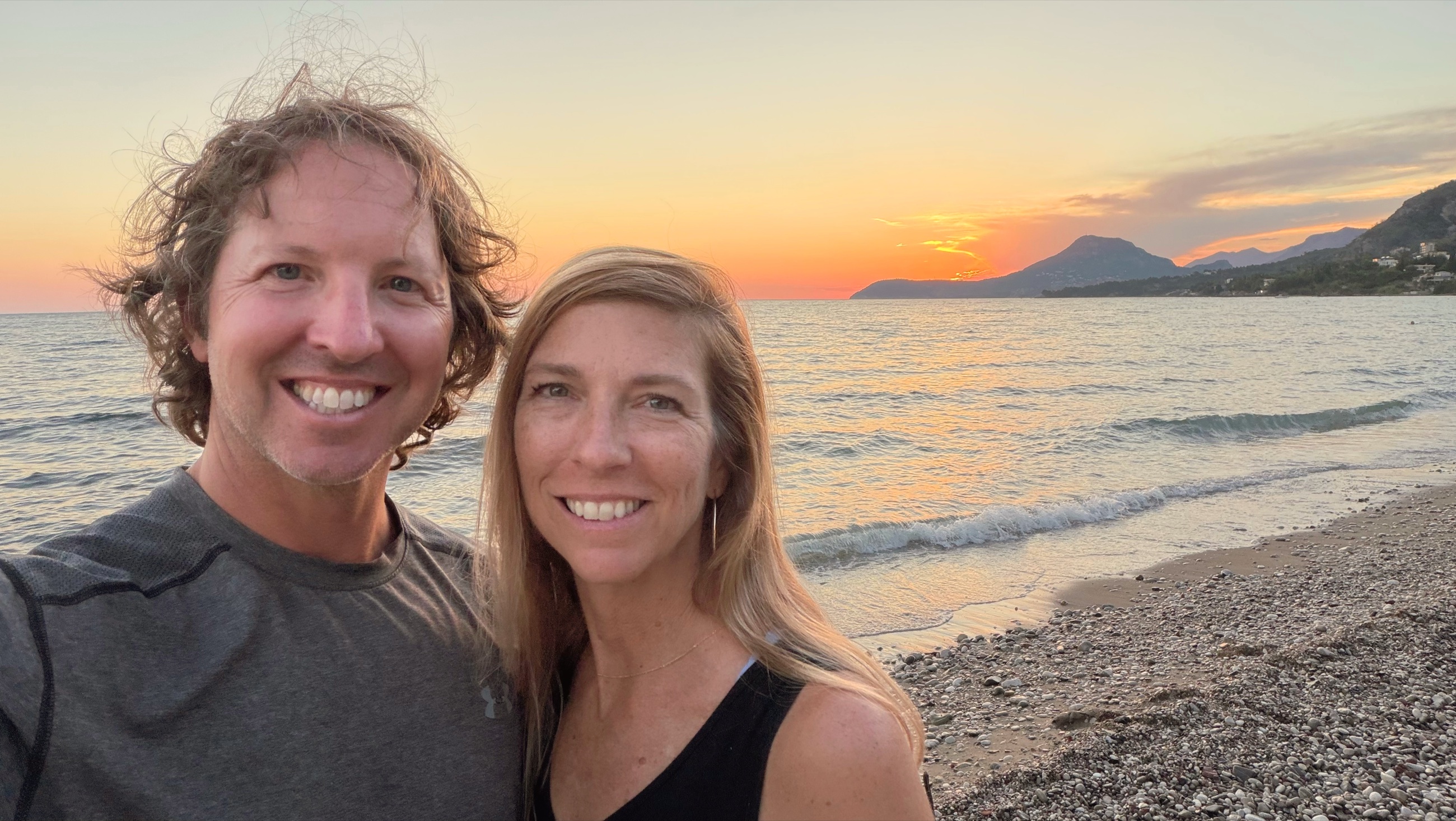 On the beach in Šušanj as the sun set over the Adriatic during Montenegro’s Statehood Day weekend.
Until next week,
S&S
Some Great Place · Living Local in a Global World · somegreatplace.com