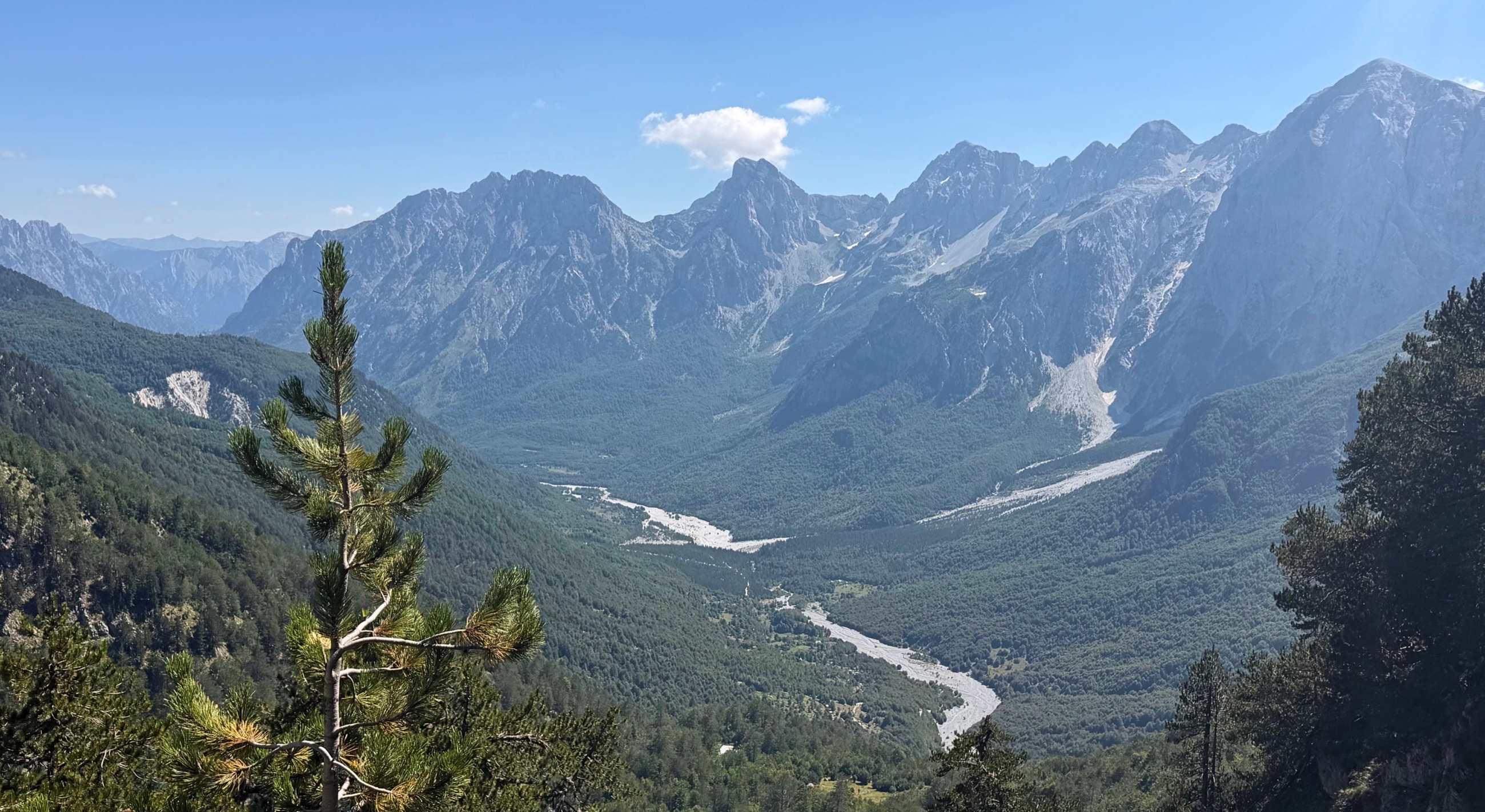
 The Valbona Valley opens below the trail, with the Accursed Mountains rising around the route toward Valbona Pass.
Some trips begin when you arrive. This one began weeks earlier, with ferry schedules, minibus reservations, guesthouse bookings, trail research, pickup locations, weather checks, offline maps, and cash set aside for places that would not take a card. For three days away from Tirana, this route through the Albanian Alps became the most logistically demanding excursion of our season abroad.
It was also one of the best.
We left the apartment at 4:30 on Friday morning and walked through empty streets toward a petrol station where the first minibus was due. Over the following eight hours we traveled by road, walked through a tunnel cut straight into a mountain, crossed Komani Lake by ferry, boarded a second shuttle deep in the north, and finally reached our guesthouse in Valbona.
The next morning we shouldered small packs and crossed the Alps on foot: roughly 3,100 feet of climbing to Valbona Pass, then a long descent into the neighboring valley and the village of Theth.
It was the kind of trip that drew us to Albania in the first place: physical, culturally rich, and unpredictable enough at the edges to remind us where we were. Our daughter, visiting from the US, made the entire crossing with us, which made a memorable weekend even better.
📍 This Week in Tirana
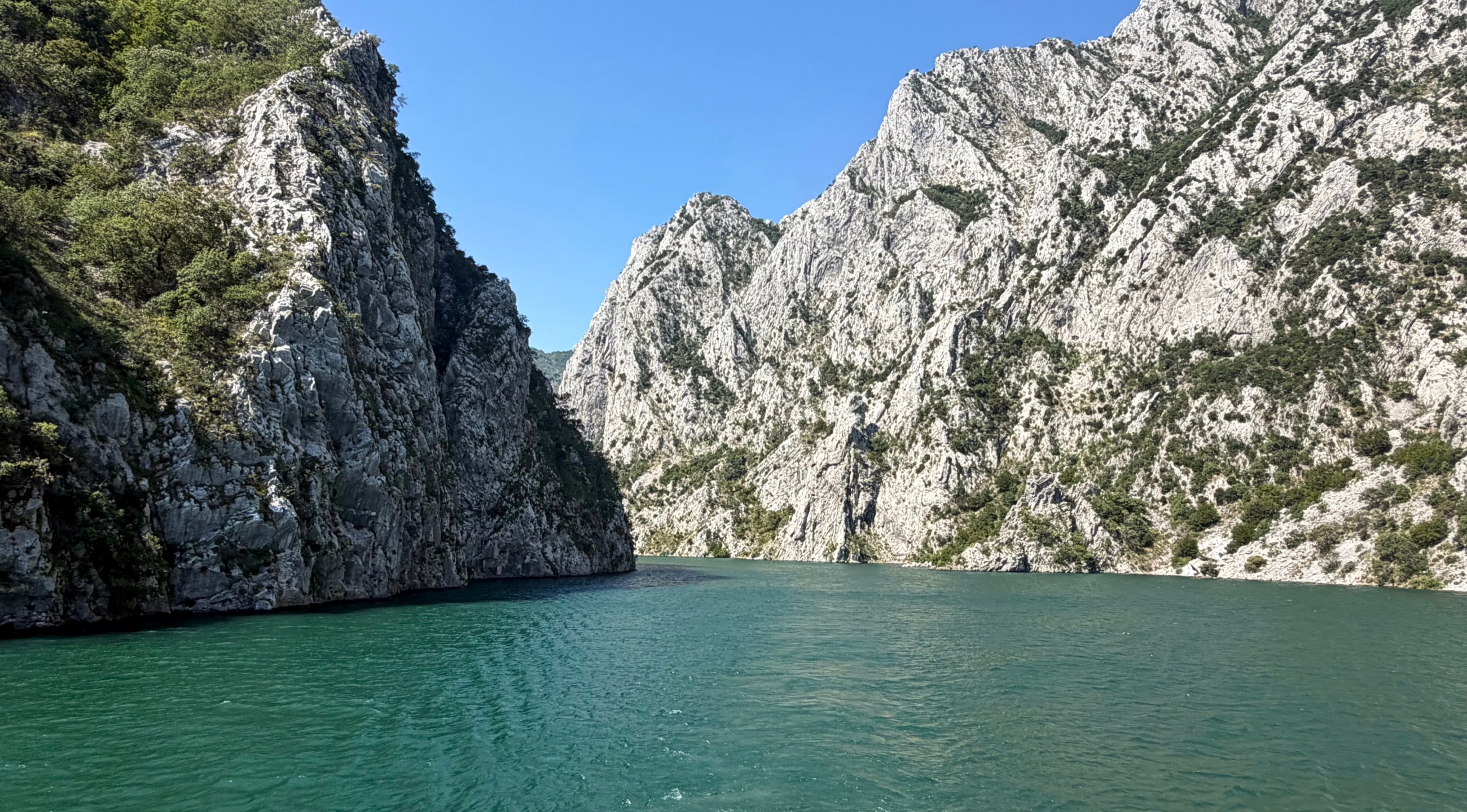 The ferry threads through the limestone walls of Komani Lake on the journey north from Tirana to Valbona.
One advantage of an urban home base is how much of Albania it puts within reach. On a normal week, our days revolve around work, the gym, neighborhood cafes, groceries, and long walks through the city and parks. With enough preparation, we can also leave early and spend a long weekend somewhere that feels entirely removed from it.
Friday began with a twenty-minute walk through a nearly empty Tirana to meet the 5:30 a.m. minibus north. Transportation in Albania often feels more personal and less standardized than what we’ve grown used to elsewhere in Europe. Pickups often happen beside petrol stations rather than terminals. Vans gather in loosely organized clusters. Drivers stop for espresso, passengers occasionally change vehicles, and the person driving at the start of a journey isn’t always the one behind the wheel at the end.
From the outside, it can look improvised. In practice, every major transfer had been reserved weeks in advance, both guesthouses were secured, and we knew roughly where we needed to be and when. In August, with hikers and summer travelers filling the mountain routes, that preparation mattered. Albania still supplied plenty of improvisation of its own.
After several hours on the road, including a roadside espresso stop that felt inevitable, we reached Koman and walked through a long tunnel to the ferry terminal. Komani Lake is technically a reservoir, but the comparison to a fjord holds up once you’re on the water. For about two and a half hours the ferry threaded through blue-green water walled in by immense limestone cliffs, higher ridges rising behind them.
Small settlements appeared occasionally along the shore, but for long stretches there was only cliff, forest, and water. The ferry ride became one of the defining experiences of the weekend on its own merits.
At Fierzë, we found our shuttle among a crowded cluster of vans, passengers, drivers, and luggage. The dizzying road climbed toward Valbona until the landscape opened into a broad alpine valley framed by jagged limestone peaks, the pale stone bed of the Valbona River running through the middle, streaked in places with turquoise water. Valbona has no real village center. Guesthouses, farms, and small hotels are scattered along the valley road, often at considerable distance from one another.
Our driver asked each group where they were staying and emptied the van one guesthouse at a time. When our turn came, we followed a rough path along an old riverbed toward Guesthouse Hyrmet Demushi. Roughly eight hours after leaving Tirana, we had arrived.
Lunch was at Fusha e Gjesë, a restaurant attached to a traditional mountain hotel inside the national park boundary, built around bio-local ingredients grown on the property and nearby farms. We ordered the grilled meats: half a chicken, sliced beef, and a cabbage salad. The afternoon required little of us after that. We settled into the shade at the guesthouse, a property that felt closer to a family farm than a hotel, trees surrounding the common area and hammocks strung nearby.
At seven, everyone gathered promptly for dinner. There was no menu and no individual ordering; plates were set out on the table: slow-roasted beef, potatoes and carrots, stuffed peppers, vegetable soup, cheese burek, and the standard Albanian salad of tomato, cucumber, pepper, and white cheese, most of it grown or raised within sight of the table. We turned in early. The reason for coming to Valbona was waiting above us.
The Crossing
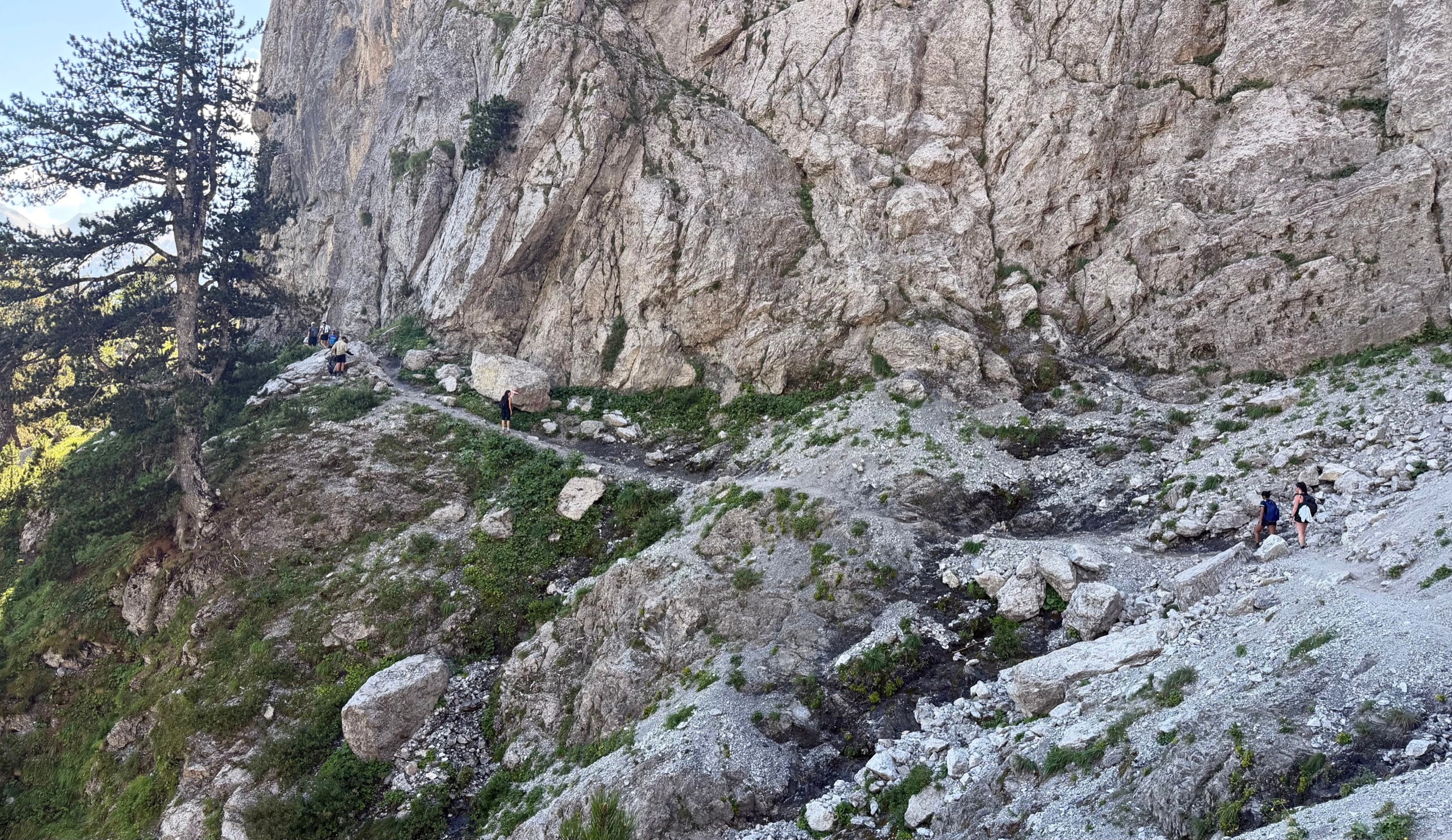 Crossing the rocky trail beneath the limestone walls on the climb toward Valbona Pass.
Breakfast was served at seven the next morning in the communal dining room: bread, homemade butter and jam, house sausage, cheese, tomatoes, cucumber, hard-boiled eggs, and juice. We paid extra for trail sandwiches, and the guesthouse set out the ingredients for us to build and pack ourselves, layered between thick slices of homemade bread. Shortly after eight, we started walking toward the trailhead with plenty of water, trail snacks, and the sandwiches in our packs.
The route from Valbona to Theth is a single-day crossing through the Albanian Alps. Depending on exactly where a hiker begins and ends, it runs roughly 17 kilometers. Our own tracked distance came to almost exactly 10 miles, with 3,140 feet of elevation gain.
These are the Accursed Mountains, Bjeshkët e Nemuna in Albanian, part of the same range Montenegrins call Prokletije as it continues north through Montenegro and Kosovo. The origin of the name is disputed. Locals point to a few different legends, among them soldiers who struggled to march through the terrain and a mother who cursed the peaks after she could find no water for her children on a hot crossing. Whichever version is true, the name has stuck for centuries.
At the trailhead, we stopped and looked up. From the valley floor, the pass itself wasn’t visible: only ridge after ridge of exposed rock rising into the sky, with no obvious gap or notch to aim for. The scale made it hard to picture the next several hours in any concrete way. We started walking, trusting the map and the accounts of hikers who had made the same crossing before us.
The first several hours were a steady climb out of the valley. Houses and guesthouses gradually disappeared below us as the limestone peaks grew larger and closer. In places the trail moved through forest; elsewhere it opened into alpine meadows where horses grazed beneath the peaks. There was enough variation in the terrain that the climb never felt repetitive, even as the elevation accumulated.
A handful of small wooden cafes appear along the route, little more than a roof, a few outdoor tables, and someone selling bottled water, tea, and Turkish coffee to passing hikers. We stopped at Simoni Coffee during the ascent and rested there while other hikers came and went.
Turkish-style coffee is often the default in northern Albania, sometimes the only option, and there was something fitting about sitting beneath the mountains with a small cup of the dark, unfiltered brew while the trail continued upward beyond us.
As we approached Valbona Pass, the grade steepened and the trees thinned out. The landscape opened wide across both sides of the mountain divide, and the trail itself narrowed to a thin line through an enormous field of stone, grass, and sky. At roughly 1,795 meters (5,889 feet), Valbona Pass (Qafa e Valbonës) marks the high point between the two valleys.
We stopped near the saddle for lunch, pulled the somewhat compressed sandwiches from our packs, and sat with the entire morning’s climb spread out below us. Behind us was the Valbona Valley. Ahead, past another line of ridges, lay Theth and the Shala Valley. Peaks rose in several directions at once, at a scale that was difficult to fit into a photograph.
We started down the far side. What had tested our lungs on the way up became a test of footing and knees going down, alternating between rocky trail, forest, and open views into the valley below. The slope was steep enough in places that we collected fallen branches and turned them into makeshift walking sticks.
Near the lower stretches, we joined several other hikers beside a cold mountain stream. One of the pleasures of the route had been the easy camaraderie along the way. We met people from several countries, shared stretches of trail and conversation, and kept crossing paths at cafes, viewpoints, and rest stops. At the stream, though, after hours of hiking in the August sun, there was little discussion required.
Shoes came off, and a few of us climbed into the cold water: a shock for the first few seconds, followed by real relief. Not far beyond the stream, we stopped at a hillside cafe for a post-hike beer. By then the hardest work was behind us, and the mood shifted from effort to satisfaction. We continued through the valley until Theth’s white stone church appeared beneath the surrounding peaks, our guesthouse almost directly across from it.
We had left Valbona shortly after eight that morning. At about four in the afternoon, we walked through the gate of Lokthi Guesthouse after ten miles, more than 3,100 feet of climbing, one mountain pass, and two valleys.
We had crossed the Albanian Alps on foot.
🎨 Cultural Deep Dive
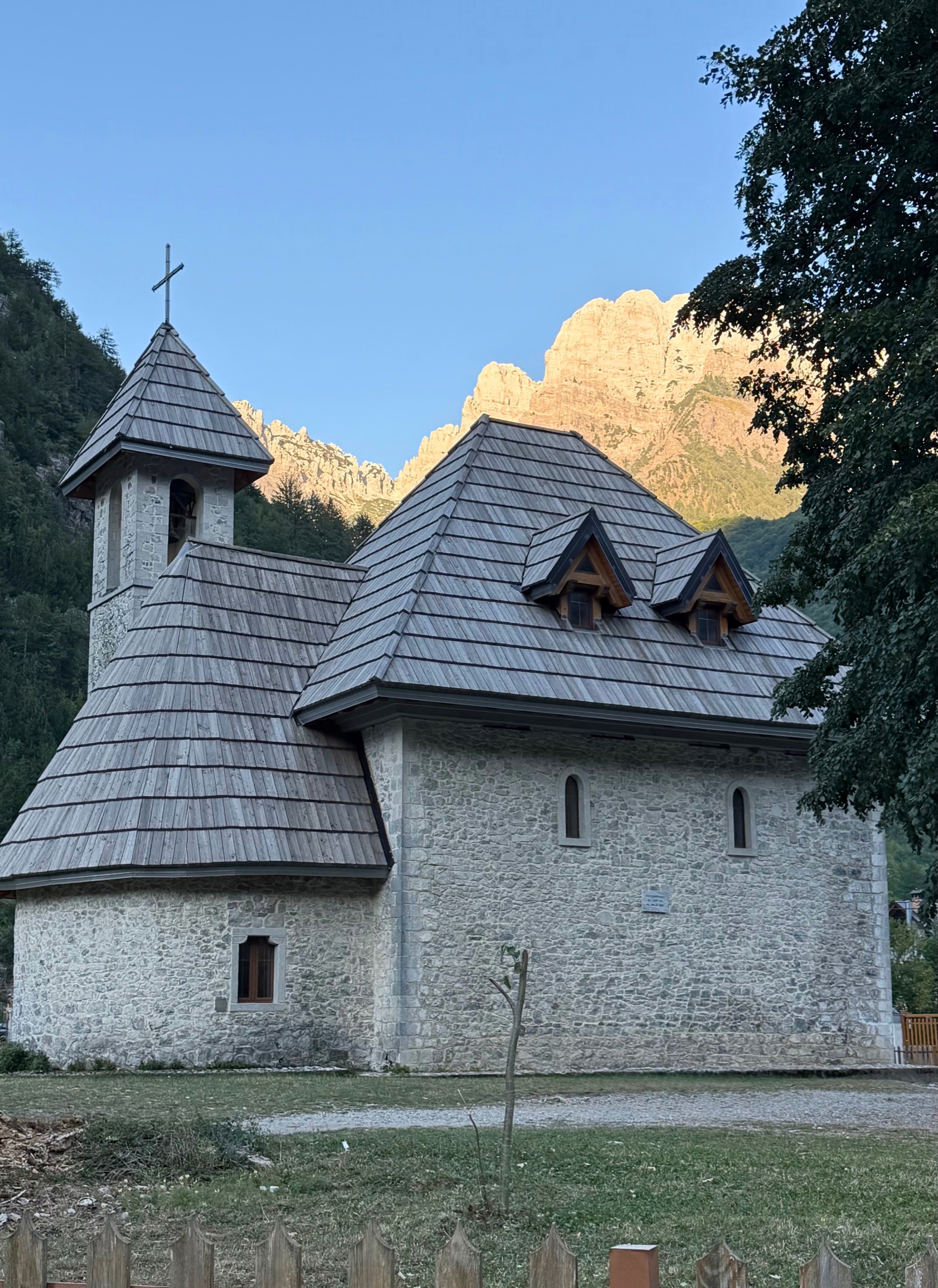 The Church of Theth with the last light catching the mountains above the village.
Theth is more than the finishing point of a well-known hike. The village sits inside what is now Albania’s largest national park and preserves one of northern Albania’s most recognizable collections of traditional mountain architecture. Stone houses are scattered across the valley rather than arranged into dense streets, farms remain woven into daily life, and livestock still occupies the same ground as guesthouses, visitors, and family homes.
Theth was declared a national park on its own in 1966. In January 2022, it was merged with the Valbona Valley National Park, established in 1996, and the Gashi River Nature Reserve to form the Alps of Albania National Park, protecting more than 80,000 hectares and making it Albania’s largest contiguous protected area.
Near the center of Theth stands the Church of Theth, built in 1892 and now the architectural symbol of the valley. Its importance reaches well beyond its appearance.
Northern Albania has long been the center of the country’s Roman Catholic population, and geography played a role in preserving distinct highland communities through centuries of Ottoman rule, although the relationship between religion, local autonomy, isolation, and Ottoman authority was more complex than a tidy story of communities retreating into the mountains.
The church later became part of another chapter in Albanian history. In 1917, Franciscan priest Shtjefën Gjeçovi established an Albanian-language school here, using the building as a place of education. When Albania’s communist government banned organized religion in 1967, the church in Theth survived physically, but worship ended, and the building spent the following decades as a local health and maternity clinic.
Some older residents of the valley were actually born inside the same stone walls where Mass is celebrated today.
After the collapse of communism, the church eventually returned to religious use and was rebuilt with support from the Theth diaspora, including families living in the United States. Today it remains an active Catholic parish and one of the clearest symbols of continuity in the valley.
We stayed almost directly across from it, which gave the history an immediacy that’s difficult to get from reading alone. At night, the church’s pale stone walls were lit beneath the dark mountains. A short distance away, life at our guesthouse carried on as it did every evening. A cow was milked by hand. Chickens wandered freely through the yard.
Grapes grew over the outdoor tables, plum trees supplied fruit used for homemade raki, and family members sat with us beneath the vines discussing village life, their Catholic faith, and the changes tourism is bringing to Theth.
Those changes are visible already: new guesthouses, cafes, roads, and construction throughout the valley. Tourism has created real economic opportunity in a place where geography once sharply limited it, and the families we met seemed aware of both sides of that equation. Visitors bring income and opportunity, but rapid development can also alter the character that makes the village distinctive. Theth is neither a museum nor an untouched mountain refuge.
It is a living community negotiating how to take part in a growing tourism economy while remaining recognizably its own.
🍽️ Local Flavor
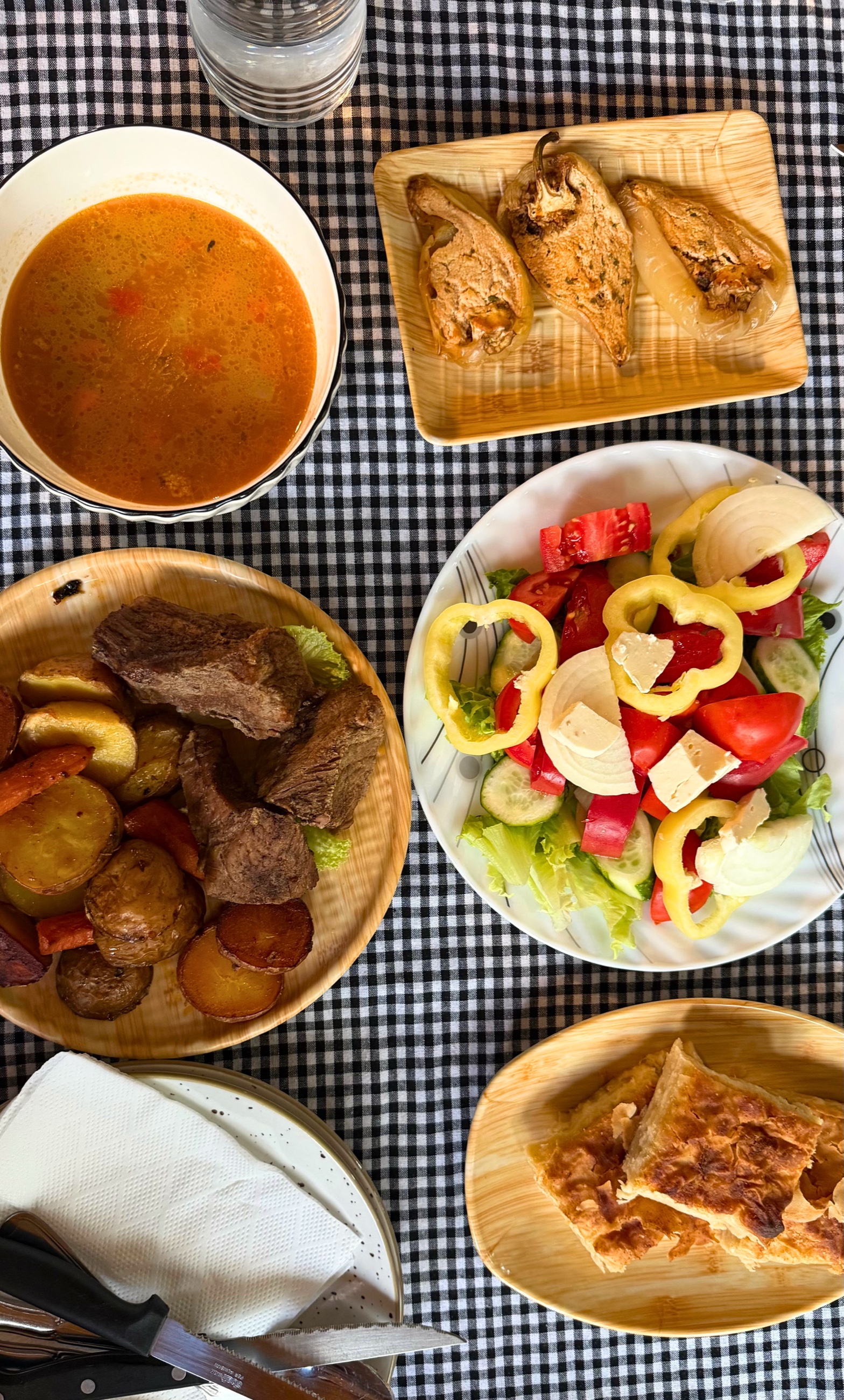 Our hearty Valbona guesthouse dinner in the mountains.
Food in the Albanian Alps is closely tied to the households producing it, and our meals over the weekend made that relationship unusually visible.
At our Valbona guesthouse, dinner was communal. Guests gathered at the same time and ate what had been prepared for the evening: slow-roasted beef with potatoes and carrots, stuffed peppers, vegetable soup, salad, and cheese burek. Breakfast followed the same pattern: bread, butter, jam, eggs, cheese, sausage, tomatoes, and cucumbers spread across the table. Much of it had traveled only a short distance, sometimes just a few steps from the table.
The experience became even more direct in Theth. Lokthi Guesthouse is a stone farmhouse surrounded by fruit trees, grapevines, garden plots, chickens, cats, and one cow milked twice daily. On Saturday evening we stood nearby and watched the eight o’clock milking. The next morning, that milk appeared at breakfast alongside fresh cheese, eggs from the chickens, local honey, fresh bread, tomatoes, and cucumbers from the garden. This was not a staged farm-to-table concept. It was simply how breakfast worked.
Saturday evening offered the restaurant version of mountain cooking. We walked along the river to La Montagne Blanche and shared grilled vegetables, a roasted vegetable and cheese dish with rustic bread, soup, and a board of pickled vegetables, cheeses, olives, and yogurt-based accompaniments.
Afterward we walked back through the village beneath the mountains, passing the illuminated church before returning to the guesthouse, where the farm quietly settled into night, waiting for the rooster’s crow the next morning.
The meals were plain, generous, and closely tied to place. In a mountain community this remote, that connection isn’t a culinary trend. It’s how food has long been produced and served there.
💰 Nomad Real Talk
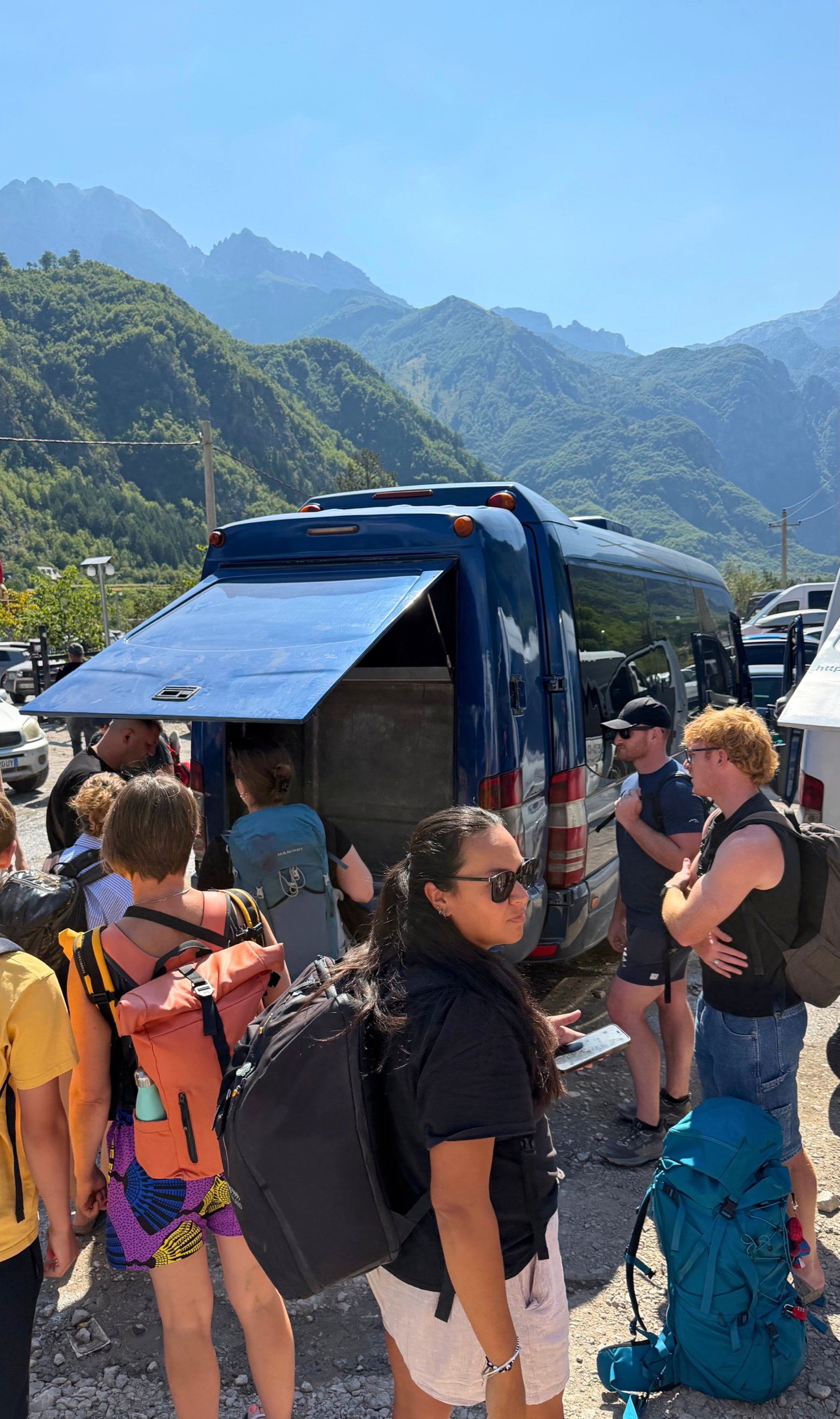 Loading up for the return trip from Theth, with packs and passengers gathering around the van back to Tirana.
This weekend was unusually good value by American standards, but it was still a deliberate splurge for us.
We travel slowly and carefully, and one benefit of long stays is that day-to-day living costs stay relatively controlled. That gives us room to spend more selectively on experiences that matter. The Valbona-to-Theth weekend was one of those.
From our 4:30 a.m. departure Friday through our return to Tirana on Sunday, the entire three-day trip cost €453.33 for three people, or approximately €151.11 per person.
| Category | Cost for 3 |
|---|---|
| Transportation | €185.70 |
| Guesthouses and included guesthouse meals | €188.94 |
| Other meals and drinks during the trip | €78.69 |
| Total | €453.33 |
Transportation covered the complete circuit: Tirana to Koman, the Komani Lake ferry, Fierzë to Valbona, and the return from Theth to Tirana. Our Valbona guesthouse bill included lodging for three, dinner, breakfast, and three packed lunches for the hike. The Theth costs covered our second guesthouse and Sunday breakfast, while the remaining spending covered restaurant meals, drinks, and three well-earned beers near the end of the hike.
For roughly €151 per person, we got two nights in mountain guesthouses, nearly all of our meals, several ground transfers, a two-and-a-half-hour ferry crossing through Komani Lake, and a full day on one of the signature routes of the Albanian Alps. In American terms, the value is hard to argue with. Within our own travel budget, though, this amount was still meaningful enough to plan around.
We considered the cost, booked carefully, and treated the weekend as a special excursion rather than routine weekly spending.
The logistics were more complicated than the price. This three-day trip required more advance coordination than any other excursion we’ve taken this season. We booked four transportation segments, two guesthouses, and the return bus before leaving Tirana, saved pickup locations offline, carried enough cash for places that didn’t accept cards, downloaded the hiking route, and built generous buffers around every connection.
That preparation let the trip itself feel relaxed even when the system around us didn’t look especially formal. A pickup point might be a petrol station. A transfer could mean walking through a mountain tunnel to find the right ferry. A van might be parked somewhere inside a crowded lot full of nearly identical vans. Drivers changed along the way, and roadside stops happened beside a cafe or shop rather than anything resembling a terminal.
The final approach to a guesthouse could be just as informal, a driver pointing down a road, a gravel track, or something that looked suspiciously like a dry riverbed and indicating the guesthouse was somewhere beyond it. That’s where the advance reservation earns its keep. You know there’s a room waiting even when the final hundred meters doesn’t look obvious.
The return trip added another layer. The mountain road out of Theth is extraordinarily narrow, winding across steep slopes where two vehicles often cannot comfortably pass. Drivers slow before blind corners, negotiate space with oncoming traffic, and continue through gaps that look impossibly small from the passenger seat. We changed vans in Shkodër and continued toward Tirana before being dropped beside a neighborhood street rather than inside a formal station.
Fifteen minutes later, we were walking back into our apartment.
The system may look loose around the edges, but with the important pieces reserved in advance, it carried us exactly where we needed to go.
🏠 Behind the Nomad Curtain
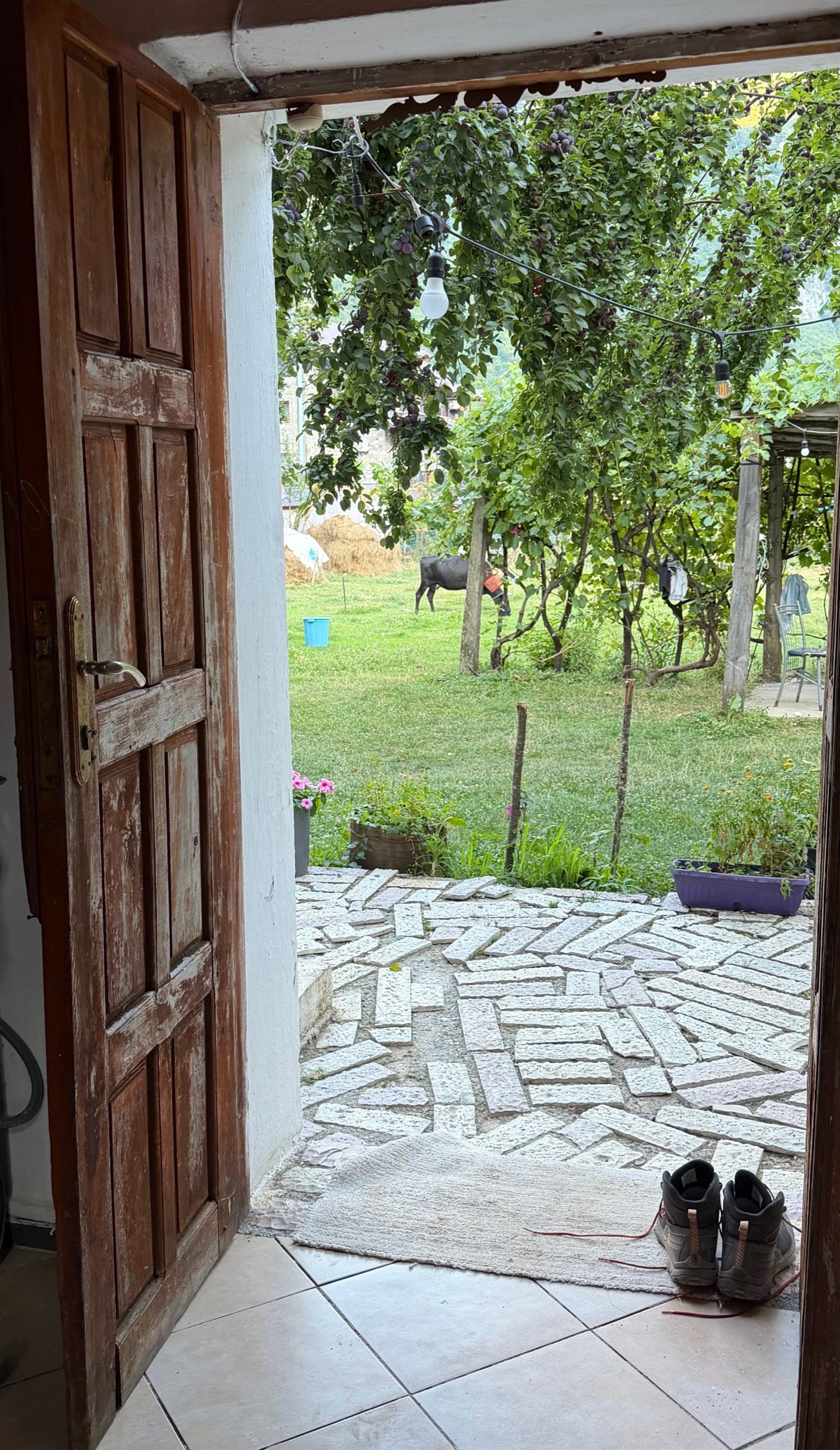 Looking out from our rustic Theth guesthouse onto the family farm.
We traveled light for a trip built around a single-day mountain crossing. Our main luggage stayed at the apartment in Tirana while each of us carried one small pack with two nights of essentials, trail food, water, rain protection, a change of clothes, and little else. That mattered on the climb, since every extra item eventually has to cross the pass too.
This is one of the less obvious benefits of a longer home base. We didn’t need to move our lives into the mountains for three days. That evening, back in Tirana, we walked a few blocks to a neighborhood restaurant for dinner: dolma, tave kosi (Albania’s national dish, lamb baked in yogurt), a vegetable risotto, and a half-liter of house wine. It felt like the right close to the weekend.
By Monday we were back in our usual routine: work, the gym, a morning at Mimosa Bar & Cocktails for petulla me malte (Albanian fried dough served with jam and cheese), and a full circuit around the Artificial Lake with a required stop at Sorrento Naturale for Italian gelato.
The adventure felt bigger set against a month of ordinary Tirana days than it would have as a stop on a two-week trip.
📸 Photo Story
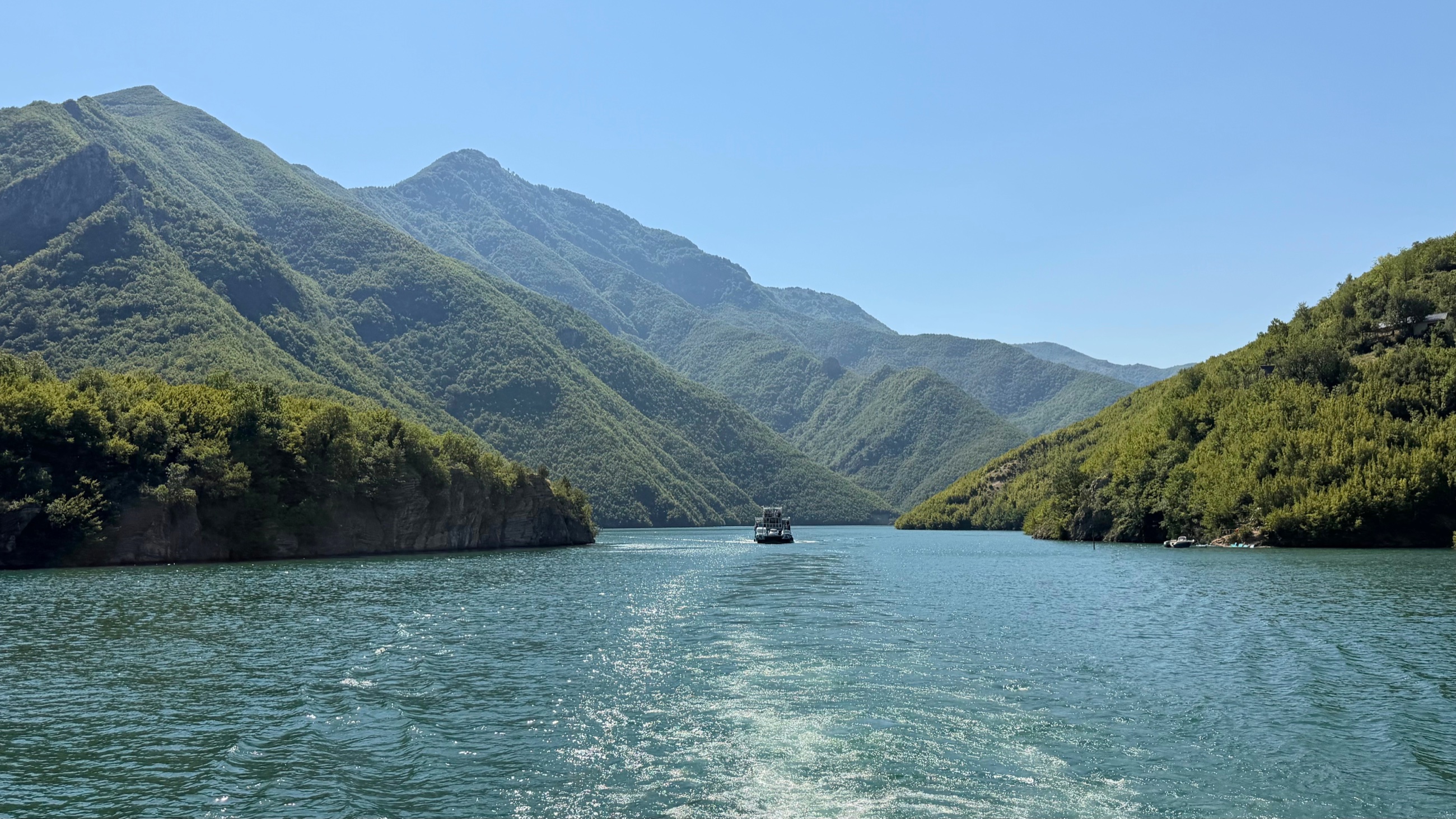 Winding through the mountain channels of Komani Lake on the journey north.
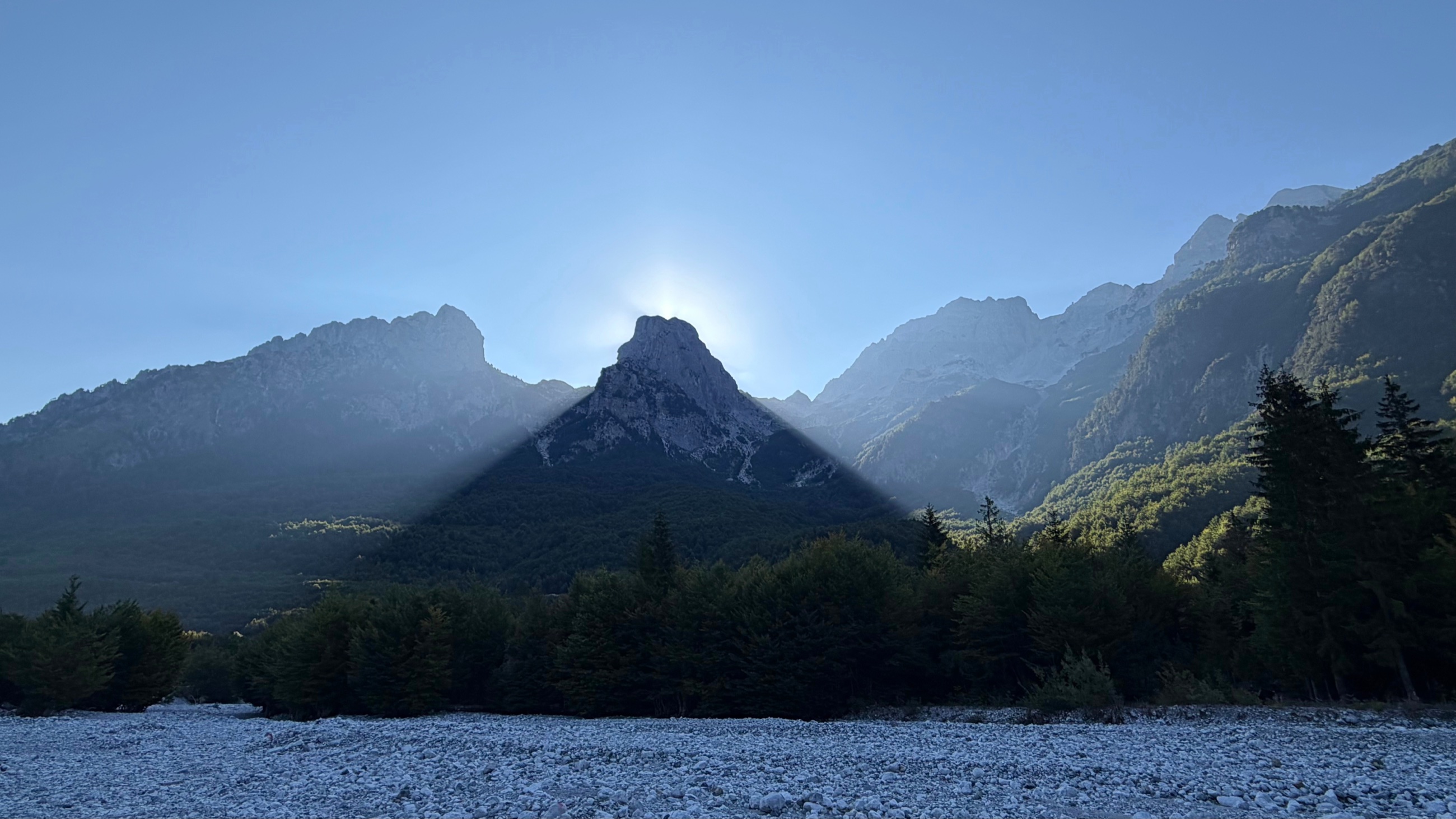 Morning light spilling across the mountains above the Valbona Valley riverbed.
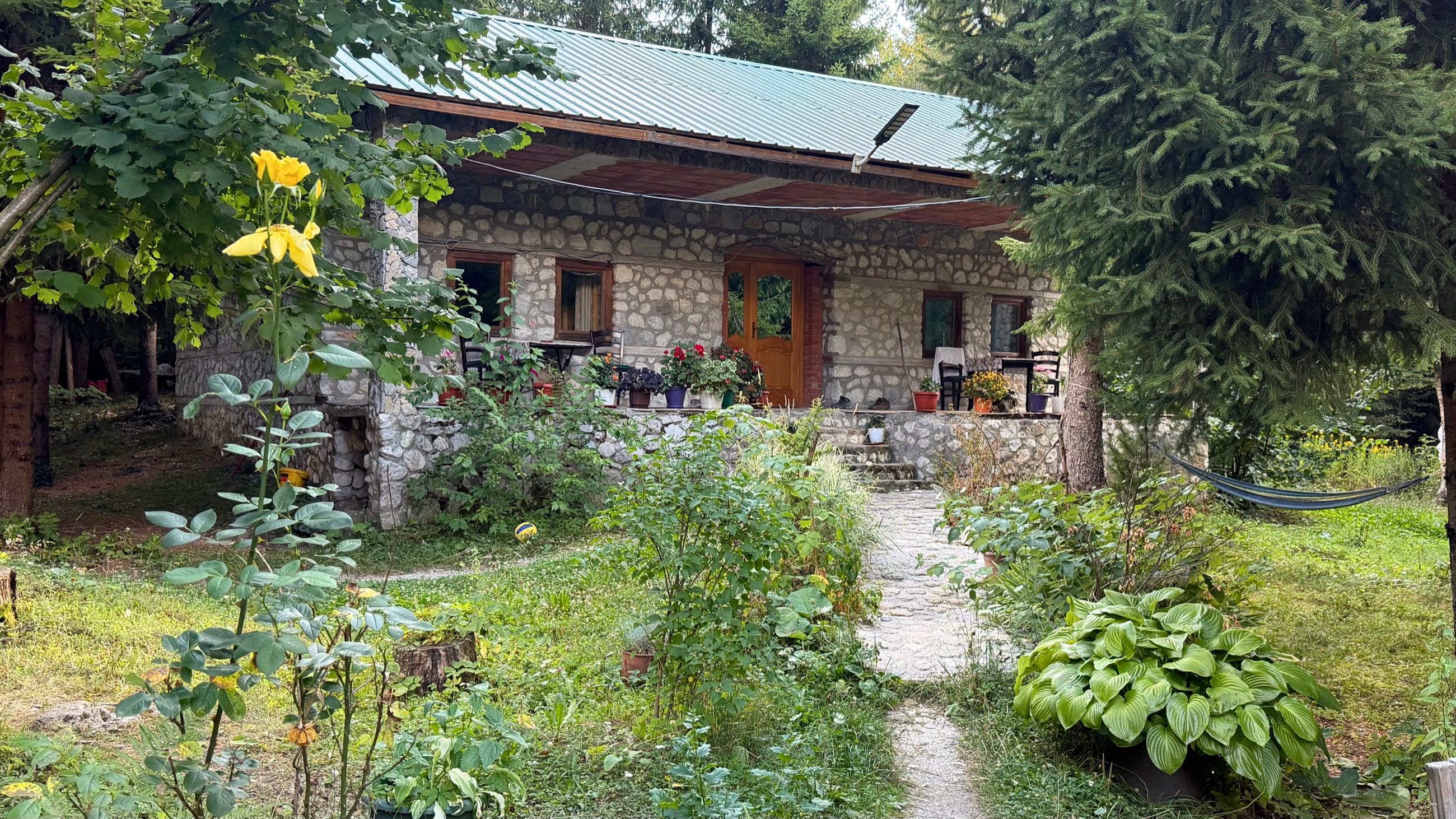 Our family-run guesthouse in Valbona, surrounded by gardens and forest.
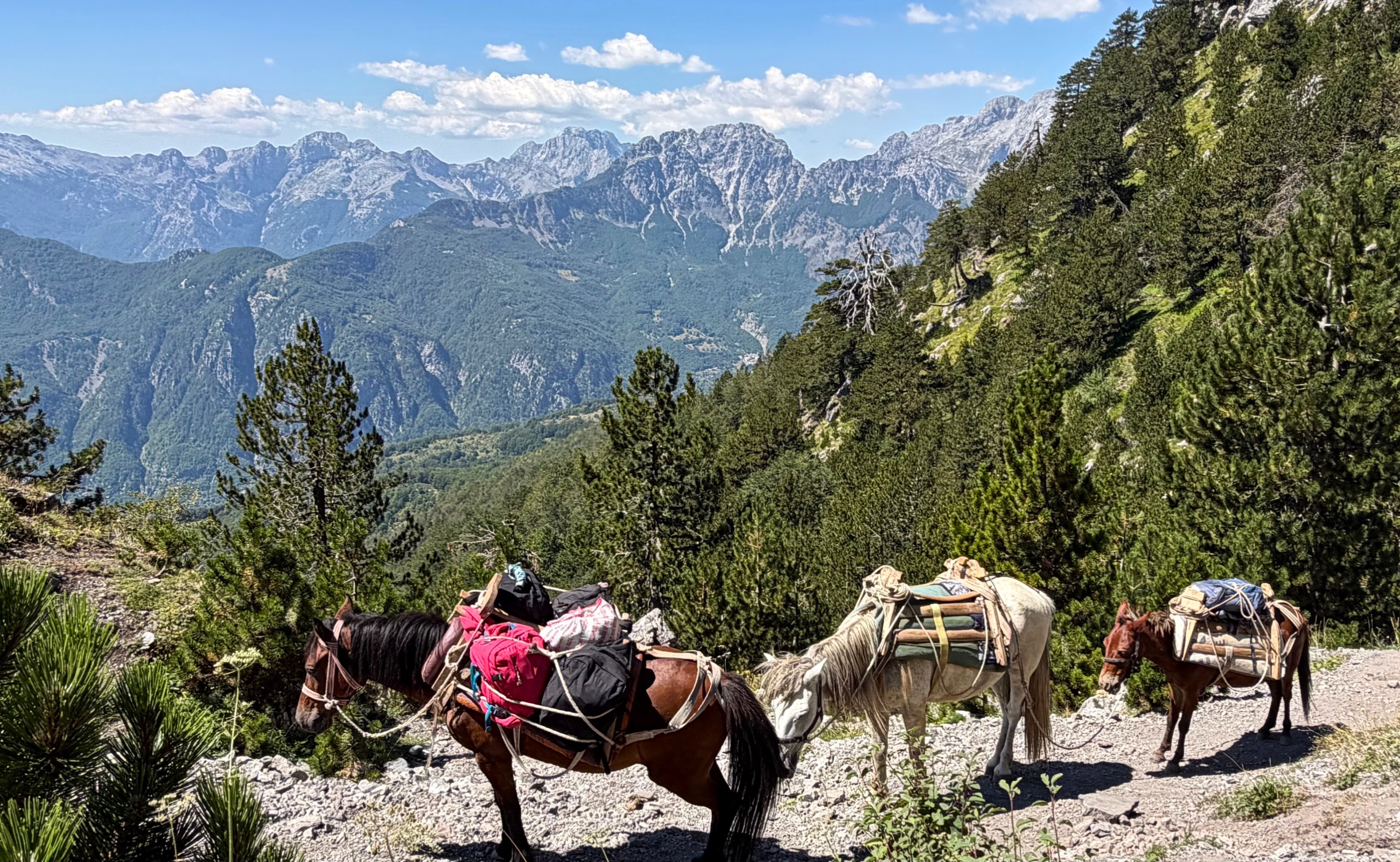 Pack mules carrying supplies along the mountain trail between Valbona and Theth.
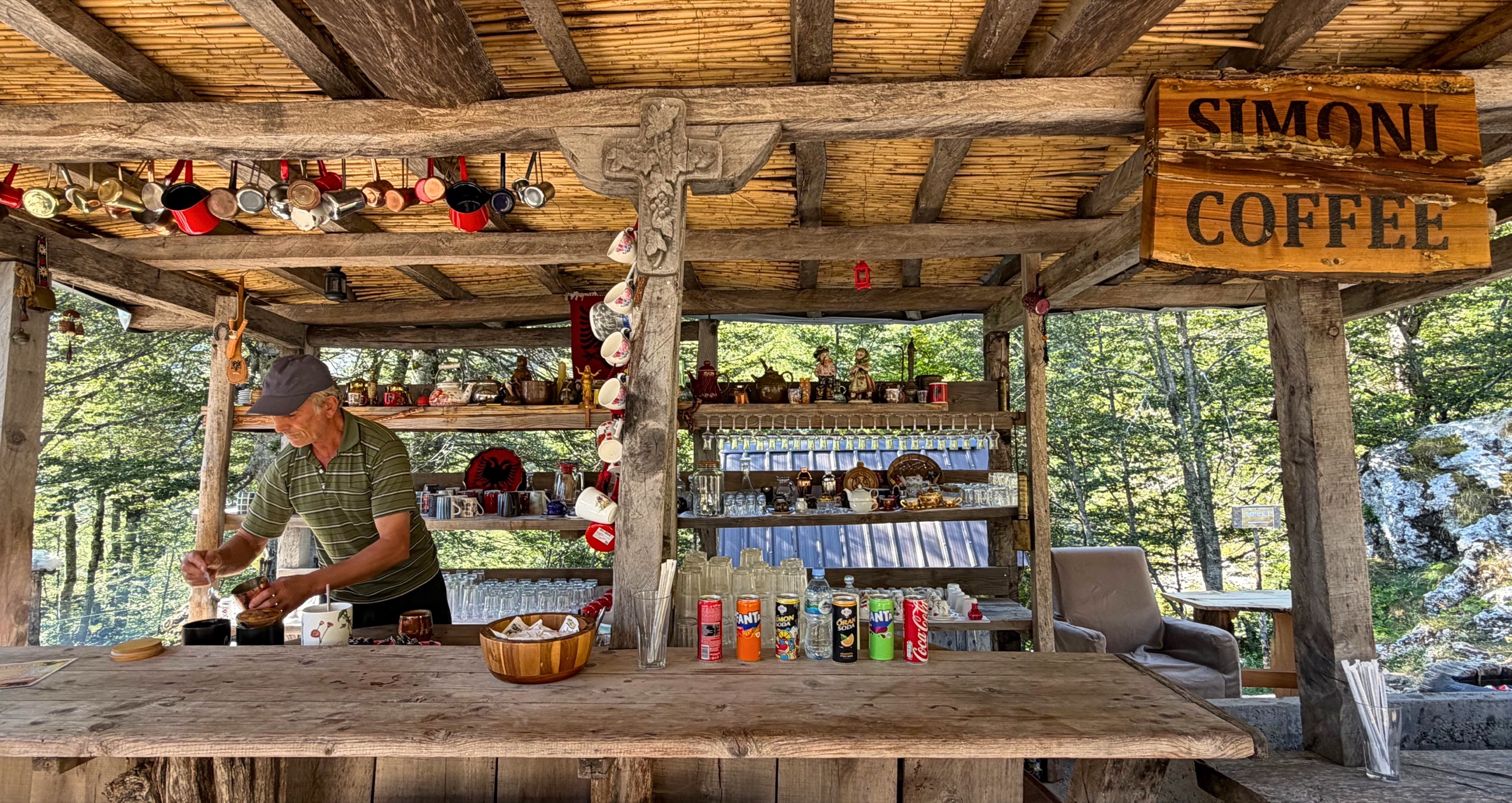 An early trail-side stop at Simoni Coffee during the climb toward Valbona Pass.
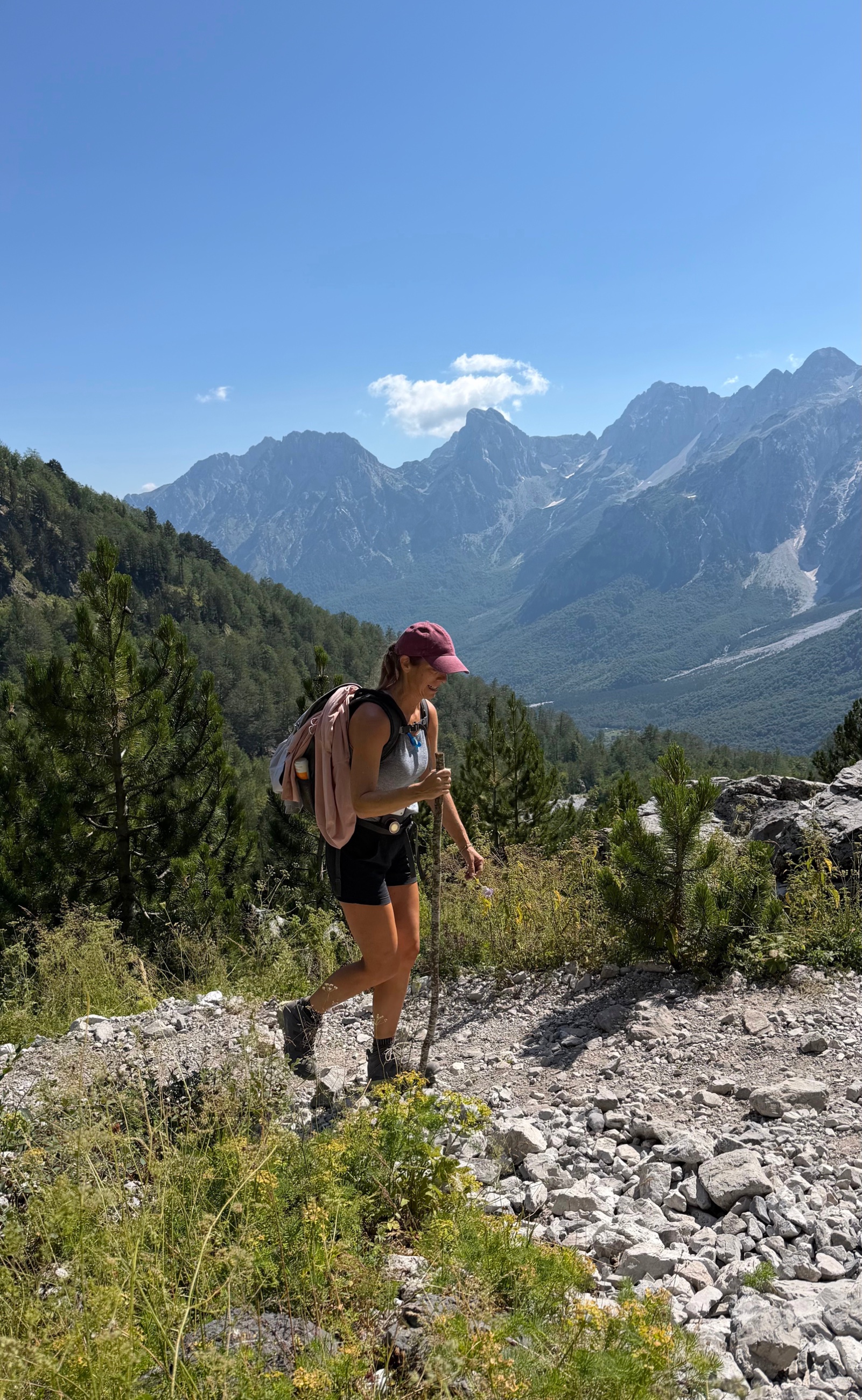 Hiking through the rocky upper stretches of the trail toward Valbona Pass.
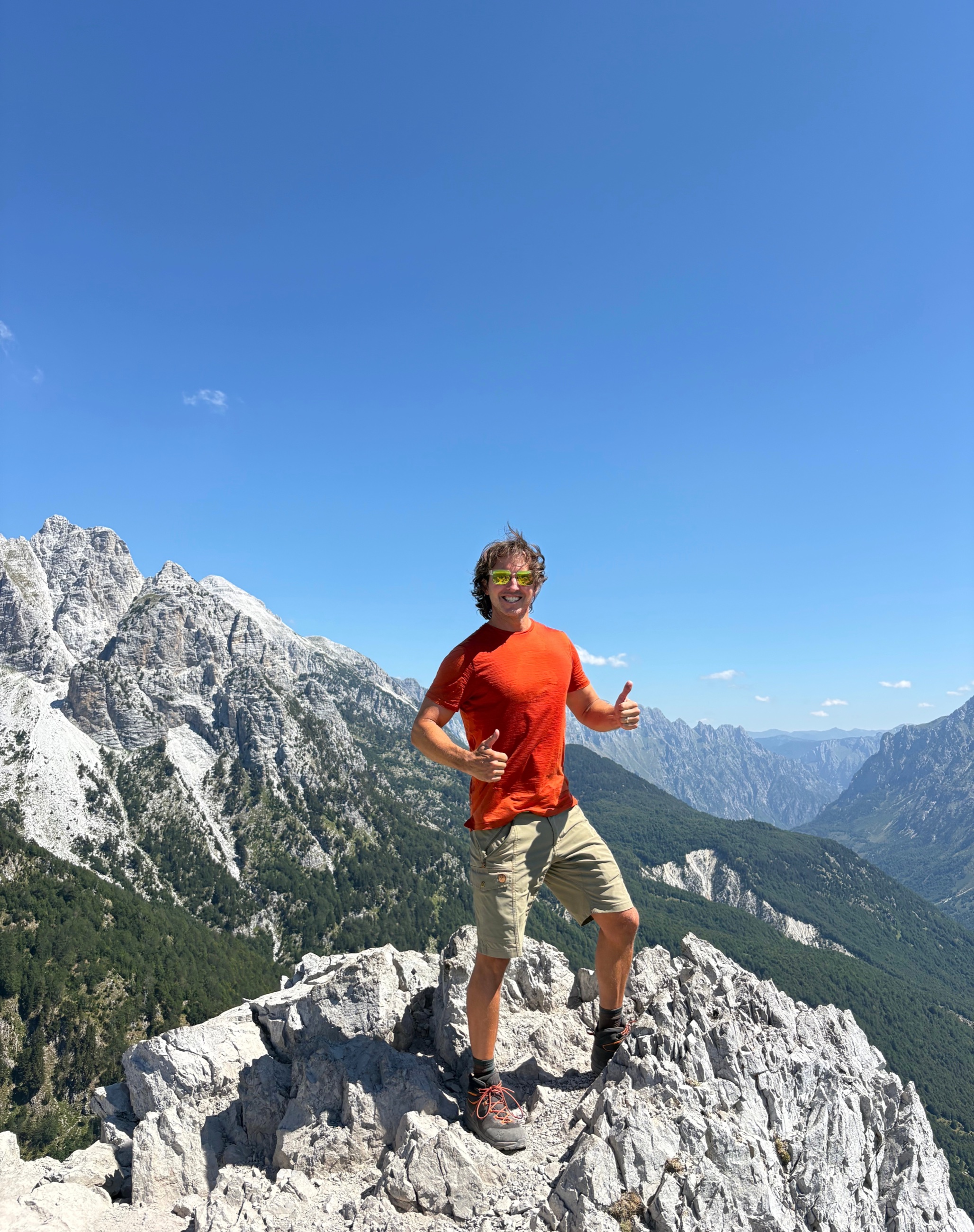 High above the valley at the peak above the saddle between Valbona and Theth.
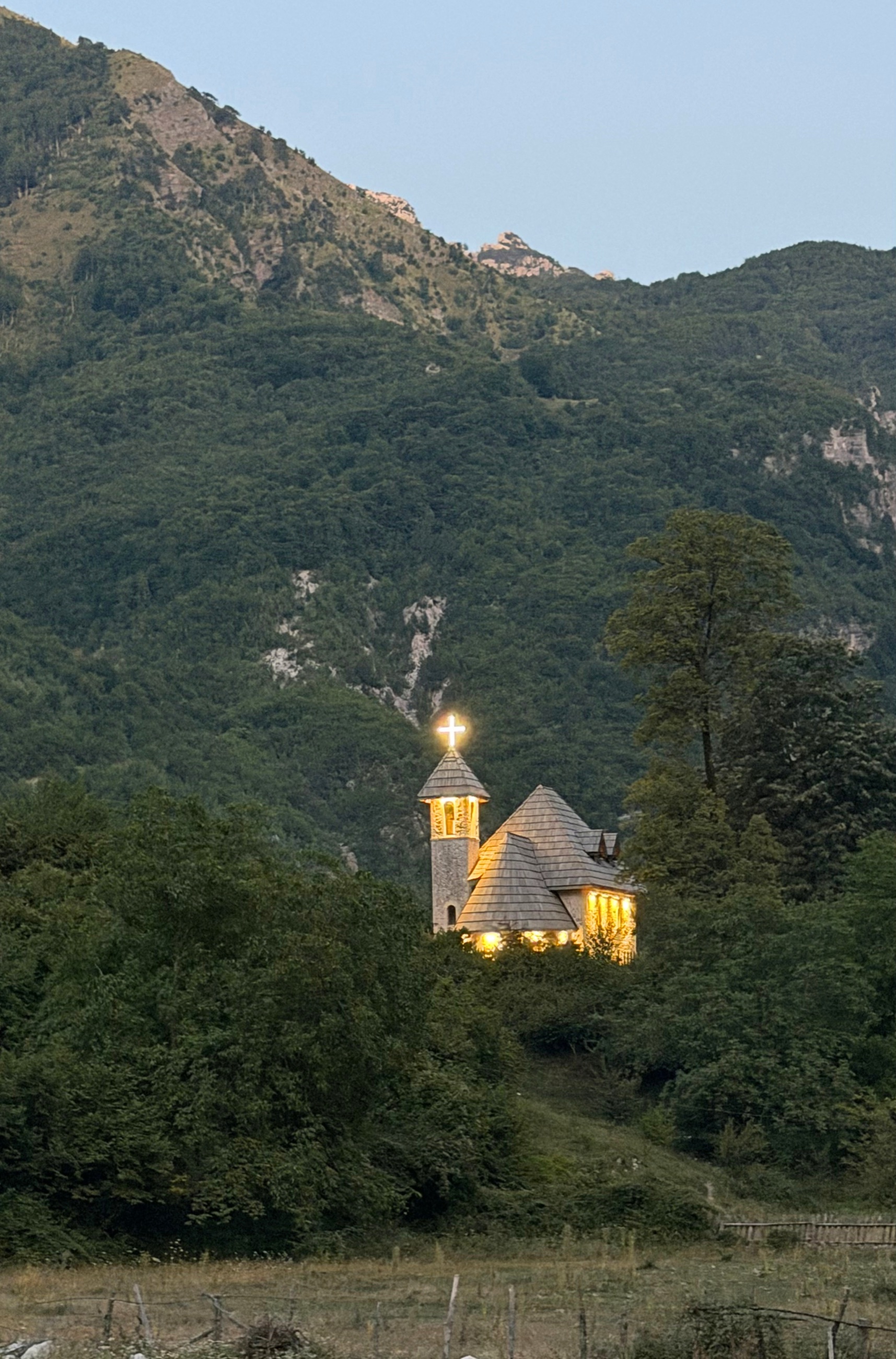 The Church of Theth illuminated beneath the mountains after the day’s crossing.
🎯 Next Week Preview
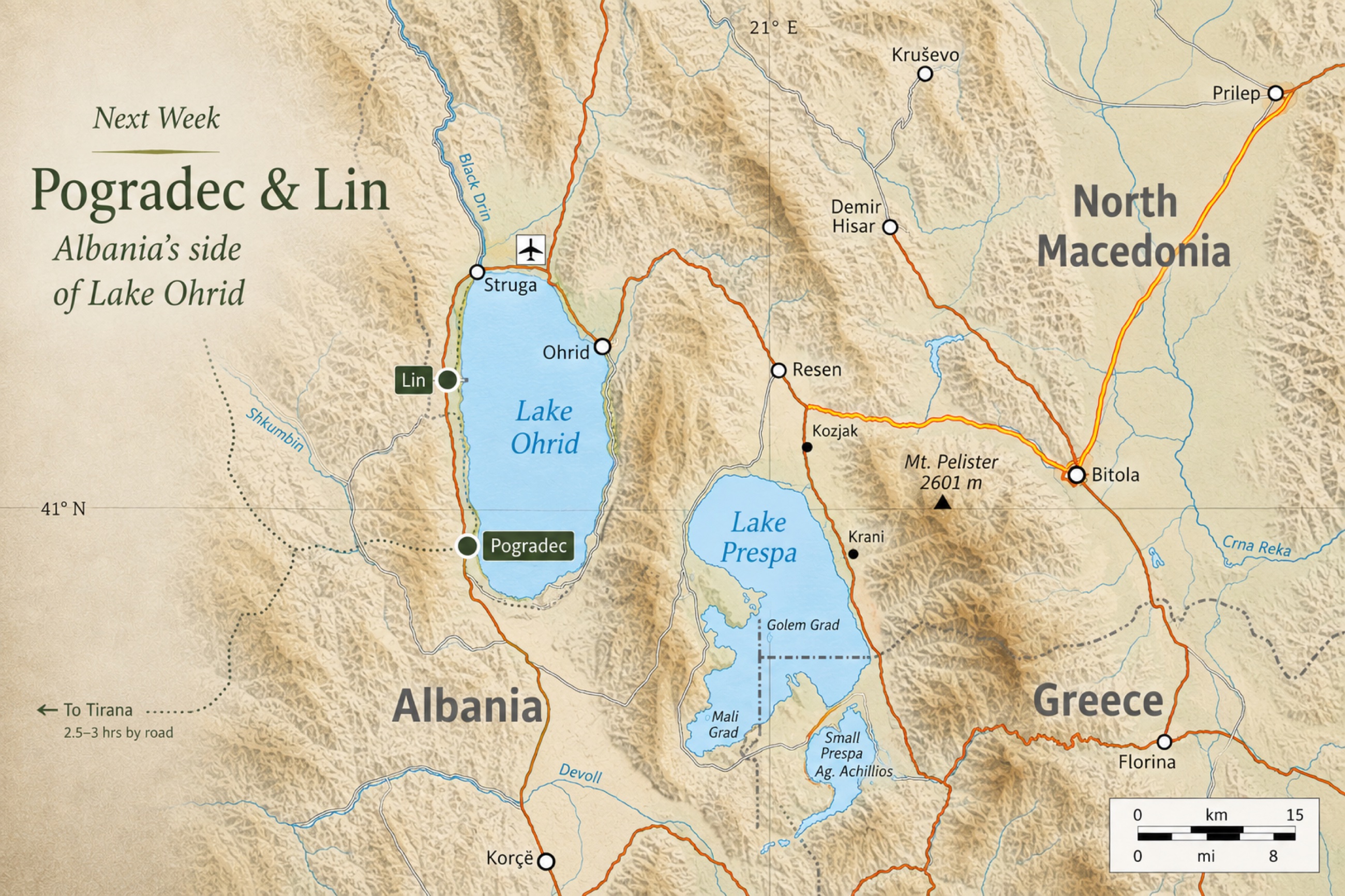 Pogradec & Lin: Albania’s side of Lake Ohrid.
Our next excursion will be a day trip east toward Pogradec and Lin on the Albanian shore of Lake Ohrid, a stretch we’ve so far only seen from the North Macedonian side. Lin’s claim to fame is a hilltop basilica with sixth-century mosaics still visible in the floor, and Pogradec is known for koran, a trout found nowhere else in the world. Whether we make it up to the ruined castle above town is still an open question.
For the moment, a few days back in Tirana’s routine sound pretty good.
💌 Personal Connection
Crossing from Valbona to Theth was one of the experiences we’d been looking forward to in Albania, and the weekend delivered: an extraordinary approach through Komani Lake, two mountain villages, family guesthouses, food produced on the properties where we stayed, a demanding and memorable day on the trail, and some of the finest mountain scenery we’ve encountered on this trip.
There’s also something satisfying about reaching a destination entirely under your own power. On Saturday morning, Valbona was behind us and Theth was somewhere beyond the mountains. For us, the way there was on foot, over the pass.
Hours later, after climbing more than 3,100 feet, eating lunch high above the valleys, working our way down the opposite slope, and cooling off in an icy mountain stream, we walked into Theth. That alone would have made the weekend memorable. Having our daughter there made it better. This was a family weekend built around meals and conversation, but also something more concrete: we crossed a mountain range together, on foot, and that created a different kind of memory.
Years from now, some of the details will probably blur. We may forget which van we climbed into at Fierzë, exactly how long one transfer took, or exactly what we ate at dinner. We’ll likely remember the pass, the three of us sitting above the valleys with our sandwiches, the long descent, the pleasure of cold water, the first beer afterward, and the feeling late Saturday afternoon of walking into Theth knowing exactly how we had gotten there.
On foot, across the Albanian Alps.
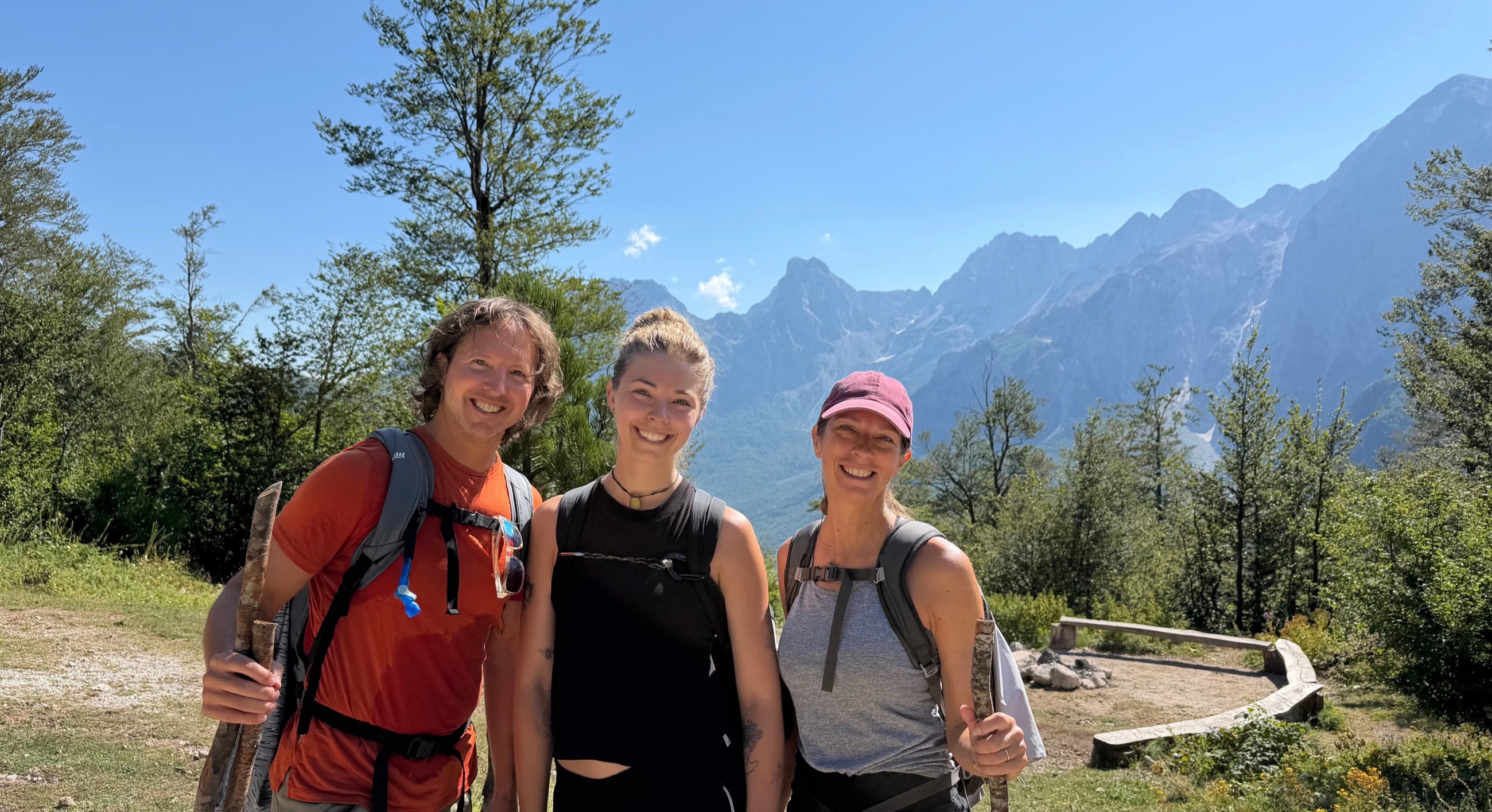 Together on the trail in the Albanian Alps, crossing from Valbona to Theth.
Until next week,
S&S
Some Great Place · Living Local in a Global World · somegreatplace.com