🌍 A Year of Living Local
A year ago, Living Local Weekly did not exist. It was an idea taking shape on a trail in the foothills outside Reno, Nevada, while we were downsizing, selling furniture, closing out jobs, and trying to determine whether a nomadic life organized around slow travel was something we could actually build.
The first issue went out before we had a departure date. This week marks our fifty-second consecutive issue, which means we have now published every week for a full year.
During that time, we have written from a mountain town in the American West and from cities across three continents. We have followed Tenerife’s volcanic coastline, entered the walled medina of Marrakesh, walked the Algarve cliffs above Lagos, traced Lisbon’s hills from neighborhood markets to the Tagus, listened to the call to prayer over Istanbul, and lived beside a North Macedonian lake older than most European capitals. We have continued along the Dalmatian and southern Adriatic coasts, from a month in Croatia to two months among the mountains and beaches of Montenegro. We are now farther south in Albania, writing from an apartment near Tirana’s central square, around which much of the country’s modern history has been arranged.
None of this was guaranteed when we began. We could plan the itinerary, book flights, calculate visa days, reserve apartments, and build a budget, but none of that promised health, safety, meaningful encounters, or that the year would unfold as expected. Planning did not buy certainty. It gave us enough structure to remain present for what the year actually became.
That same principle shaped another milestone this week: for the past year, our newsletter archive has lived on infrastructure designed primarily for sending email. The platform gave us a place to begin, but it became an increasingly expensive and restrictive home for a growing body of writing and photography.
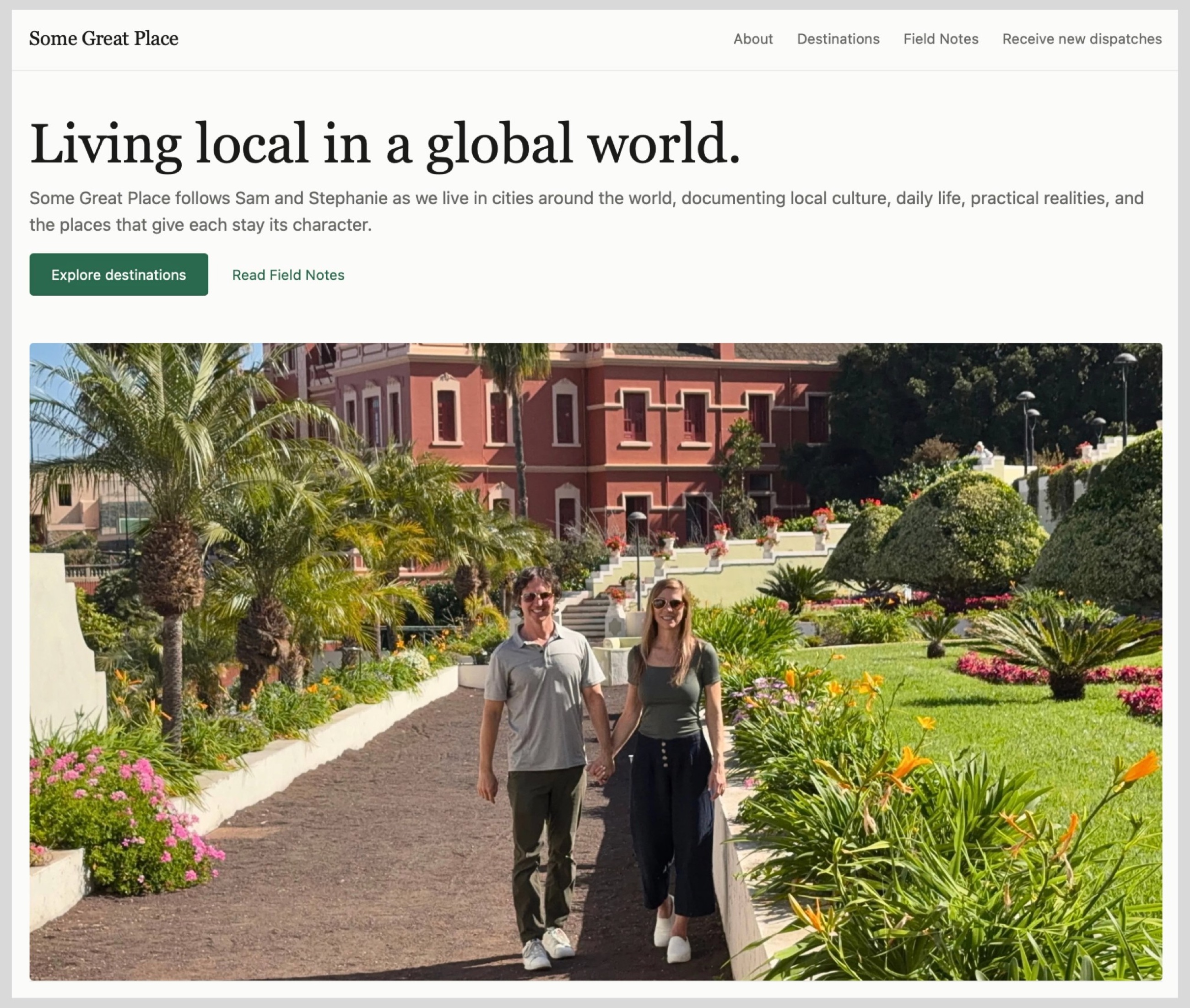 The rebuilt Some Great Place website now brings one year of writing and photography into one permanent archive.
Starting this week, SomeGreatPlace.com is the permanent home of every dispatch we have published, rebuilt from scratch with AI assistance rather than continuing to rent space on a hosted platform.
The address is the same. What sits behind it has changed completely: the full archive is now organized by country and city. Our earlier experiences from Reno and the American West have a home in Field Notes, while every international dispatch can be found through the destinations where we have lived since leaving the United States.
Fifty-two weeks into this project, we are still living local in a global world, and we now have a proper place to document it.
📍 This Week in Tirana
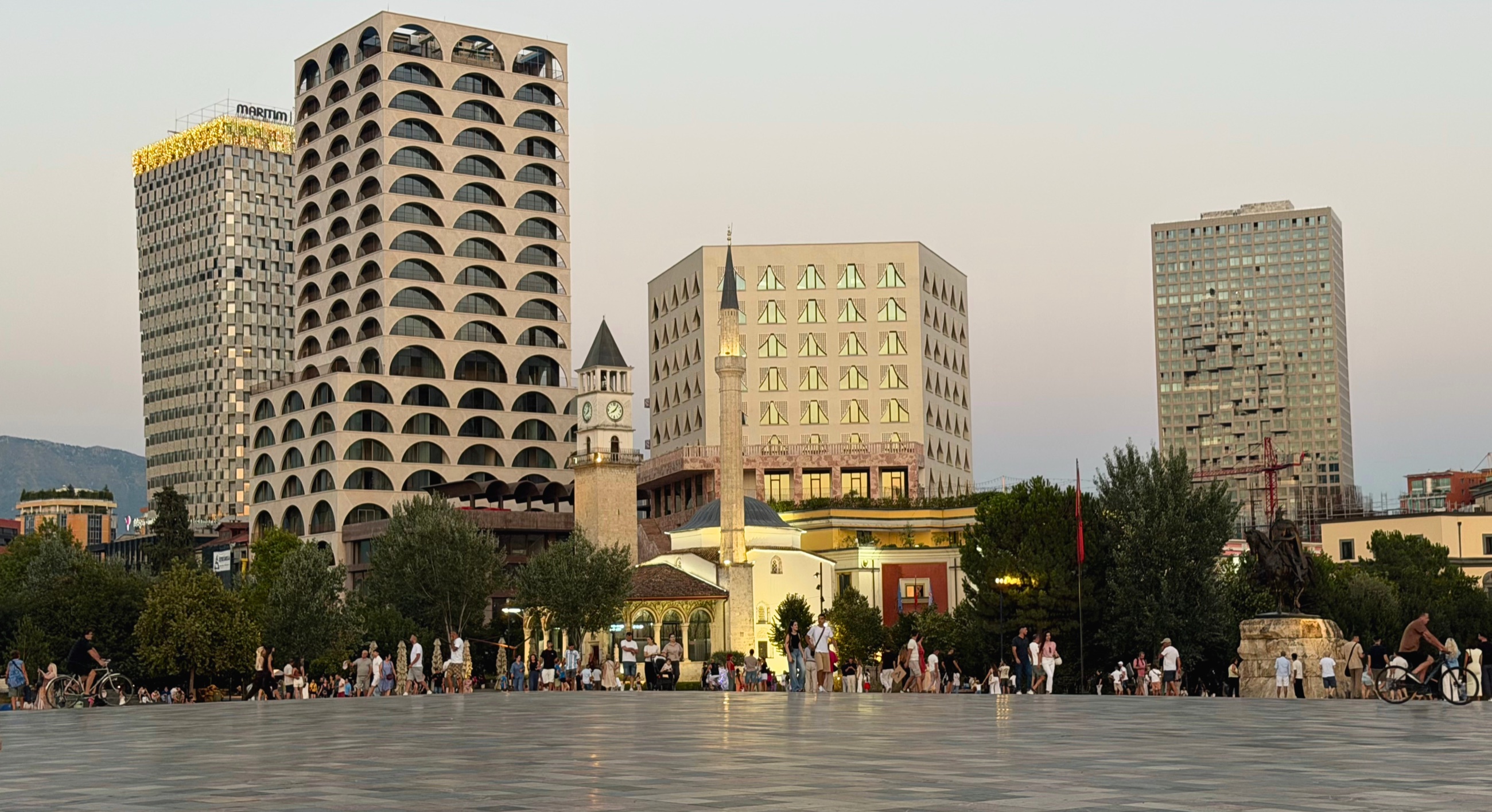 Skanderbeg Square brings together Tirana’s Ottoman landmarks, twentieth-century civic architecture, contemporary towers, and daily public life.
Our first full week in Tirana revealed why this city of roughly 600,000 works so well as a place to live. The necessities came first. We learned the surrounding grocery options, tested the local buses, established our working routines, found a gym five minutes from the apartment, and began recognizing the streets connecting our apartment to Skanderbeg Square, the New Bazaar, Blloku, and the southern parks.
Tirana is compact enough to understand on foot, but large enough that each part of the city carries a different purpose, and nowhere shows that more plainly than Skanderbeg Square, its civic and geographic anchor. The square has repeatedly been rebuilt to reflect the government, ideology, and national story of its time. Under Ottoman rule it was the Old Bazaar, a market district built around a mosque, a bakery, and a hammam that the city’s founder, the Ottoman governor Sulejman Bargjini, put up in 1614. Under King Zog in the 1920s it became a roundabout with fountains, still holding an older Orthodox cathedral alongside the young administrative buildings of a state trying to look modern. By the late 1930s, Italian planners had added the monumental ministries and broad boulevards that still frame the square today.
Communism erased more than it added. The Old Bazaar came down for the Palace of Culture. The original Orthodox cathedral, standing since 1865, was closed for worship in 1967 and later demolished to make room for the Tirana International Hotel. The city’s oldest mosque, built alongside the square by Bargjini himself, was razed in the same era to clear space for a Communist monument. A statue of Stalin held the square’s center until 1968, when it was replaced by the equestrian statue of Skanderbeg that stands there today, timed to the five-hundredth anniversary of the national hero’s death. A separate statue of Enver Hoxha stood between the museum and the national bank until 1991, when protestors pulled it down as communism collapsed.
What has gone up since 1991 says as much as what was torn down.
The Resurrection of Christ Orthodox Cathedral, one of the largest Orthodox churches in the Balkans, was consecrated in 2012 after eight years of construction, a deliberate rebuilding of what the state had destroyed on nearly the same ground. St. Paul’s Catholic Cathedral followed a similar arc, built between 1994 and 2002 on land the Albanian government donated to the Catholic Church during Pope John Paul II’s 1993 visit. The Namazgah Mosque, also known as the Great Mosque of Tirana and the single largest mosque in the Balkan Peninsula outside the European part of Turkey, opened more recently still, beside the Parliament building a short walk from the square. Four decades of enforced state atheism attempted to remove organized religion from the capital. What has been rebuilt around Skanderbeg Square tells a different story: Islamic, Orthodox, and Catholic institutions now stand within the same civic center as Italian-designed ministries, socialist monuments, and the commercial city that followed them.
The square’s current form dates only to 2017, when a Belgian architecture firm paved the plaza in stone gathered from every region of Albania and closed it to traffic entirely, a project that later won the European Prize for Urban Public Space. Today it brings together the National History Museum, the 1822 Clock Tower, those government ministries, hotels, and the avenues extending into the rest of the capital.
From there, the city changes quickly. East of the square, the New Bazaar combines produce stalls, meat and fish vendors, household shops, cafés, and restaurants around a renovated public market. We picked up fresh figs and honey from one of the stalls, and found both delicious. West of the square, along Murat Toptani Street, the old Byzantine and Ottoman walls of Tirana Castle have been folded into a small artisan bazaar; we left with a small, hand-crafted olive wood vase. A short walk farther east, Tanner’s Bridge preserves another fragment of Ottoman Tirana, its eighteenth-century stone arches now sitting below the level of the surrounding streets. To the south, Rinia Park leads toward the Pyramid, Blloku, and the long approach to the Grand Park and Artificial Lake. North of the square, the city becomes more residential and commercially practical, with supermarkets, bakeries, pharmacies, gyms, and neighborhood cafés serving the people who live nearby.
This balance has been important for us. Our apartment sits on the northern edge of the historic center, close to the main pedestrian sights and several useful bus connections. Nearly everything required for daily life is within a short walk. When we want a longer outing, the city extends naturally toward Blloku, the lake, or neighborhoods beyond the immediate center.
Tirana’s extensive tree cover also makes a material difference in August. The summer heat remains intense, but many central streets are shaded by mature trees. Public parks, landscaped medians, café terraces, and the green corridor around the lake soften what might otherwise feel like a hard, overheated capital.
The city also appears comfortable with contrast. Pastel apartment façades stand beside unfinished concrete. Ottoman landmarks share the center with Italian-planned boulevards, communist monuments, contemporary towers, and the rebuilt Orthodox and Catholic cathedrals and mosque nearby. The Pyramid of Tirana, built in 1988 as a museum honoring communist dictator Enver Hoxha, has been transformed into a public structure that people can now climb, cross, and occupy.
From the top, Tirana spreads across a broad valley surrounded by mountains. At street level, it is denser, warmer, and more animated, and its social character becomes clearest in its cafés.
Tirana has the most extensive coffee culture we have encountered anywhere during this journey, and the numbers back up the impression. In 2016, Albania recorded 654 café-bars per 100,000 residents, a world record at the time that edged out Spain’s previous mark of 592. More recent counts have dropped some since, but the country remains among the highest in the world, and it shows: there is at least one café on nearly every block, and often several. Some belong to large Albanian chains such as Mulliri i Vjetër, Sophie, and Mon Chéri. Others are small neighborhood bars, Italian-style coffee counters, garden cafés, or more specialized shops serving carefully prepared espresso.
Most remain occupied throughout the day. Coffee here is seldom treated as a product to collect and carry elsewhere. It grants temporary possession of a table. A small espresso or macchiato may be accompanied by a glass of water, free Wi-Fi, and no expectation that the customer leave quickly, a custom found throughout the Balkans. Albanians sit, talk, watch the street, conduct business, and return later with a different group. The cost helps preserve the custom. A macchiato generally runs around €1.50 to €1.80 in the city center, while a cappuccino or double espresso may cost a little more than €2. Neighborhood bars can be cheaper, and specialized cafés somewhat higher, but the differences are modest enough that coffee remains part of daily life rather than a discretionary luxury.
In the cooler morning and evening hours, the tables fill and the streets become more active. After sunset, café culture blends into the xhiro, the evening ritual we described from Shkodër last week. The same table might hold coffee in the morning, beer in the afternoon, and cocktails at night.
There is very little separation between the café and the city around it, which may be one reason Tirana has felt so accessible. Public life is easy to observe because so much of it takes place outside.
A week ago, we were unpacking bags and learning where to buy groceries. This week, we began seeing how the city uses its time.
🎨 Cultural Deep Dive
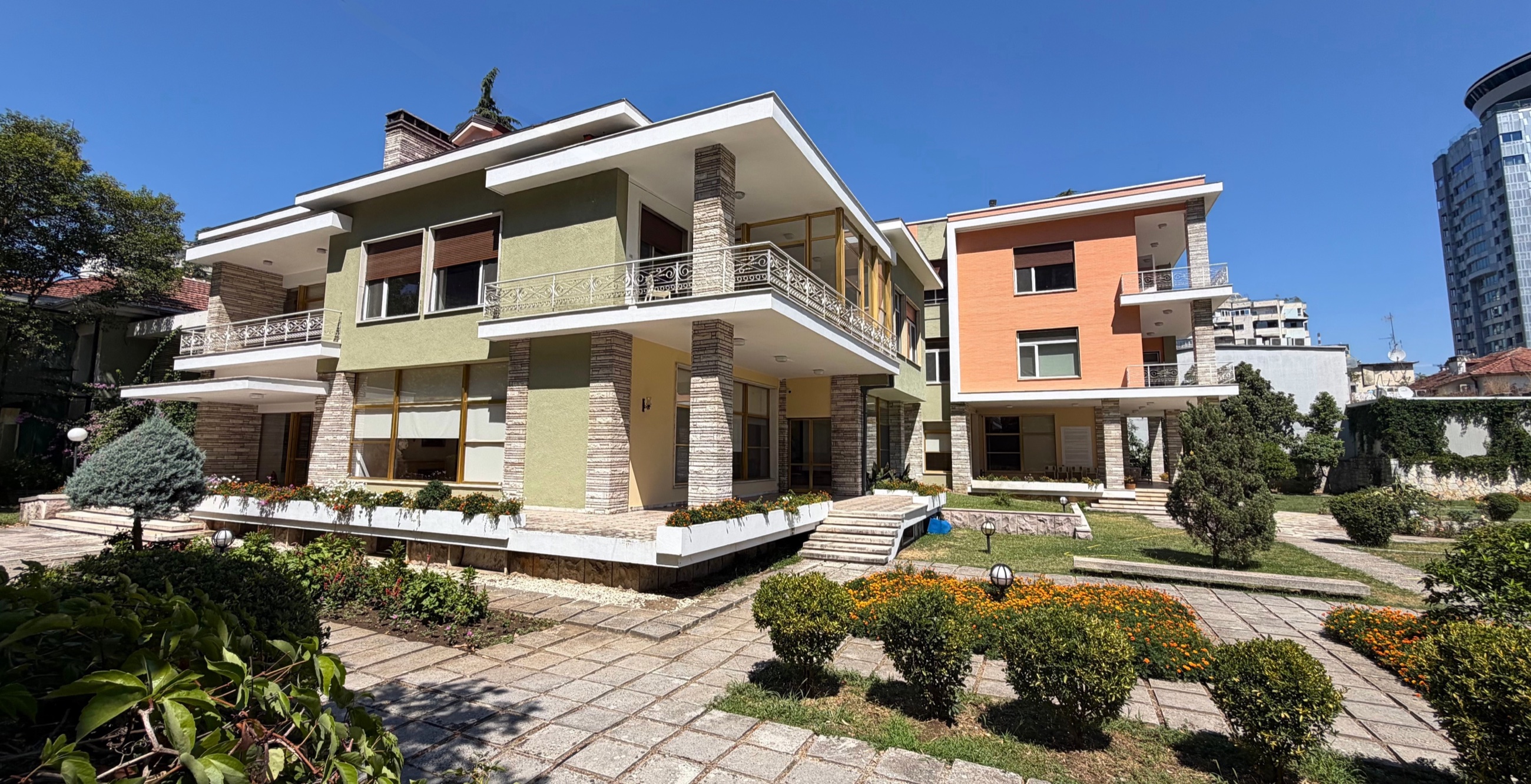 Enver Hoxha’s former residence, now Vila 31 x Art Explora, remains in Blloku amid the commercial and social life that replaced the district’s former isolation.
Few outside influences have shaped modern Tirana as visibly as Italy. When Tirana became Albania’s permanent capital in 1925, it was still largely an Ottoman market town. King Zog I looked across the Adriatic for investment, political support, and architectural expertise as the young Albanian state attempted to build a modern capital.
The resulting relationship with Benito Mussolini’s Italy was unequal and increasingly dangerous. Italy subsidized the Albanian government, expanded its economic influence, and treated the country as part of its wider Adriatic ambitions. Italian architects were sent to redesign the capital, creating the monumental boulevards and government buildings that still define its central axis.
The 1939 annexation of Albania by Italy’s totalitarian dictatorship exposed the ultimate cost of their dependency, yet the Italian footprint endured long after the regime collapsed. Tirana’s broad central avenues, rational civic planning, institutional façades, and portions of its residential architecture continue to carry the visual language of the period.
Italian influence later returned through a less official route. Under Enver Hoxha, Albania became one of the most isolated countries in Europe. Foreign media was prohibited, travel was heavily restricted, religion was outlawed, and the government progressively severed relations with Yugoslavia, the Soviet Union, and eventually China.
Italy was geographically close enough, however, that television and radio signals could sometimes cross the Adriatic. Albanians constructed makeshift antennas and watched Italian broadcasts in secret. For many families, Italian television provided a narrow view of a society organized around consumer choice, fashion, popular music, private enterprise, and personal mobility. It also taught generations of Albanians the Italian language.
After the communist system collapsed in 1991, the connection became more direct. Hundreds of thousands of Albanians moved to Italy, while returning migrants brought language, work experience, food traditions, design sensibilities, and commercial habits back with them. Today, the Italian presence is woven into the fabric of everyday Tirana. Italian supermarkets sell familiar products in residential neighborhoods. Pizzerias advertise regional styles and Italian ingredients. Gelaterias, pasta shops, espresso bars, clothing stores, and architectural firms occupy the same streets as Albanian businesses. Italian remains widely understood, and Italy continues to be one of Albania’s most important economic partners.
We encountered this history without setting out to make it the subject of the week. We bought groceries at Conad, the Italian supermarket chain. We stopped for espresso at Plaz’Oro, an Italian café near Skanderbeg Square. In Blloku, we ate Neapolitan pizza at a Tirana branch of L’Antica Pizzeria da Michele, the Naples institution founded in 1870. Those experiences did not feel imported in the manner of isolated foreign franchises. They belonged to a much longer relationship between the two countries.
That history is especially visible in Blloku. During the communist era, the neighborhood was reserved for Enver Hoxha, senior party officials, and their families. Most Albanians could not enter. Security checkpoints guarded its streets, and the district was excluded from public maps. Inside the restricted zone, the political elite had access to villas, imported goods, and privileges denied to much of the country.
After communism fell, the barriers dissolved. Blloku became one of the capital’s principal districts for cafés, restaurants, boutiques, bars, and nightlife. The neighborhood once built around exclusion now stands as a monument to capitalist enterprise and open social life.
Hoxha’s former villa remains there, largely untouched, surrounded by businesses that would have been impossible under his government. A specialty coffee shop now faces the former home of a communist dictator. Young Albanians gather in the same streets from which their parents or grandparents were barred. Western brands occupy buildings at the very epicenter of a system that once criminalized the cultural world those brands represented. Modern Tirana did not erase its earlier layers. It built around them. Nearby, Postbllok extends that history into public memory through a former bunker, concrete supports from the Spaç labor camp, and a section of the Berlin Wall.
🍽️ Local Flavor Discoveries
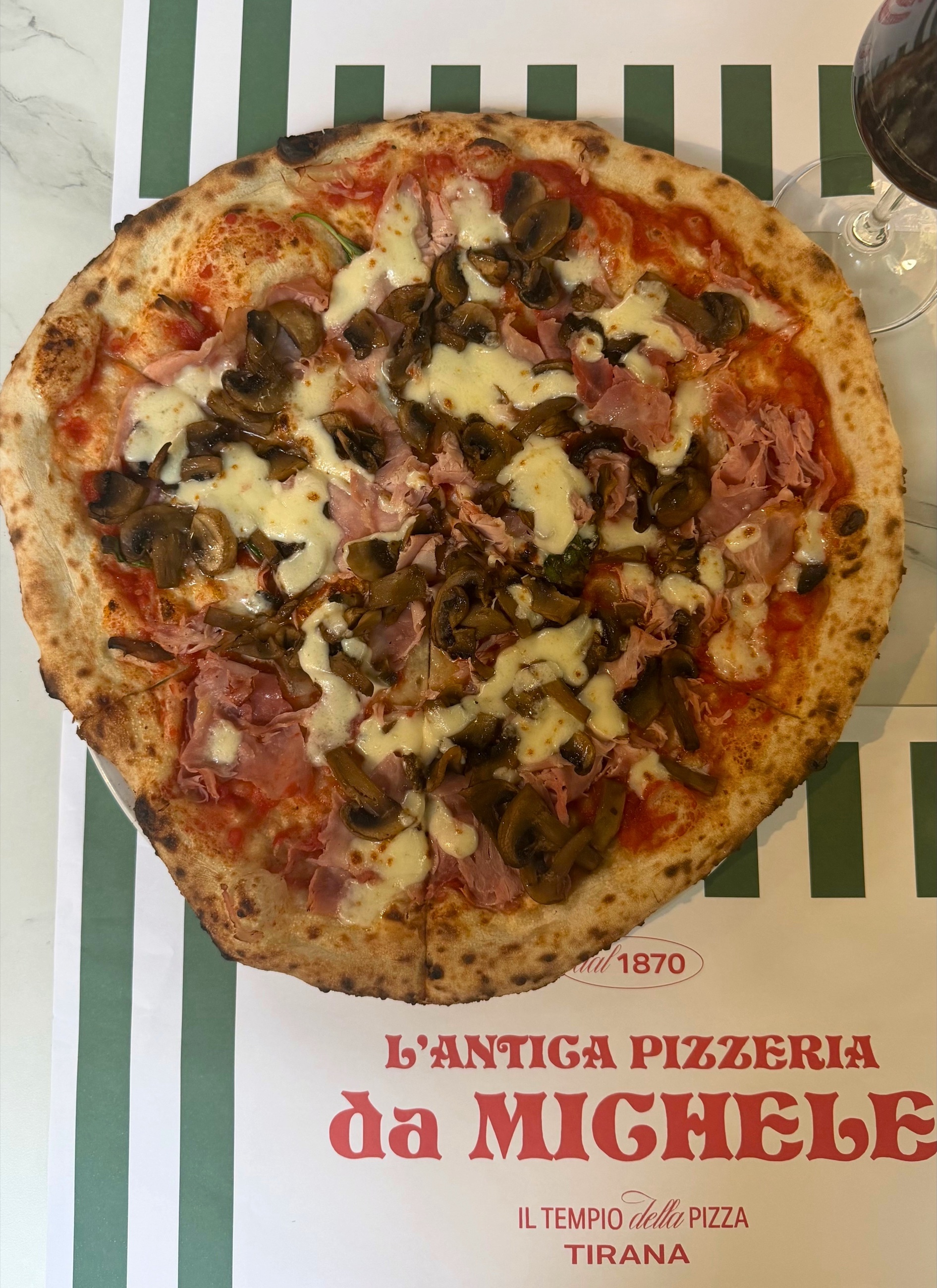 The cotto e funghi at L’Antica Pizzeria da Michele.
The most memorable meal of our week came from Naples. L’Antica Pizzeria da Michele is one of Naples’ best-known pizzerias, recognized for its traditional menu of soft, thin-centered Neapolitan pies associated with southern Italy. Its Tirana restaurant sits in Blloku, where Italian food feels less like an international novelty than part of the city’s contemporary culinary identity.
We ordered the cotto e funghi, made with fresh mushrooms, cooked ham, tomato, Fior di Latte di Agerola, Pecorino DOP, basil, and olive oil. The pizza arrived with textbook Neapolitan proportions: a blistered, inflated cornicione framing a soft, thin center. The mushrooms and ham added substance without overwhelming the delicate dough and cheese. At 1,150 lek, it is remarkably reasonable for a well-executed pie from a recognized Naples institution.
We paired it with an arugula salad of cherry tomatoes, Parmesan DOP, and balsamic glaze for 550 lek, along with a satisfying glass of Italian house red. The meal was simple, balanced, and faithful to the style the restaurant is known for.
Our other meals out this week occupied the street-food end of the dining spectrum. Tirana is dense with budget-friendly shops selling sufllaqe, döner, gyros, sandwiches, and grilled meat. These foods overlap in form but reflect different regional traditions and localized preferences.
Sufllaqe is Albania’s adaptation of the Greek souvlaki wrap. Shaved or grilled chicken or pork is placed inside a warm pita with tomatoes, lettuce, onions, french fries, and sauces. Depending on the shop, those sauces may include garlic mayonnaise, ketchup, mustard, or a yogurt-based mixture. A filling central-city sufllaqe typically costs around 270 to 330 lek, or roughly €2.75 to €3.35.
Döner is equally widespread. Meat cooked on a vertical spit is shaved into bread or a thin wrap with vegetables and savory sauces. The terminology and composition vary from one shop to another, reflecting the broader Turkish and Balkan history of the dish.
Gyro remains closer to its Greek form. The pita is often thicker and oiled, with pork or chicken, tomatoes, onions, french fries, and tzatziki. Dedicated Greek shops may charge slightly more, though the difference is rarely substantial.
All three are inexpensive, quick, and widely available, and well suited to Tirana’s street life. A person can eat at a small counter, carry the meal to a park, or sit outside without turning the meal into a long restaurant occasion. The city provides plenty of elaborate dining, but its everyday food culture does not require much ceremony. That has made it easy to eat well while continuing to explore.
💰 Nomad Real Talk
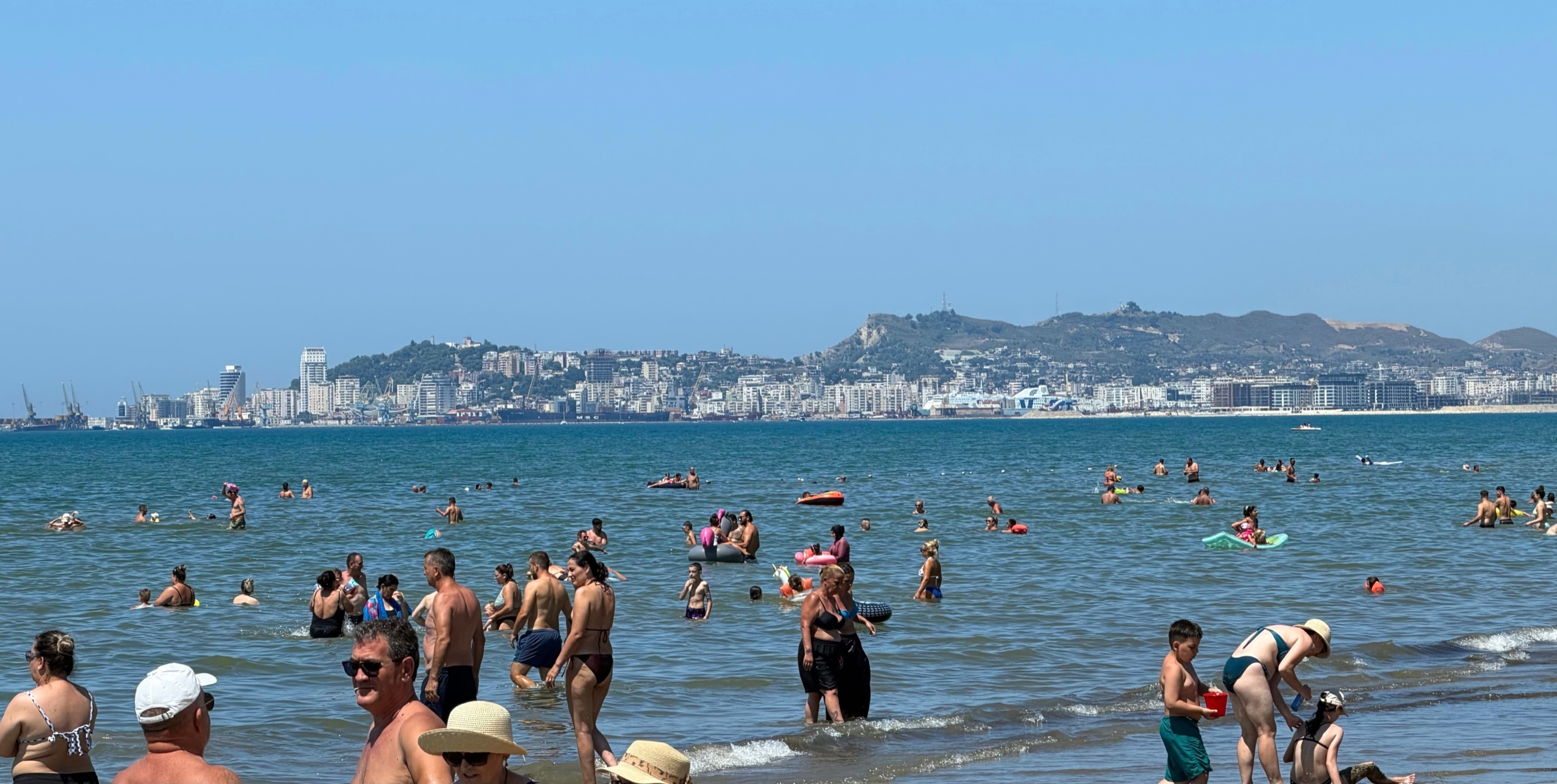 Durrës Beach on a hot summer weekend, with swimmers filling the warm, sandy shallows and the city stretching across the bay.
Tirana has been one of the easier cities in which to establish our basic routines. Our apartment cost $1,070 for thirty-four nights. It is centrally located, has a functional kitchen, reliable internet, a washing machine, adequate work surfaces, and direct access to nearly everything we need on a normal day.
Housing prices vary sharply by neighborhood and season, but our experience suggests that Tirana can still offer strong value for long-stay travelers who book early and prioritize function over luxury.
The same has been true of fitness. After months in smaller coastal towns, returning to a substantial capital gave us several viable gym options around our apartment. We joined Matrix Fitness Center, about a five-minute walk from the apartment, for 3,500 lek (about $43) on a three-visit-per-week plan.
The proximity matters more than elaborate amenities. A gym that requires transportation or a complicated route adds friction to the practical demands of a month-long stay. This one is close enough that exercise remains part of the day rather than an excursion.
Public transportation has also been inexpensive and reasonably useful. Local buses operate throughout the city for about 40 lek (roughly €0.40) per ride, though routes are not always intuitive to a new arrival. Stops may lack detailed signage, online mapping is imperfect, and buses can become crowded. Once the correct stop and route are identified, the system covers a large portion of the city at very low cost.
Our first intercity experiment was a day trip to Durrës. The trip is often described as a straightforward forty-minute ride from Tirana. On a hot summer weekend, ours took nearly two hours. We first traveled by local bus from central Tirana to a stop outside the Presidential Palace, popularly known as the Palace of Brigades, on the city’s southeastern edge near the Grand Park. King Zog I commissioned the palace as his royal residence in the 1930s but fled Albania after the Italian invasion of 1939, before it was completed. Italian architects finished it in 1941, and it later became a ceremonial government residence under communism. Today it is used for presidential functions and state receptions. A wedding party in traditional Albanian dress was dancing and posing for photographs at the gates while we waited for the next bus. From there, we boarded a small intercity minibus, commonly called a furgon, for Durrës.
The fare was 200 lek per person each way, about €2. The vehicle was full and had no functioning air-conditioning. Open windows provided the only ventilation as we moved slowly through heavy summer traffic, and we were glad we had brought water. After arriving near the Durrës beach district, we stopped for coffee, then walked about twenty minutes past the Albanian naval base to reach the shore.
Durrës Beach is Albania’s largest developed beach, extending roughly 6.5 miles (10.5 km) along the Adriatic. The shoreline is sandy, the water is warm and shallow, and the surrounding district is lined with hotels, apartment buildings, restaurants, and a broad promenade.
Temperatures sat in the low 90s Fahrenheit (low 30s Celsius), so we spent more time standing and swimming in the water than lying beneath the umbrella. The beach was crowded, but its scale made it possible to keep walking until we found a less concentrated public section.
The sand was a welcome change after months of pebble and stone beaches in Croatia and Montenegro, though it also changed the water. Fine sediment reduced the sharp clarity we had grown accustomed to farther north along the Adriatic. The comparison to Montenegro’s turquoise coves does not require declaring one coast superior. They are different beach environments serving different kinds of days. Durrës offered broad sand, warm shallows, and enough shoreline to absorb a heavy summer crowd.
We chose to treat the excursion strictly as a beach outing. The main archaeological and historic sites, including the Roman amphitheater and Venetian Tower, lie in a different part of Durrës and were not conveniently accessible from the stretch of beach we used. Trying to combine both areas after a long, hot commute would have diminished each experience.
The practical lesson was straightforward: Durrës is accessible from Tirana without a car, but the journey should not be planned around the advertised travel time during summer. Traffic, heat, terminal transfers, and the walk from the bus stop can turn a nominally short trip into most of a day. For this month, it remains our most convenient route back to the sea. Next month, we will return to coastal life for a full stay in Sarandë.
🏠 Behind the Nomad Curtain
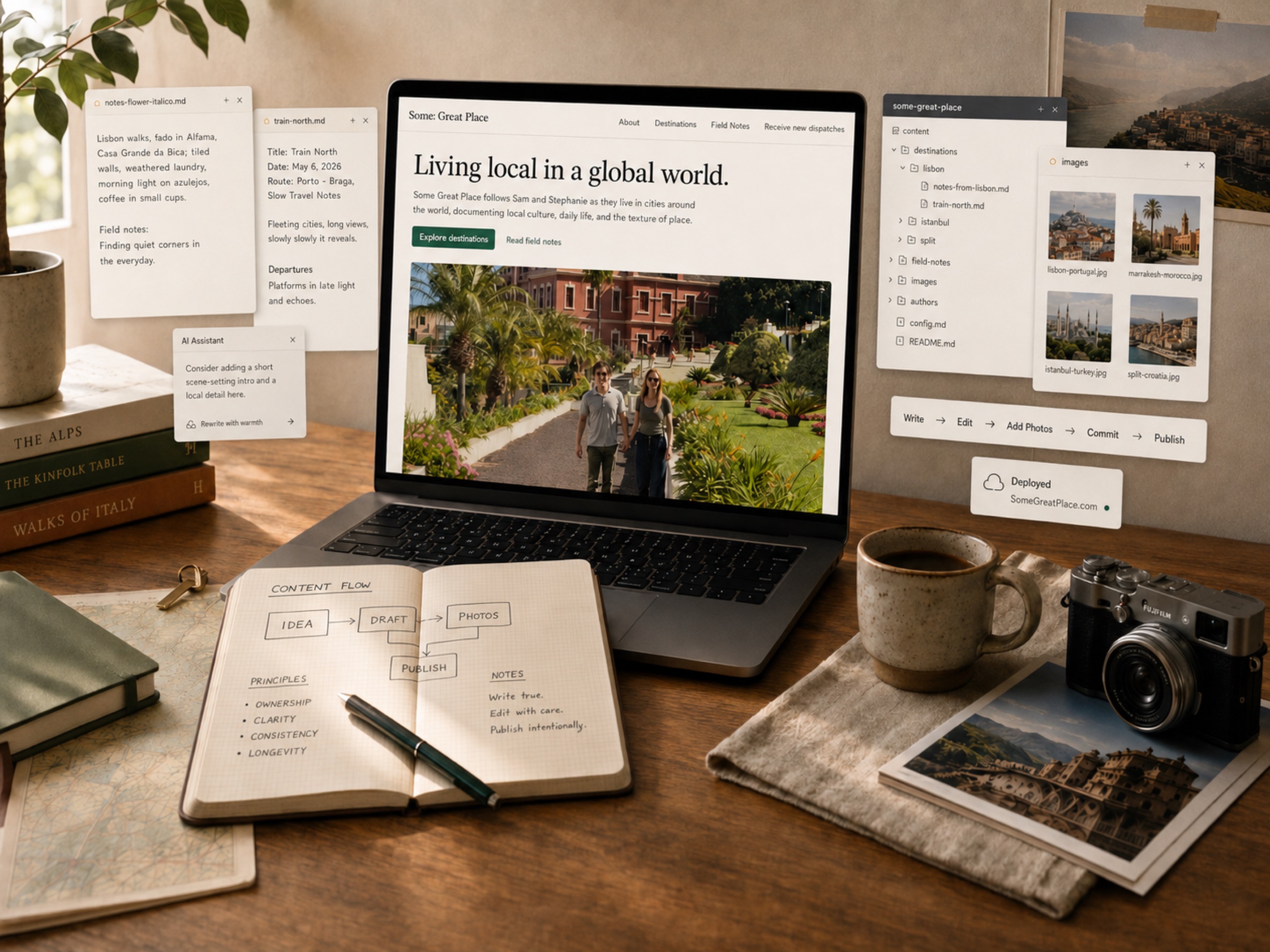 AI-generated illustration of the Some Great Place publishing workflow.
Building a custom website is more complicated at the beginning than paying for a hosted platform. There are repositories, build commands, content schemas, image folders, domain records, deployment settings, and a long list of small decisions that conventional website builders conceal behind menus. The benefit is cost and control.
Our new site is built with Astro, a framework that produces lightweight static pages. The articles are stored as Markdown files, while photographs live in organized folders tied to each story. When an article is ready, the files are added to GitHub and pushed to the repository. Cloudflare detects the change, rebuilds the site, and publishes the new version automatically. The workflow is now straightforward: write, edit, add photographs, commit, push, and publish.
AI assisted with coding, troubleshooting, and repetitive implementation work. Sam still had to define the architecture, make the design decisions, inspect the output, correct mistakes, and determine how the site should serve the editorial project. AI made the work more accessible. It did not decide what Some Great Place should become.
The result removes our monthly hosting expense entirely, replacing it with a modest annual domain fee. For the first time, the underlying structure belongs to us.
📸 Photo Story of the Week
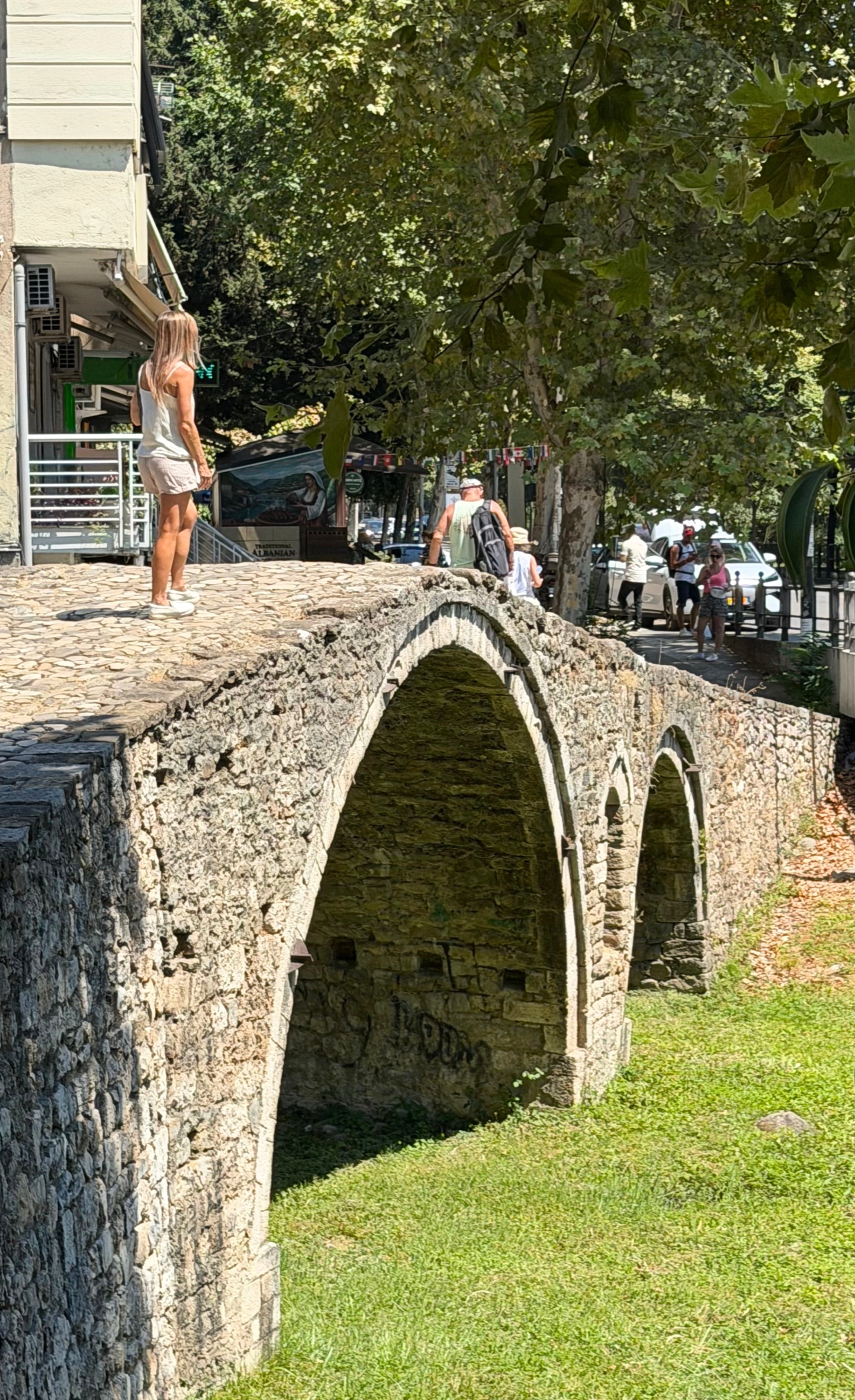 Tanner’s Bridge preserves a fragment of eighteenth-century Ottoman Tirana amid the roads and development of the modern capital.
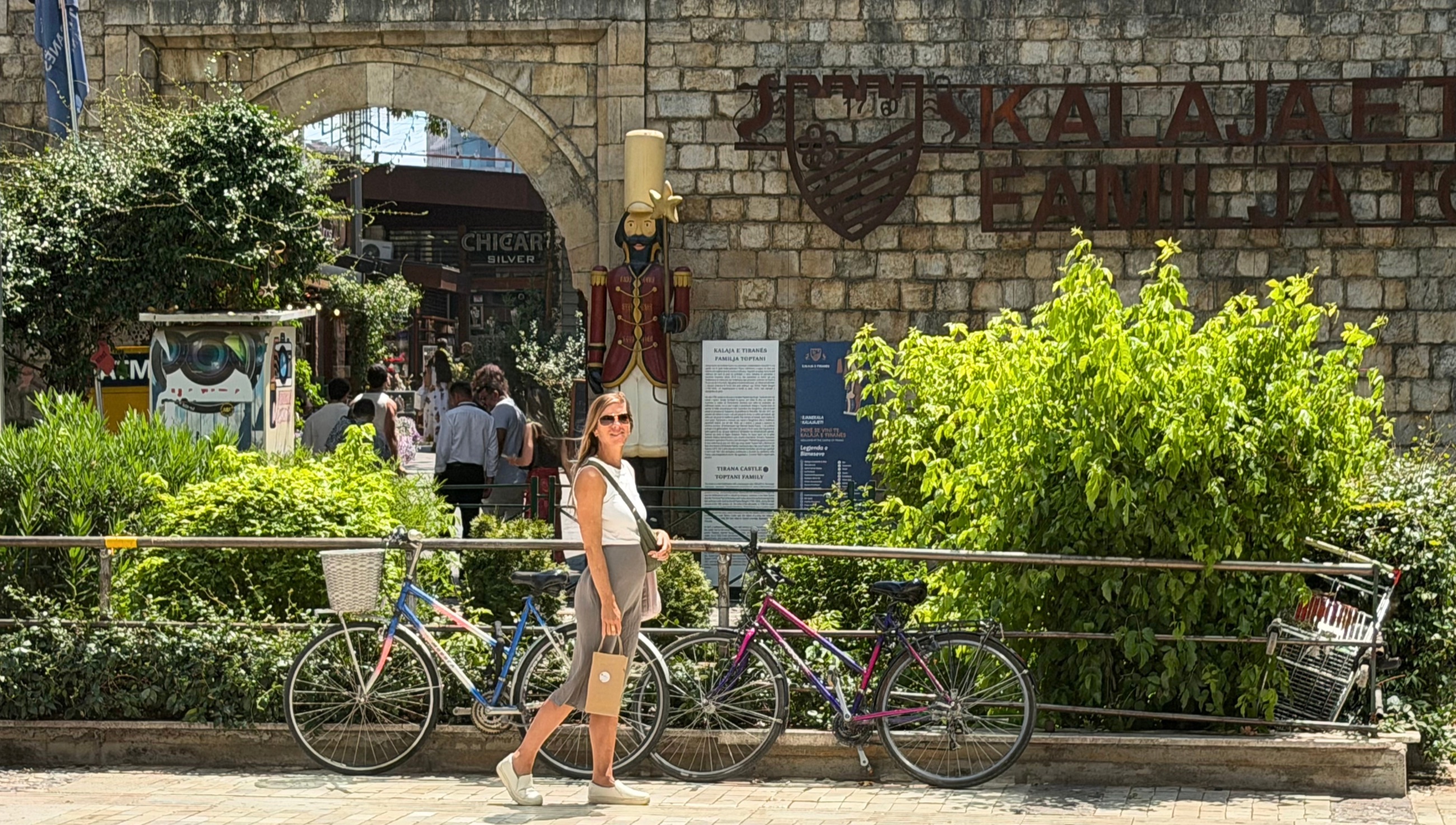 The surviving walls of Tirana Castle now frame a pedestrian district of cafés, shops, and bicycles, showing how older fabric has been absorbed into contemporary city life.
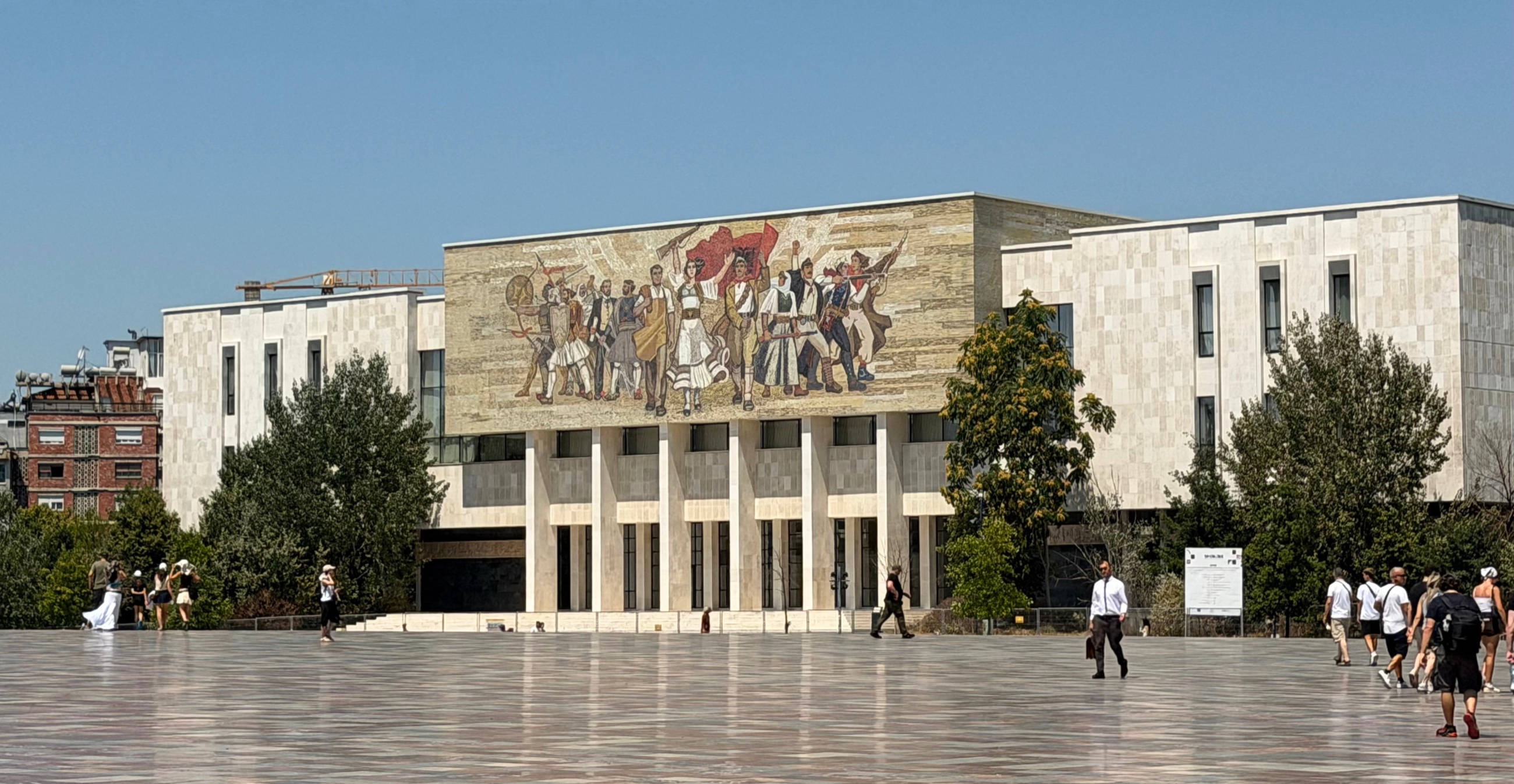 The National History Museum and its monumental mosaic present the official national story once placed at the center of communist-era Tirana.
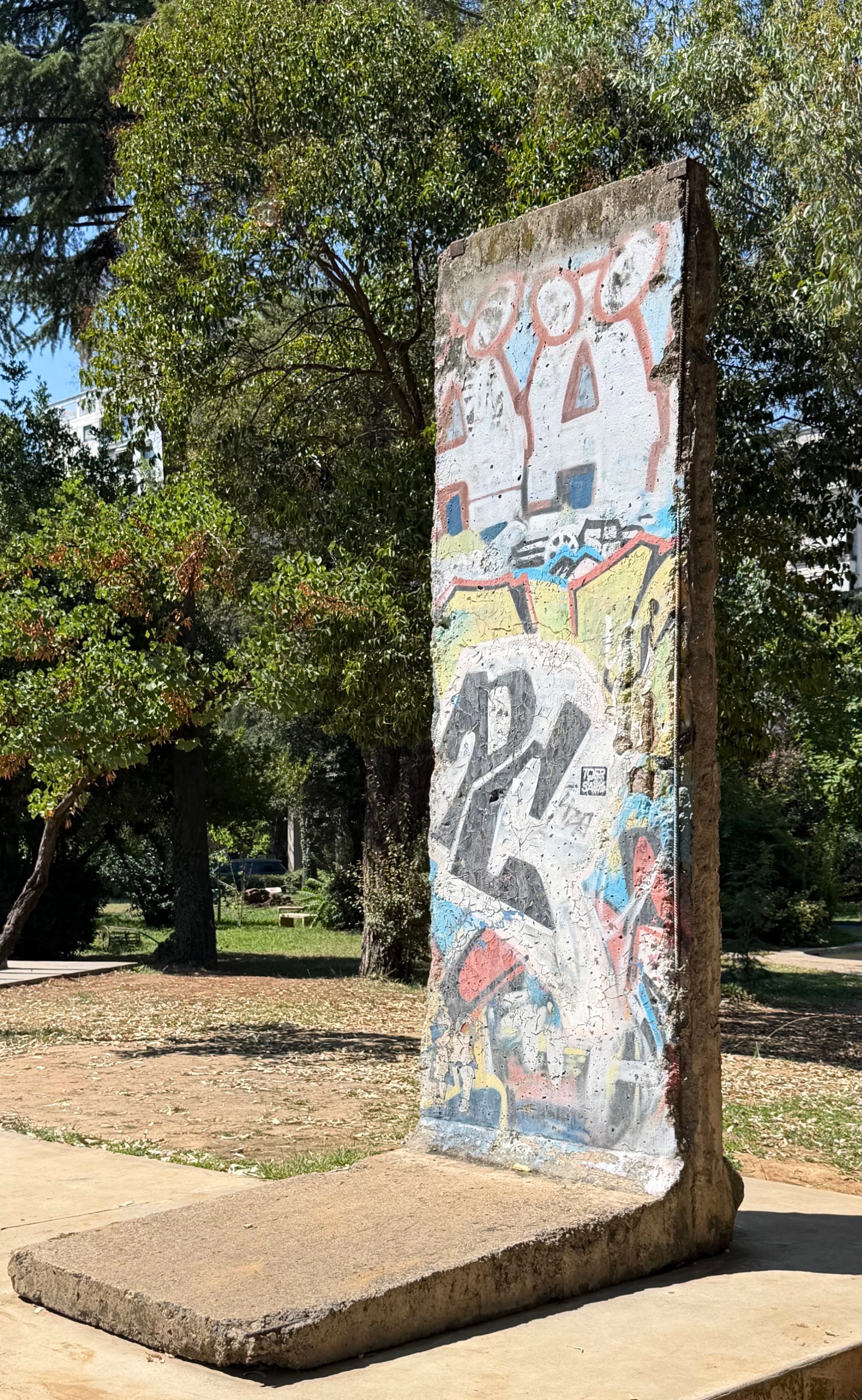 A section of the Berlin Wall at Postbllok connects Albania’s own history of isolation and political repression to the broader division of Cold War Europe.
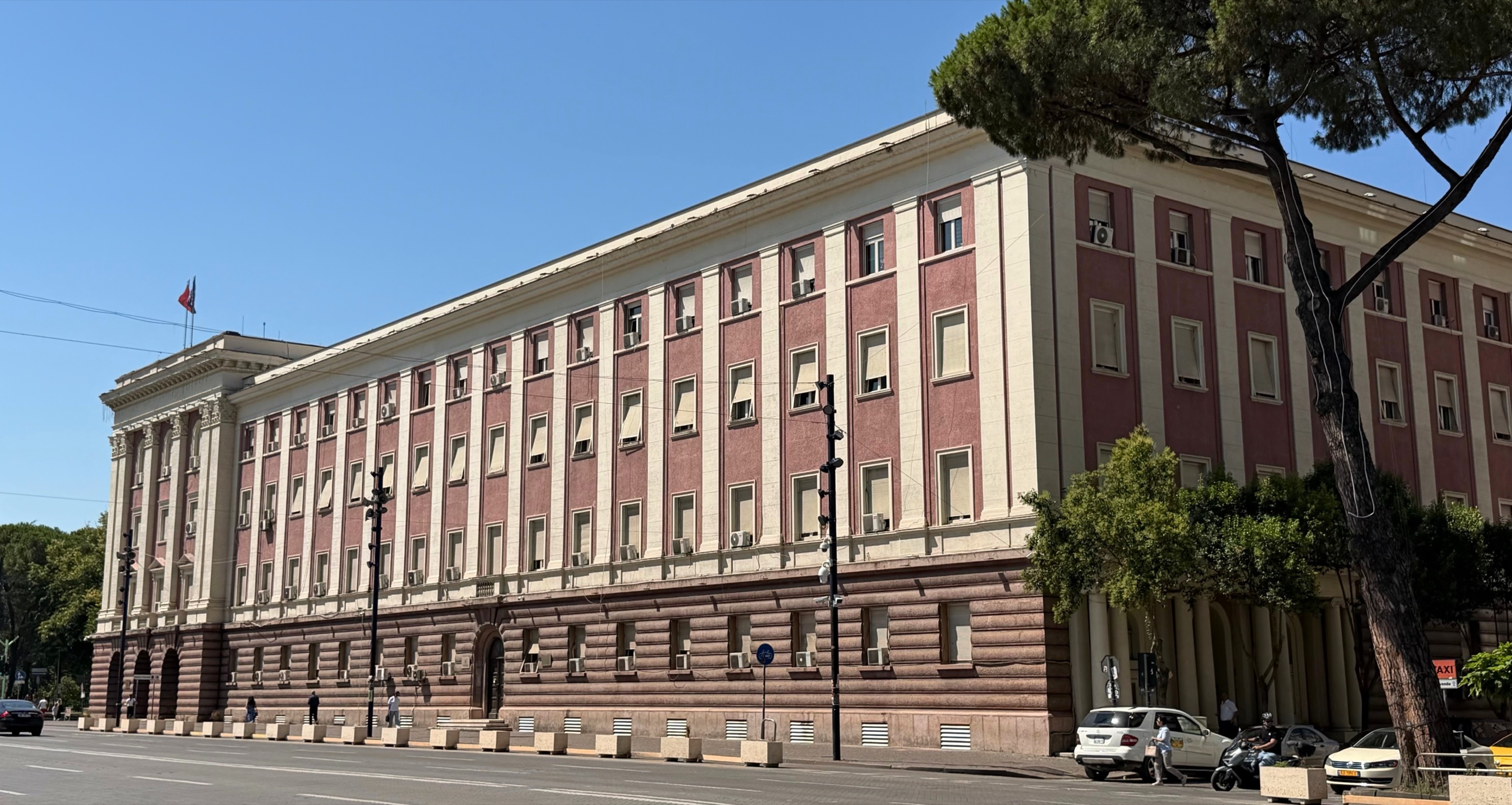 Albania’s Prime Minister’s Office reflects the Italian-era architecture that reshaped Tirana’s ceremonial boulevard and government quarter in the 1930s and early 1940s.
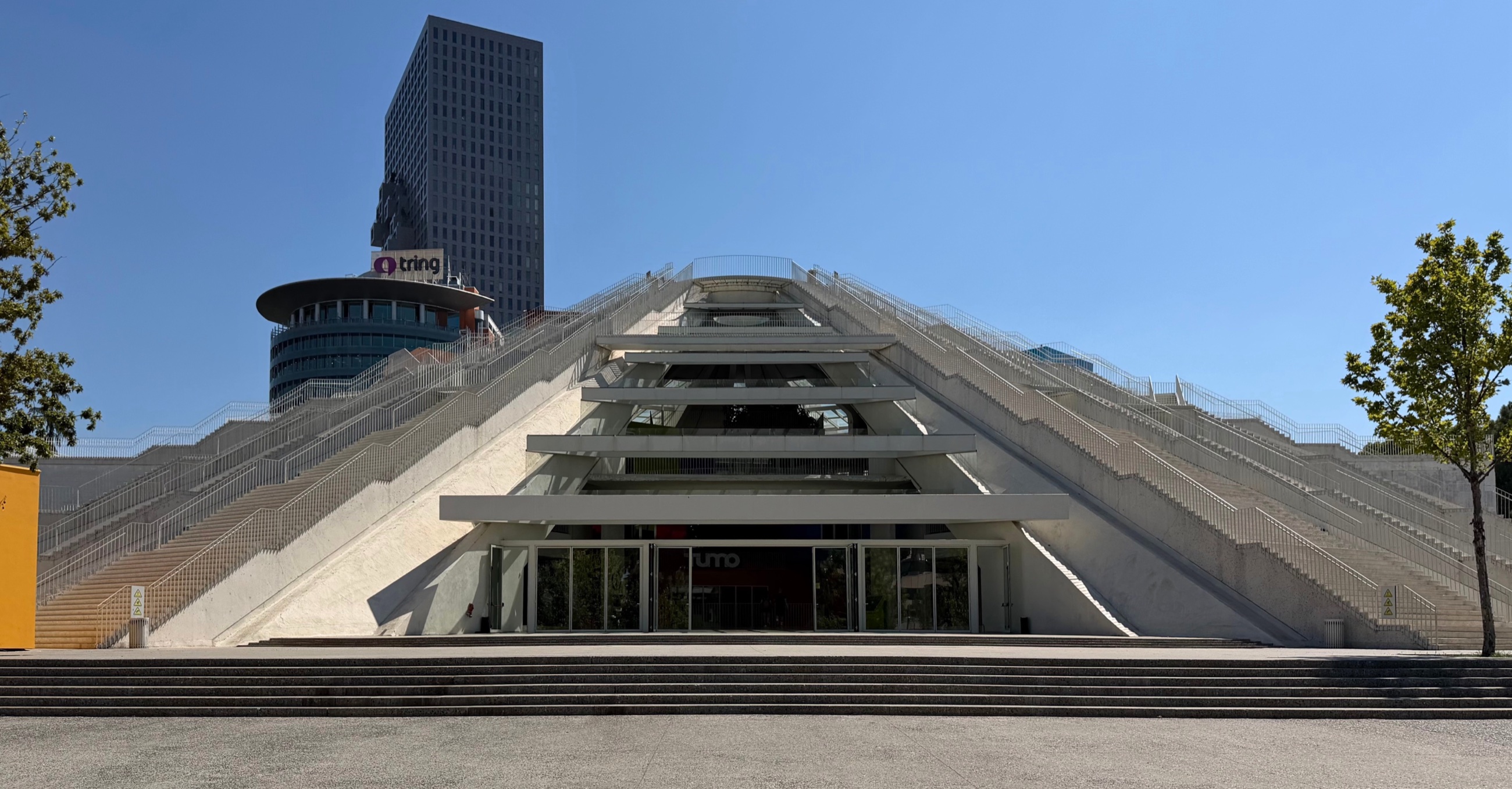 Built as a museum to Enver Hoxha, the Pyramid has been remade as a public staircase and center for technology and creative education.
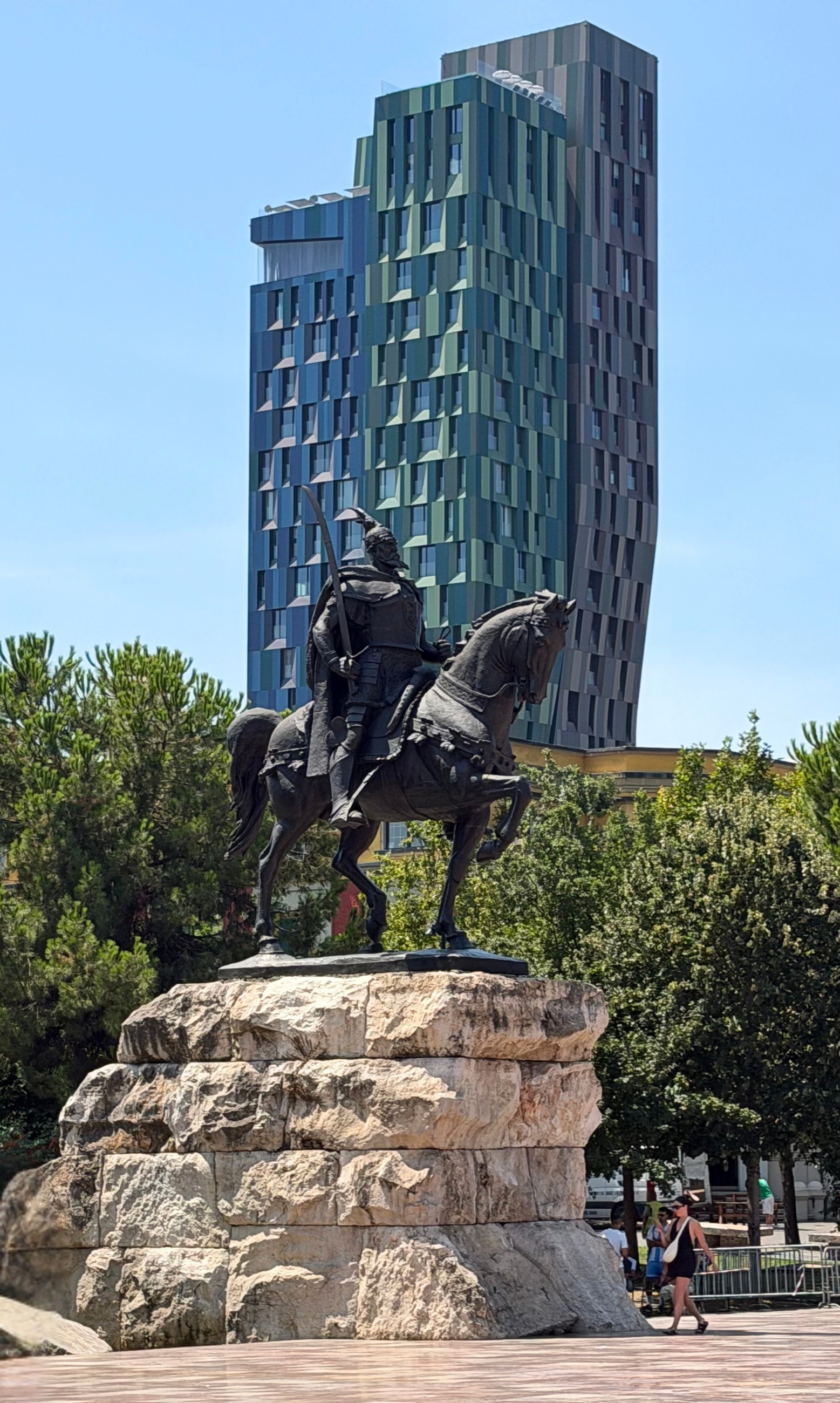 The Skanderbeg Monument stands against Tirana’s rising contemporary skyline, placing national memory beside the city’s latest phase of reinvention.
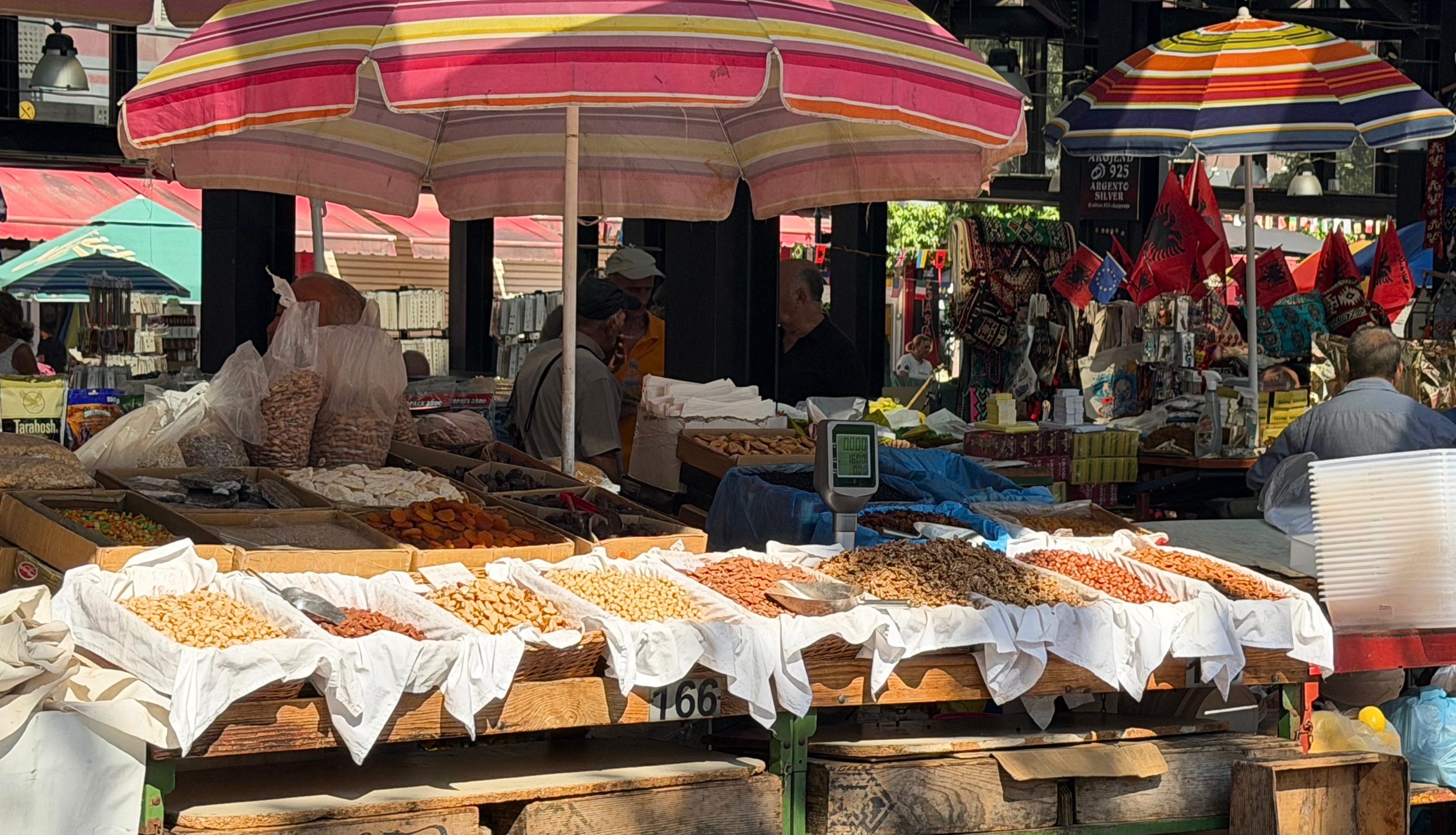 The New Bazaar brings the sequence back to daily life, where food, trade, and neighborhood routines continue beneath Tirana’s larger historical transformations.
🎯 Next Week Preview
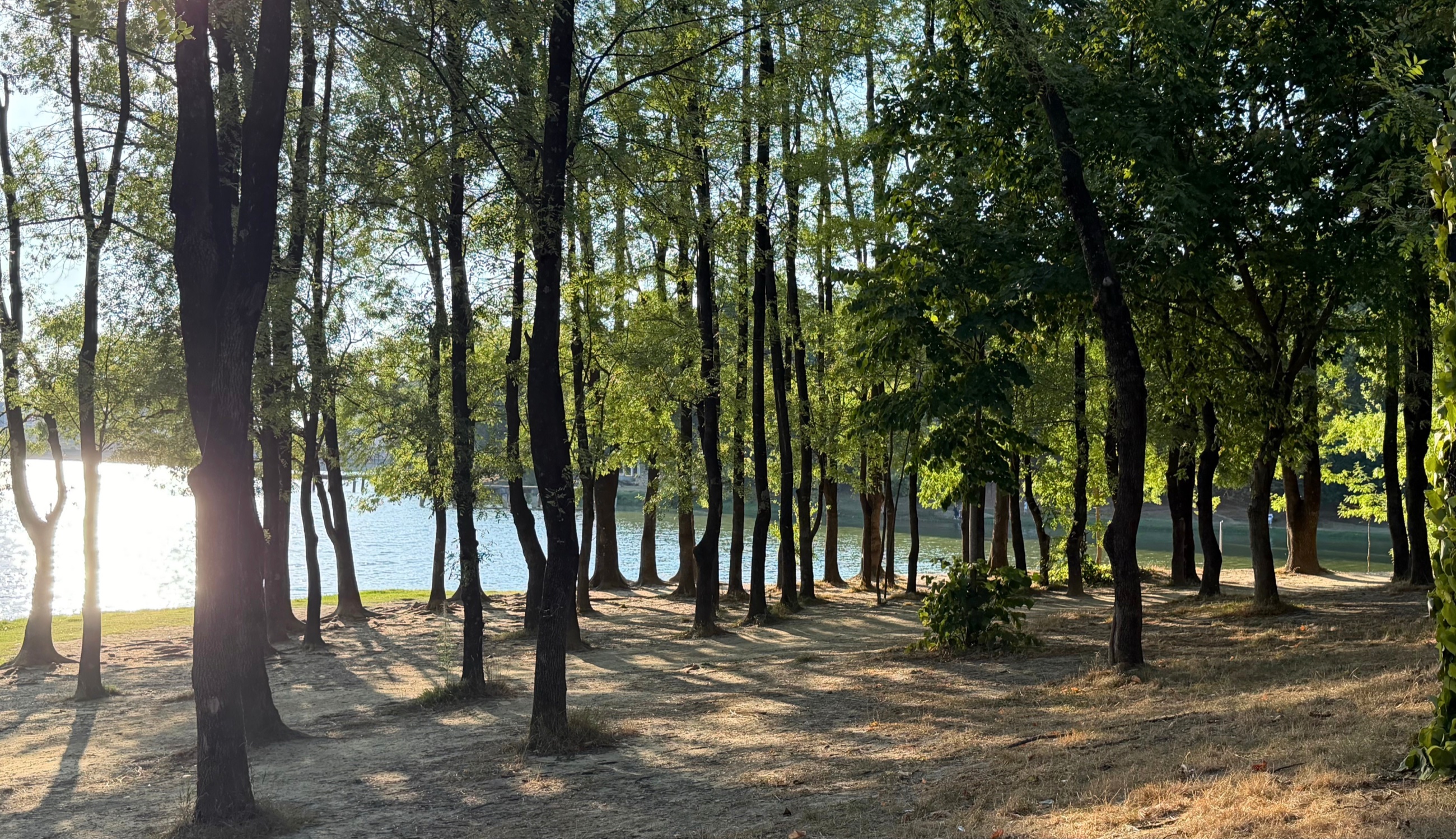 Late-afternoon light through the trees at Tirana’s Grand Park, beside the city’s Artificial Lake.
Our daughter will arrive in Tirana soon and will stay with us for the next few weeks. Her visit will bring us back through parts of the city we have already begun exploring, now with the benefit of greater familiarity and another perspective. We will also turn more directly toward Albania’s communist history.
Bunk’Art 1 occupies a five-story underground complex built into the hillside near Mount Dajti. Constructed in secret during the 1970s, its 106 rooms were intended to shelter Albania’s political and military leadership during a nuclear attack. The scale of the bunker reflects the fears, isolation, and militarization of Enver Hoxha’s government. Albania built tens of thousands of smaller bunkers throughout the country, but this complex was designed for the people directing the state.
Later this month, we will spend a long weekend in the Albanian Alps. We will travel from Tirana across Lake Koman to Valbona, then hike over Valbona Pass to Theth. The trail is one of the best-known mountain routes in the Balkans, connecting two valleys through the high limestone landscape of northern Albania. The ferry, guesthouses, transportation, and return journey are booked. Now we have to hike it.
💌 Personal Connection
Publishing every week for a year changes the meaning of a project. At the beginning, consistency is an aspiration. There are plans, calendars, templates, and promises about what will happen once the work begins. After fifty-two issues, consistency becomes evidence.
We published while preparing to leave the United States, while closing one home and building a life that could move. We published during flights, border crossings, apartment changes, family and friend visits, illnesses, difficult travel days, and weeks when the story did not arrive in an obvious form. Some issues were written from settled apartments with familiar routines. Others were assembled while luggage remained open on the floor.
The weekly commitment forced us to pay attention. Without it, experiences might have remained photographs, vague impressions, or anecdotes repeated until their details faded. Writing required us to ask what had actually happened, what a place revealed over time, which conclusions were earned, and which were merely first reactions. It also created a record of the journey before memory had time to simplify it.
A year later, we can return to the beginning and see what we did not yet know. The Reno foothills were still home. Europe existed as bookings and spreadsheets. Some Great Place was an idea whose future depended on repeated execution.
Now the archive contains fifty-two weeks of evidence. It holds the work before departure, the uncertainty of leaving, the first month abroad, the places that were easier than expected, the transfers that were harder, and the gradual formation of a life we had previously known only as a plan.
Tirana is where that record continues, and our daughter will soon be part of it for a few weeks. The value of this journey has always been as much about sharing it with people we love as documenting the places themselves.
Thank you for reading and remaining with this project through its first year. We are grateful you are here.
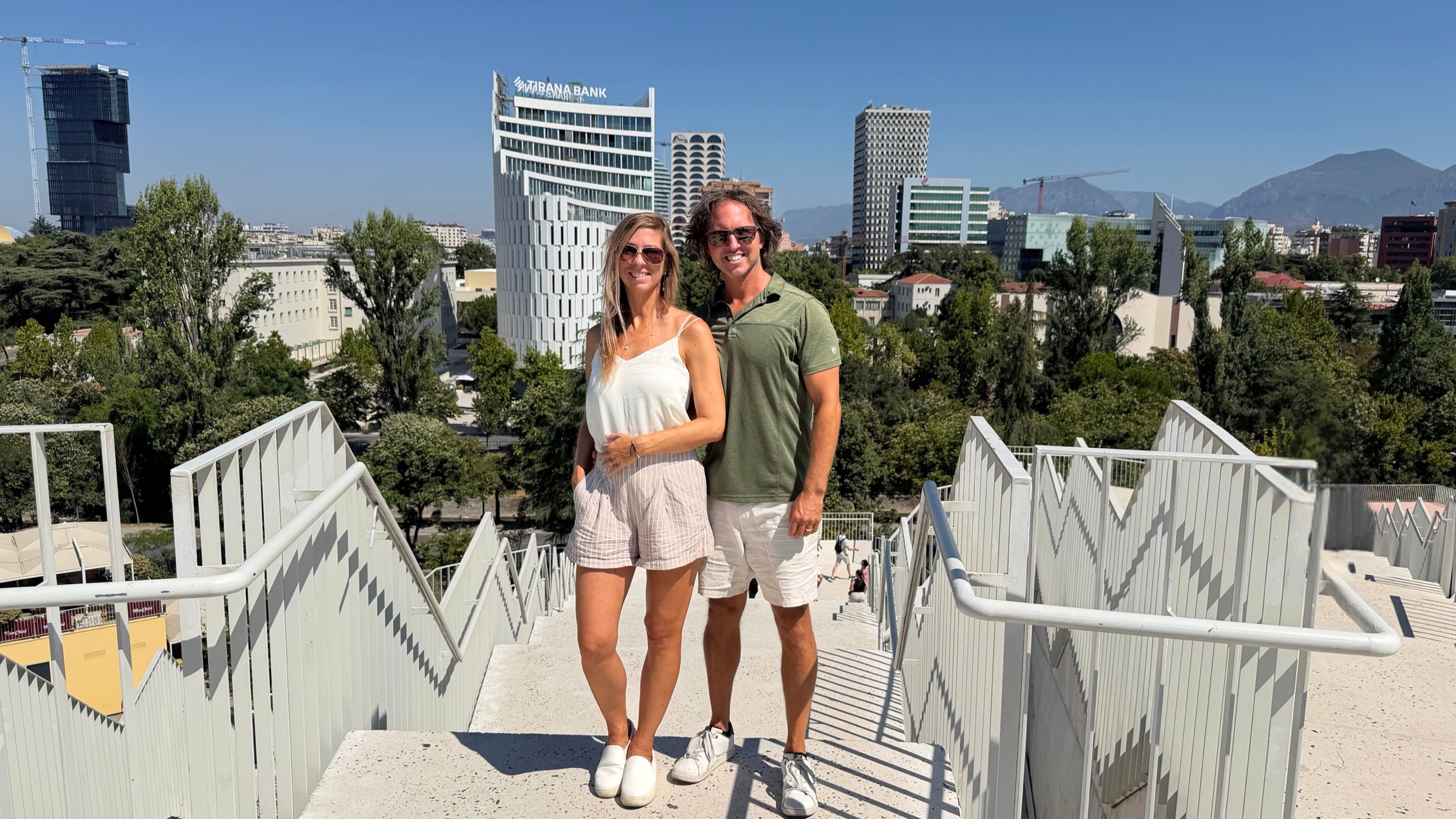 A year into Living Local Weekly, together above Tirana on the Pyramid’s rebuilt terraces.
Until next week,
S&S
Some Great Place · Living Local in a Global World · somegreatplace.com