There is a long tunnel at the foot of Mount Dajti that leads away from the heat and traffic of Tirana and into a very different Albania.
The temperature drops first. Then comes the smell of damp concrete and old dust. Farther inside, steel doors, military offices, communications rooms, air-filtration equipment, and row after row of underground corridors reveal what the place was built to do.
Bunk’Art 1 occupies a five-story nuclear shelter constructed for Enver Hoxha and Albania’s political and military leadership. Its 106 rooms were designed to keep the government functioning after the kind of chemical or nuclear attack Hoxha spent decades expecting.
The attack never came.
Above ground, Tirana carried on this week with the considerably less dramatic requirements of daily life. We visited churches and mosques, found another neighborhood café, ate dinner at a gjelltore, replaced our dwindling protein powder, went to the dentist, and spent part of the weekend working through the logistics of the next stage of our life abroad.
Albania’s former government prepared obsessively for a future catastrophe. Our own planning this week was far more mundane, but living abroad for months at a time as nomads has shown us how much daily life depends on staying ready.
📍 This Week in Tirana
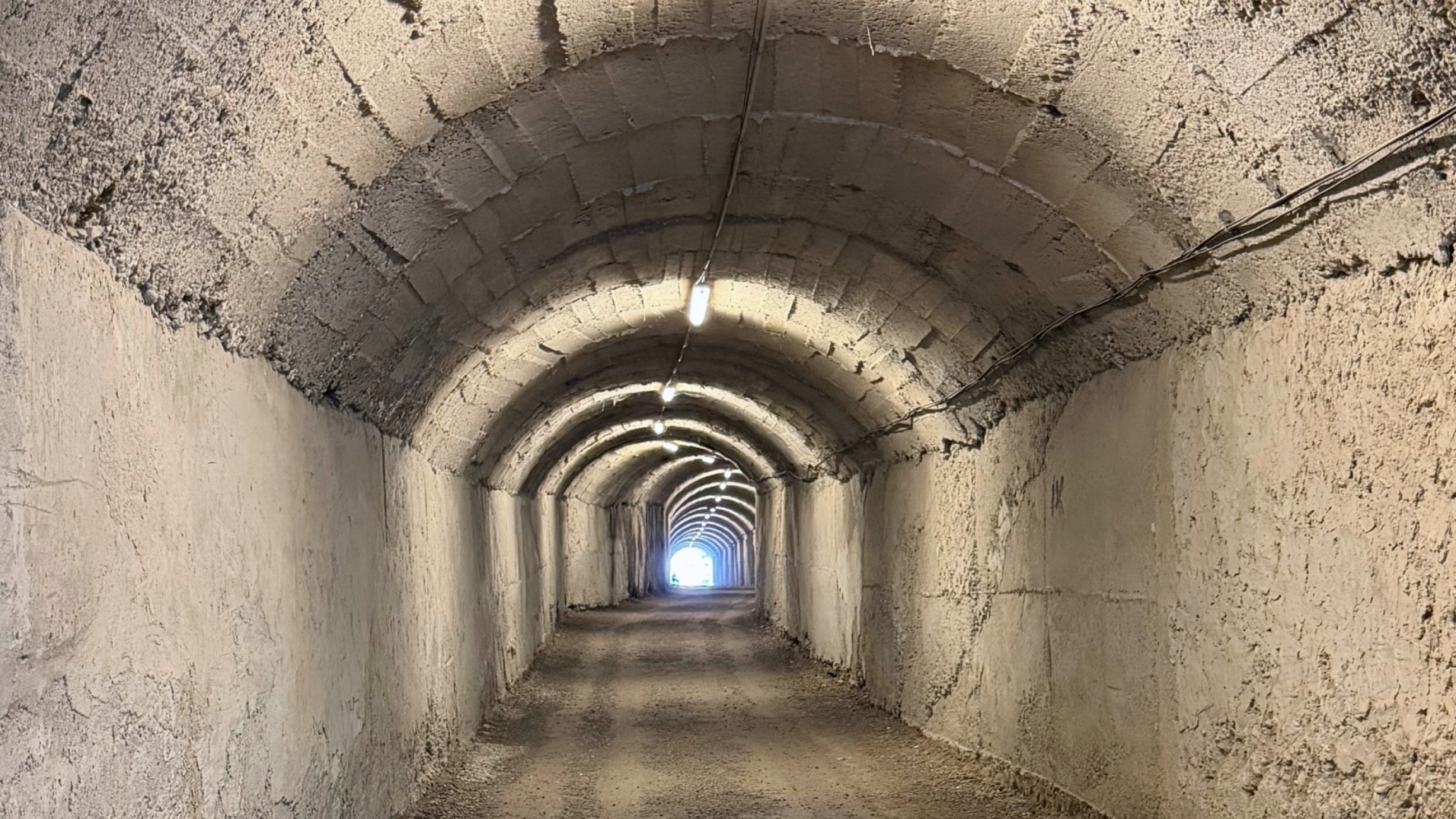 The entrance tunnel to Bunk’Art 1, the Cold War-era nuclear shelter built beneath Mount Dajti for Enver Hoxha and Albania’s political leadership.
Our trip to Bunk’Art began on a local bus heading northeast from central Tirana toward the base of Mount Dajti. Admission was 900 lek each, about €9.60, for what turned into one of the most substantial historical experiences of our month.
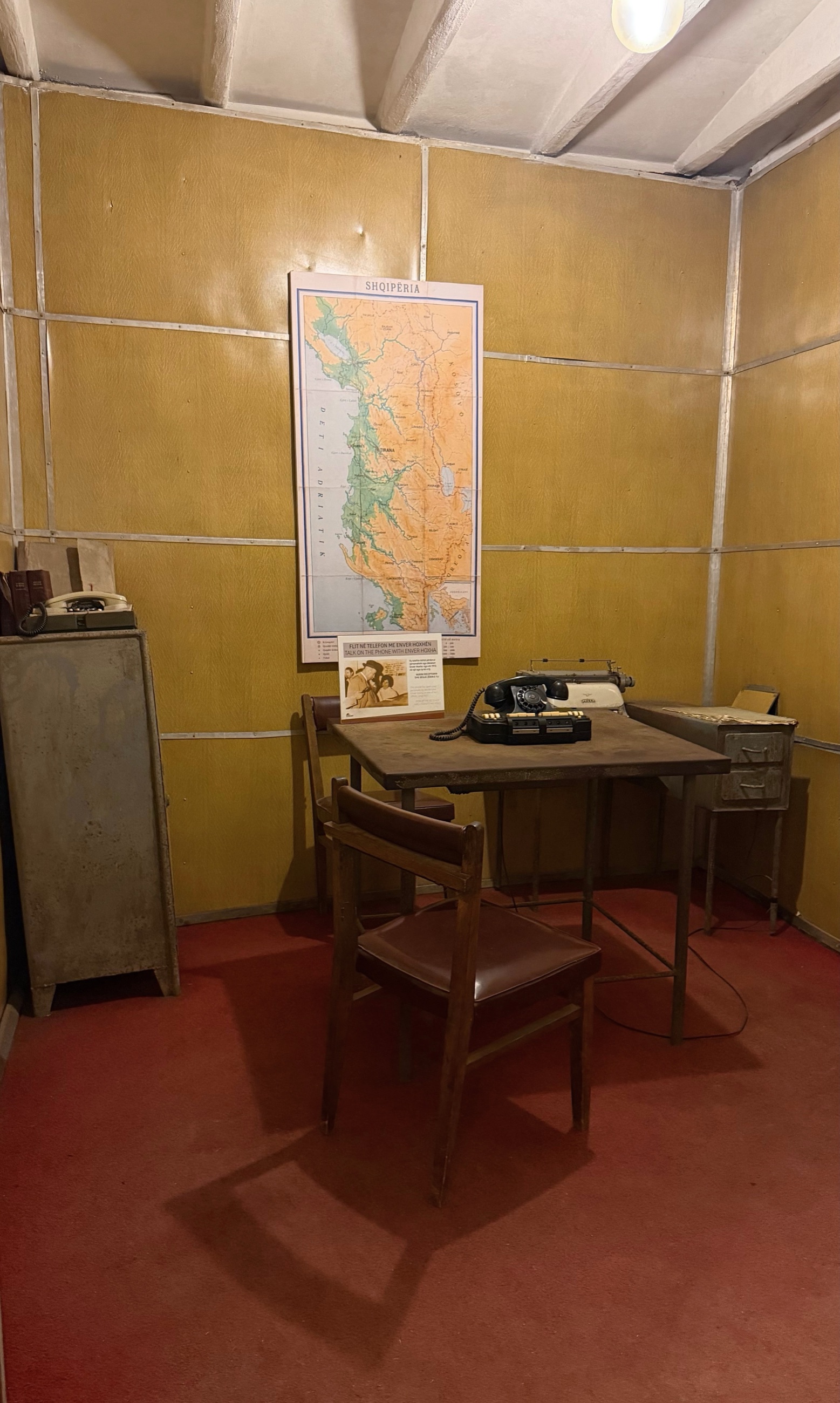 Enver Hoxha’s underground office at Bunk’Art 1, built to keep Albania’s leadership functioning during an attack.
Hoxha’s private suite sits behind an unremarkable steel door, distinguishable from the dozens of identical doors around it mainly by its position closest to the assembly hall. Inside, the furniture is spare and official rather than personal: a desk, a bed, a bathroom sized for one, built for continuity rather than comfort.
We also continued exploring the religious institutions around central Tirana.
The Resurrection of Christ Orthodox Cathedral, which we introduced last week in the context of Tirana’s post-communist rebuilding, was free to enter. Its scale is striking after learning how completely Albania’s communist government attempted to remove organized religion from public life.
At the nineteenth-century Et’hem Bey Mosque on Skanderbeg Square, our experience was less comfortable. We had barely cleared the entrance, shoes still in hand, when an attendant stepped toward us and asked where we were from. Other visitors moved past freely behind him. When we answered, his posture changed. He turned, pointed at the donation box near the door, and said “donation” a second time, then a third, each time more firmly, closing the space between us until it no longer felt like a suggestion. There was no posted admission fee, so we understood the donation to be voluntary. We could have said as much and walked past him into the courtyard. Instead we set our shoes back down, said we understood, and left the way we came, unwilling to turn a place of prayer into an argument over money, however uncomfortable the walk back out into the square.
A very different experience followed at the much newer Namazgah Mosque near Parliament. We removed our shoes at the entrance, walked inside, spent a few minutes beneath its enormous central dome, took several photographs, and left without difficulty.
Taken together, the visits were a reminder that contemporary Tirana holds religious institutions from very different moments in the country’s history within a remarkably small geographic area.
The rest of the week looked more like daily life.
We returned to Blloku after finding one shop in the city carrying a protein powder that met our ingredient preferences. Nearby, we came across HANA Corner Café, an independent specialty coffee shop with a shaded stone patio beneath mature trees. Specialty shops in Blloku run at a premium to the rest of the city, with a macchiato here pushing closer to €3 against the €1.50 to €2 typical of a Tirana café-bar. Ours turned into an unplanned pause before lunch from a neighborhood bakery: fresh byrek with dhallë, the salted yogurt drink found throughout Albania and the wider Balkans.
We also made a routine visit to Toronto Dental Clinic for professional cleanings, $50 each. Dental appointments do not make compelling travel photography, but they are part of what happens when a trip lasts long enough to become normal life.
🎨 Cultural Deep Dive
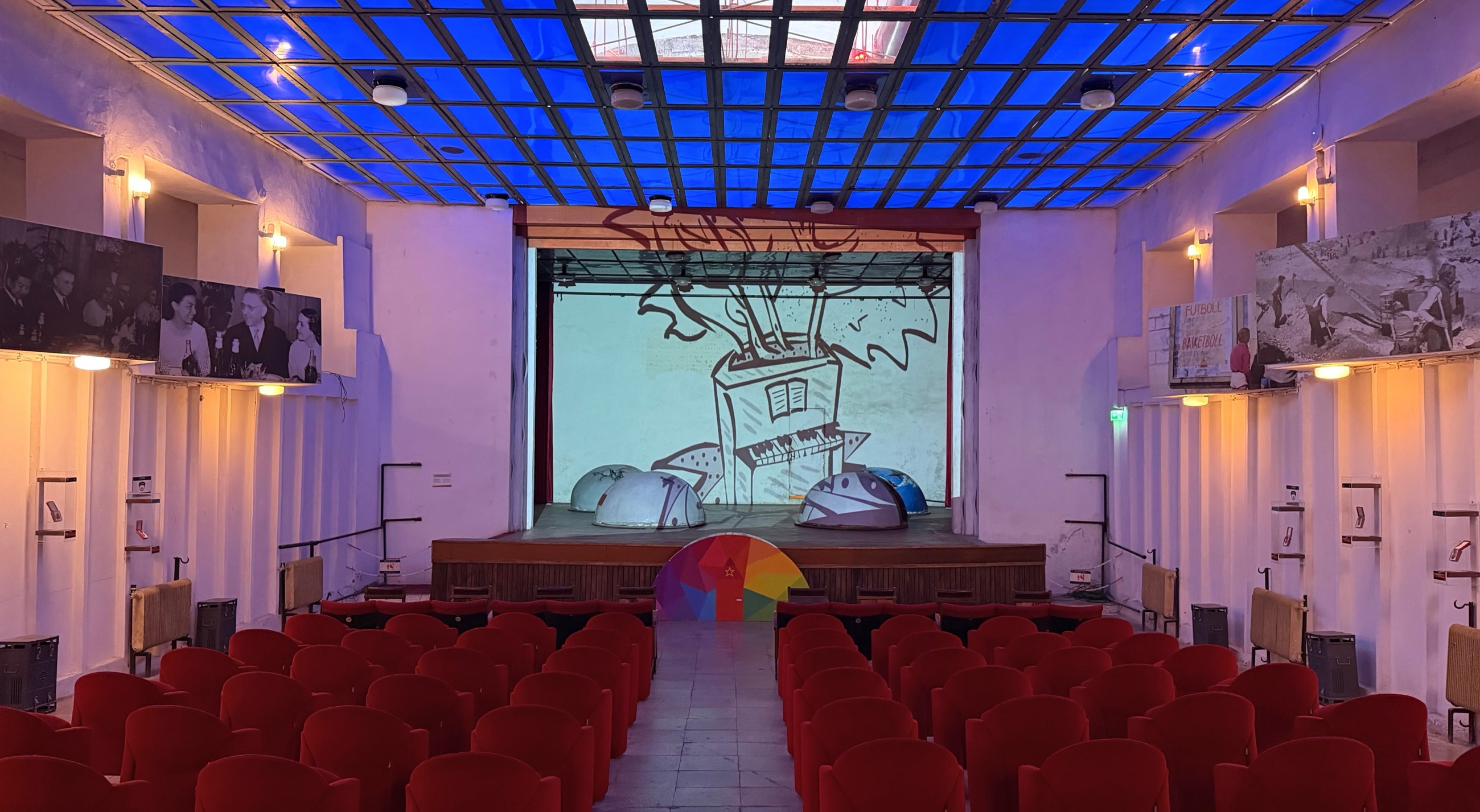 Bunk’Art 1’s 200-seat assembly hall, designed as an underground meeting chamber for Albania’s communist leadership.
Bunk’Art 1 makes more sense once Albania’s twentieth century is placed behind it.
The country had spent nearly five centuries under Ottoman rule before declaring independence in 1912. The decades that followed brought war, contested borders, weak institutions, foreign interference, and recurring struggles over what the new Albanian state would become. When European powers settled Albania’s borders in 1913, large Albanian-inhabited territories, including Kosovo, were left outside the new state, separating a substantial share of ethnic Albanians from Albania.
Ahmet Zogu emerged from that instability, first as prime minister, then president, and finally as King Zog I in 1928. His effort to modernize Albania increasingly depended on Italian financing and political support. Benito Mussolini’s government used that dependence to expand its influence across the Adriatic until, in April 1939, Italy invaded Albania outright. Zog fled the country and never returned as king.
Italy’s collapse in 1943 brought German occupation and an intensifying internal struggle among Albania’s competing resistance movements: Enver Hoxha’s Communist Partisans, the nationalist Balli Kombëtar, and the royalist Legaliteti, all fighting over what Albania would become. When the Germans withdrew in late 1944, Hoxha’s partisans crushed the other two outright.
That victory mattered for what came next. Unlike several other communist governments emerging in Eastern Europe, Hoxha’s regime did not come to power behind an occupying Soviet army. That gave Albania’s postwar leadership unusual independence from Moscow and helped shape the fierce suspicion of foreign influence that followed.
That history is embedded in the bunker.
Mehmet Shehu, Hoxha’s longtime prime minister and second-in-command, had a suite that mirrors Hoxha’s own almost exactly, the two men planning to wait out an apocalypse in adjoining rooms. Offices were prepared for military officers, translators, typists, communications personnel, and other government staff, arranged around a 200-seat assembly hall built to keep a government running underground.
The facility was effectively a second government headquarters buried beneath a mountain, designed so the country’s leadership could survive an attack and continue issuing orders after much of the world above had become unsafe.
Hoxha broke with neighboring Yugoslavia in 1948. Albania later aligned itself closely with the Soviet Union, then split with Moscow in 1961 as Hoxha rejected Nikita Khrushchev’s reforms and rapprochement with Yugoslavia. China became Albania’s next major patron. That relationship collapsed as well, ending in 1978. Each rupture narrowed Albania’s external world.
Inside the country, the government suppressed political opposition, maintained an extensive secret-police apparatus through the Sigurimi, restricted foreign contact, and eventually declared Albania an atheist state. Churches and mosques were closed, repurposed, damaged, or destroyed. Concrete bunkers appeared across the country in extraordinary numbers, from mountainsides and agricultural fields to beaches and city neighborhoods. Bunk’Art 1 was the command-center version of the same idea.
Walking through it today, the machinery is interesting, but the scale is more instructive. Consider the time, labor, concrete, engineering, equipment, and political attention required to construct an underground government capable of surviving a nuclear attack, then consider that it was never used. The bunker stands as physical evidence of a government that organized enormous resources around a future it feared, while the society above it lived with the consequences of that fear for decades.
🍽️ Local Flavor
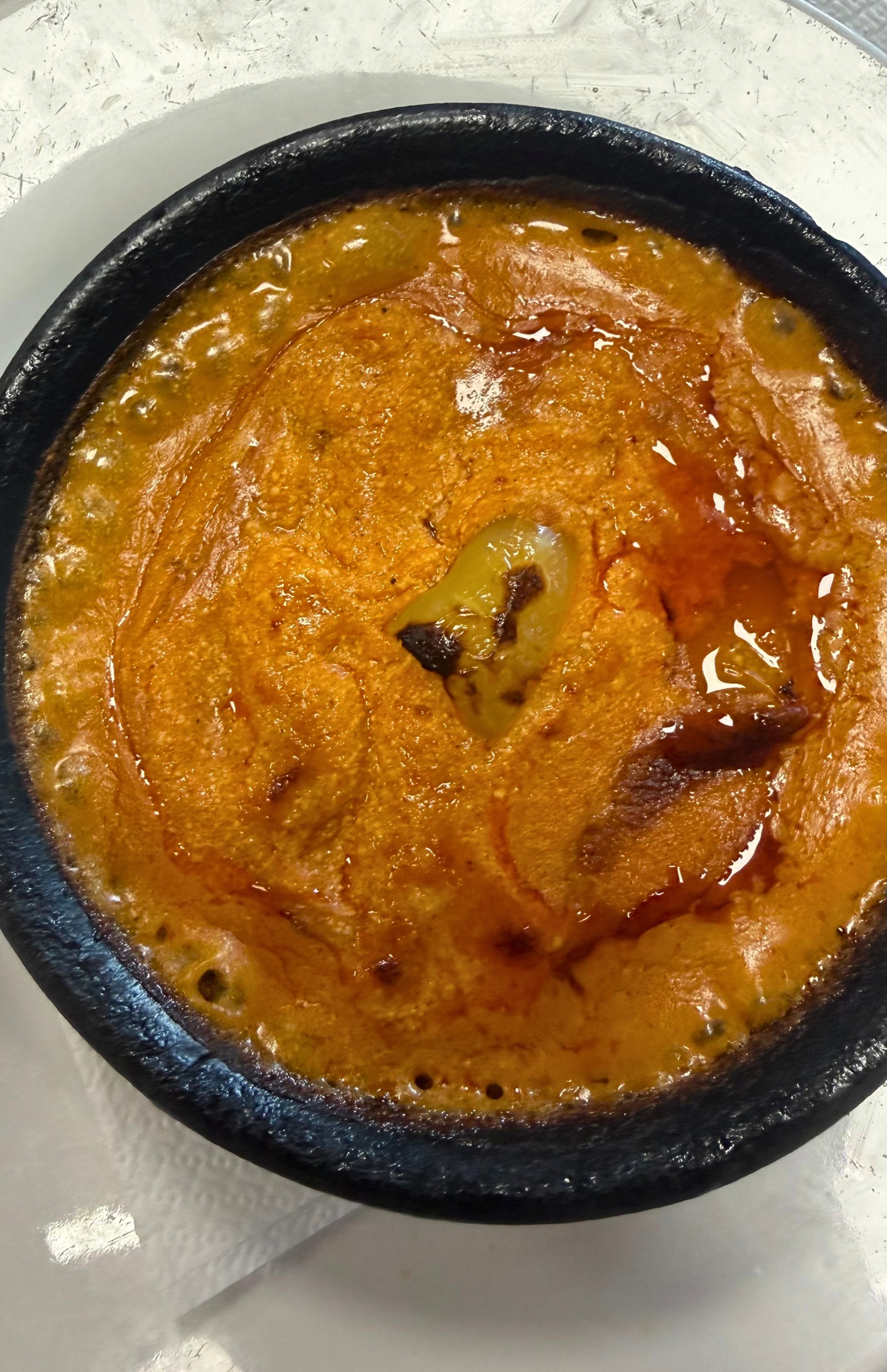 Fërgesë me speca, a Tirana staple of roasted peppers, tomatoes, onions, and gjizë served bubbling in a clay dish.
A gjelltore is one of those useful Albanian institutions that makes more sense after living here for a while. The word broadly refers to a place serving cooked dishes, usually inexpensive and prepared in a home-style tradition, somewhere between a neighborhood cafeteria and eating from someone’s family kitchen. There is little ceremony. You look at what has been prepared, choose several dishes, sit down, and eat.
Our dinner began with fërgesë me speca, a dish closely associated with Tirana. Roasted peppers, tomatoes, onions, and gjizë, Albania’s soft curd cheese, arrived bubbling in a clay dish with bread for dipping. It was rich, slightly tangy, and more substantial than its ingredients suggest.
We added two house-made qofte, Albania’s seasoned meatballs, along with stuffed eggplant and a side of chicken. With sparkling water and a beer, the entire dinner for two came to roughly €16.
Meals like this are one reason Albania remains easy to live in rather than merely inexpensive to visit. A person can eat cooked food outside the apartment without converting every meal into a restaurant occasion or a major line item in the budget. The same applies to the bakery lunch we had near HANA. Byrek and dhallë require very little explanation once they become part of the week. They are simply lunch.
💰 Nomad Real Talk
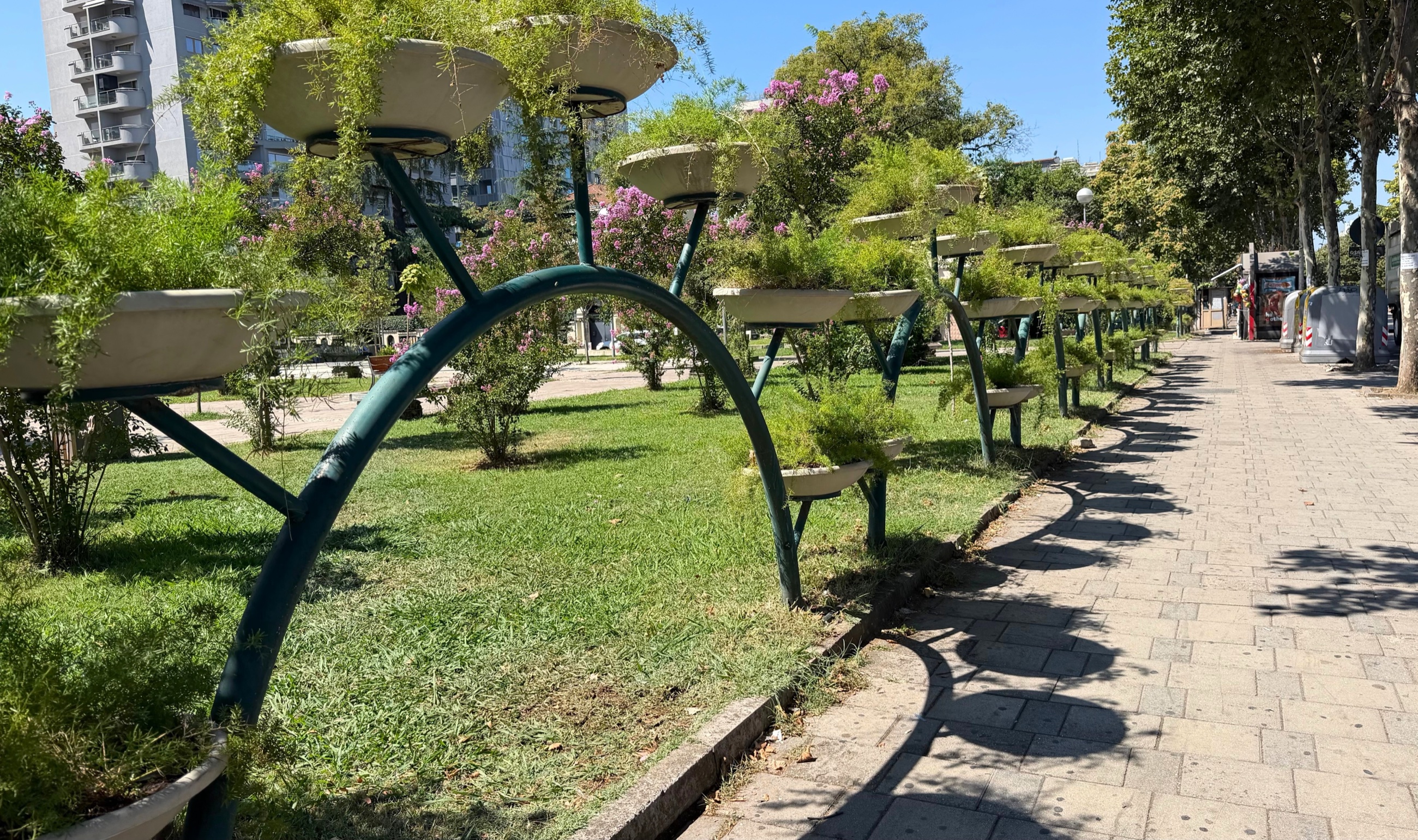 The planted walkways of Rinia Park, a central green space between Skanderbeg Square and Blloku.
We spent a large part of the weekend planning what comes after our return to the United States this fall, and that exercise clarified something we understood in theory before leaving home but appreciate more now: living nomadically is a logistical system.
Short vacations hide most of this. A traveler spending four nights in an apartment does not care much whether the kitchen has olive oil, dish soap, or enough storage for a month of groceries. A person living there does. Every move creates a small economic decision: buy the bottle of olive oil knowing you may use a quarter of it, or skip it and cook around what’s already there. Individually these costs are minor. Repeated across a dozen apartments, they become part of the real math of moving.
The same calculation applies to fitness and lodging. A gym day pass works fine for a tourist but quickly becomes uneconomical for someone training several times a week, so a monthly membership almost always wins, which is one more reason a twenty-eight-day stay works better than a string of shorter ones. Airbnb reinforces the same pattern: monthly discounts beginning around twenty-eight days can materially change accommodation costs, and a longer stay spreads the time it takes to learn a neighborhood across more useful days.
In each new city we have to work out where to buy groceries, which supermarket carries what we actually use, how the buses run, where the gym and a dentist are, and which parts of the neighborhood function well for daily life. By the time those questions have answers, the apartment starts to feel familiar. Then we pack again.
Our luggage reflects the same distinction between travel and living: clothes, shoes, electronics, health items, and work equipment sized for functioning across different countries and seasons, hauled through elevators sometimes, stairs other times, across trains, buses, ferries, and cobblestones. Moving it is physically tiring. Rebuilding a routine every month is mentally tiring in a different way.
Then there is the legal architecture. As Americans, movement through much of Europe is governed by the Schengen Area’s rolling ninety-days-within-180-days rule, and changing one stay by a week can alter the legal feasibility of another stay months later. Accommodation, flight prices, visa appointments, weather, family commitments, and Schengen math all interact, which is why changing one destination can produce a chain reaction through the entire itinerary.
Our working plan going forward: after spending the holiday season in the United States, we return abroad for winter in Cyprus, then continue through Portugal for Stephanie’s residency biometrics appointment, then spend longer periods in Valencia, Belgrade, and Bologna before returning to the United States by way of Rome next summer.
This chapter of living abroad has a financial boundary. We are supporting it through part-time income and savings, and global remote employment has proven harder to secure than the phrase “remote job” suggests. Most employers still require an employee to live in the country where the company employs them. We have decided that next summer is the right point for an extended return to the United States and a more concentrated job search. That does not diminish what we are doing now. It gives this first chapter added meaning.
📸 Photo Story
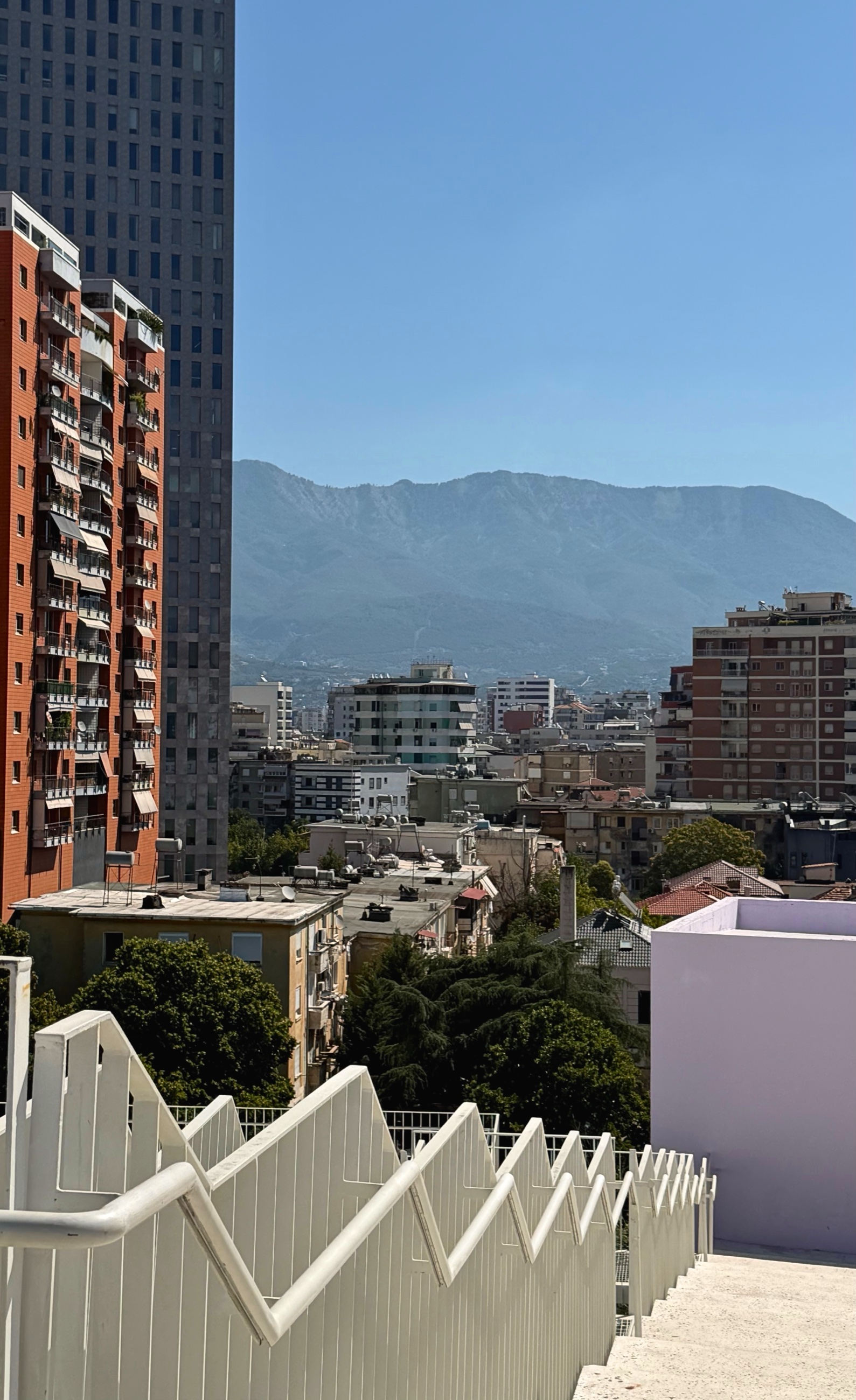 From central Tirana, older apartment blocks and newer towers rise toward Mount Dajti, a compact view of a city changing rapidly while still pressed closely against the mountains.
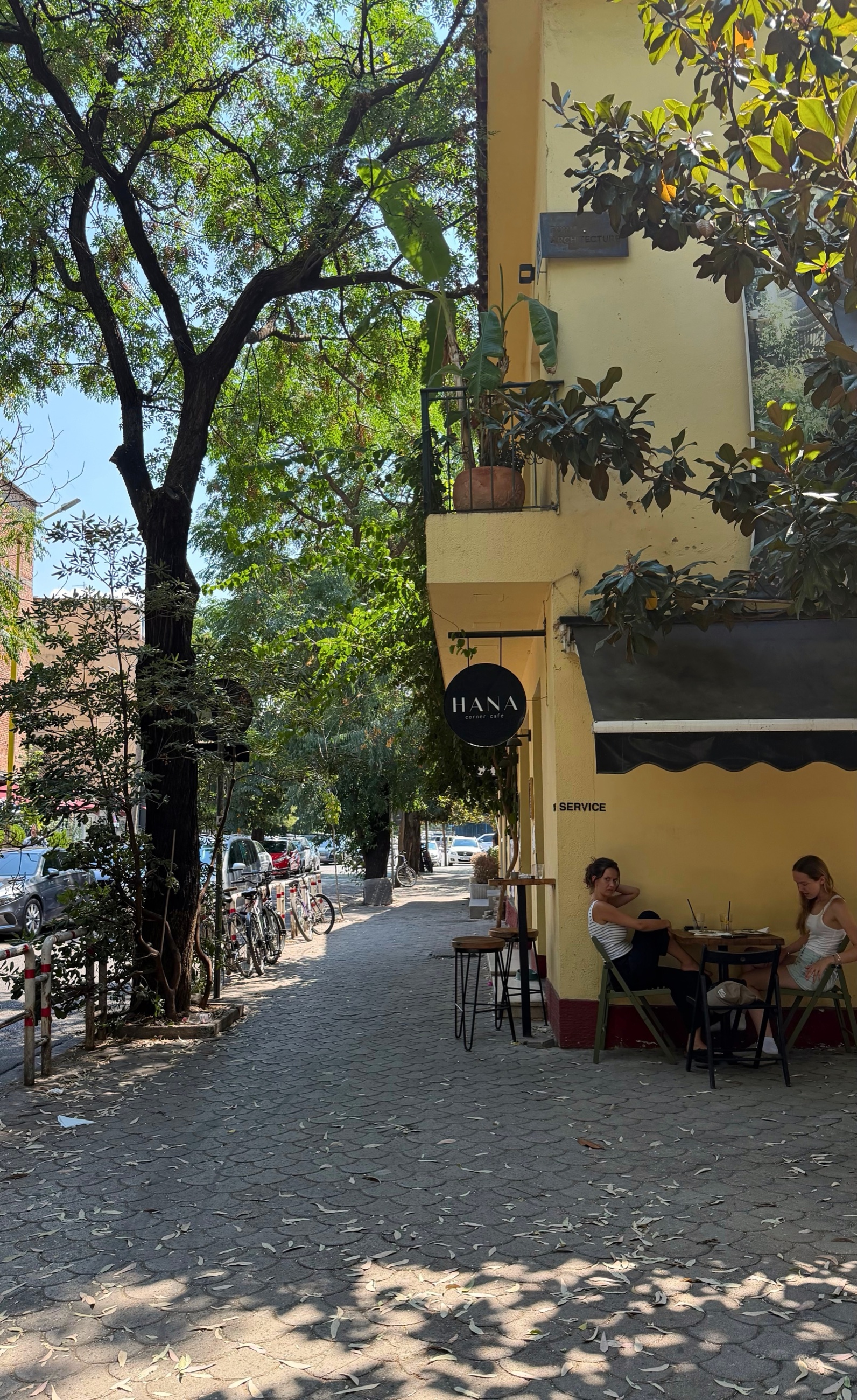 HANA sits beneath mature trees on a quieter Blloku street, part of Tirana’s growing specialty-coffee scene.
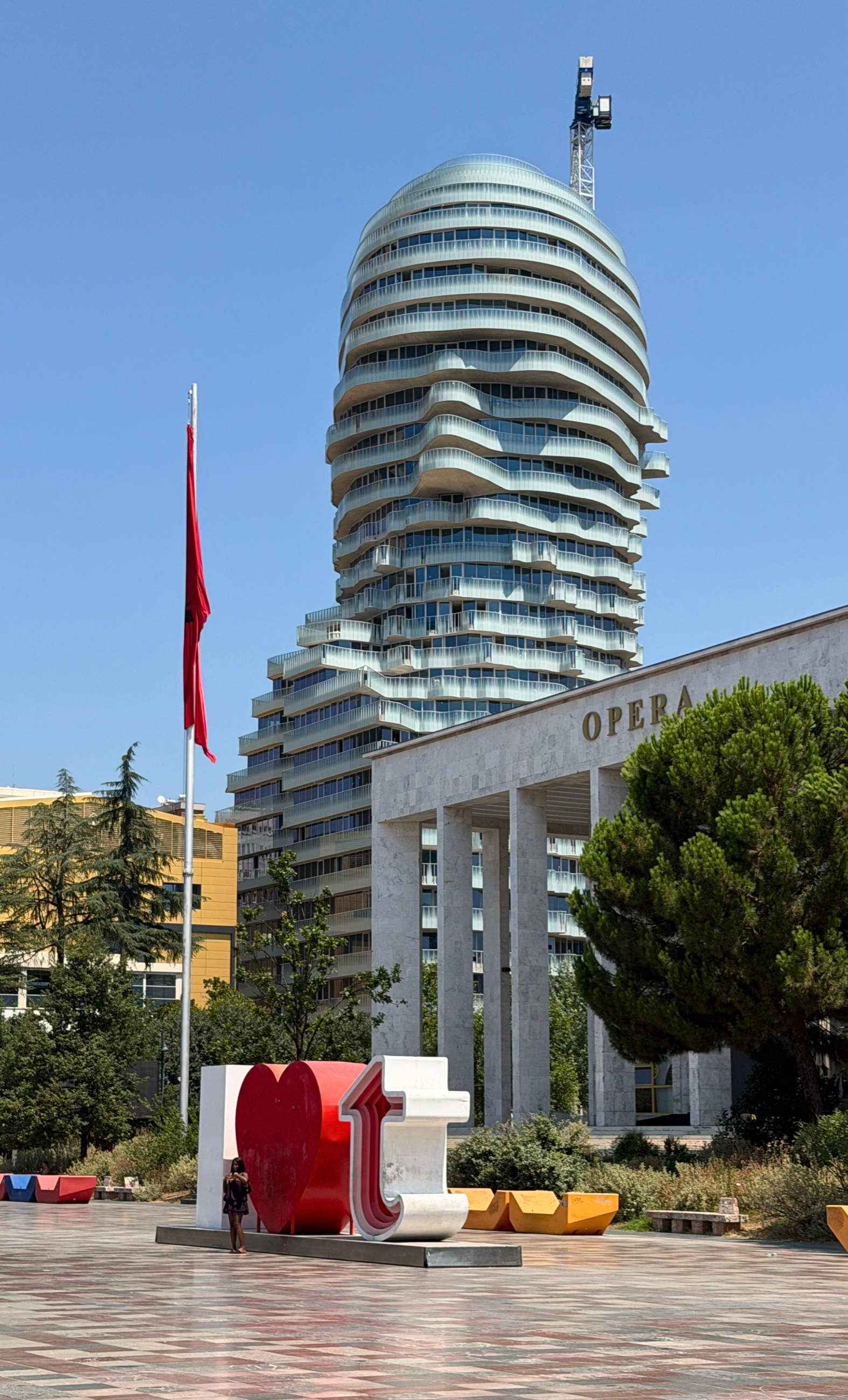 From Skanderbeg Square, the National Theatre of Opera and Ballet shares the frame with newer high-rise construction, one of the clearest visual contrasts in a capital being rebuilt upward.
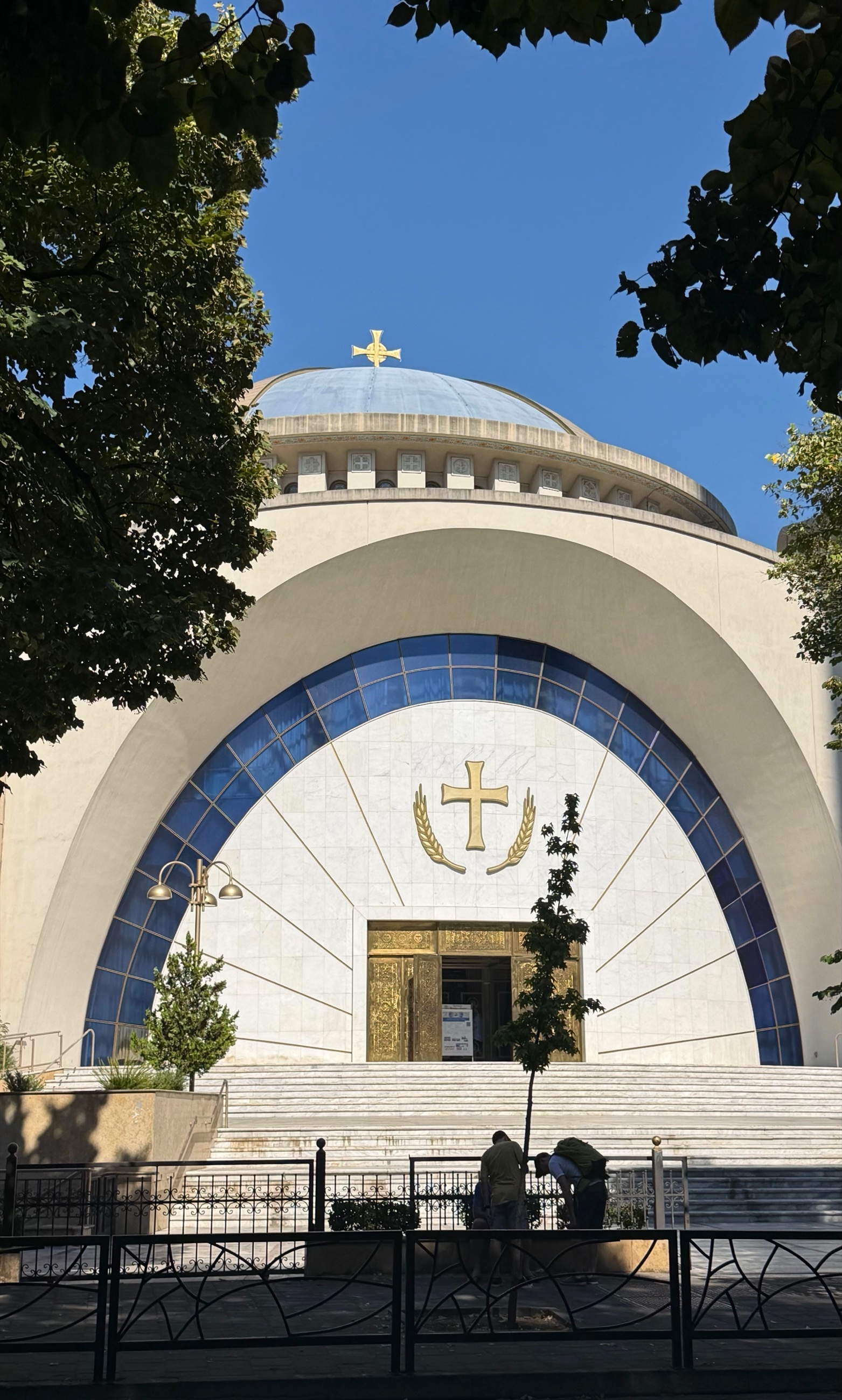 Completed after the fall of communism, Tirana’s Orthodox cathedral stands prominently in the center of a country whose government once removed organized religion from public life.
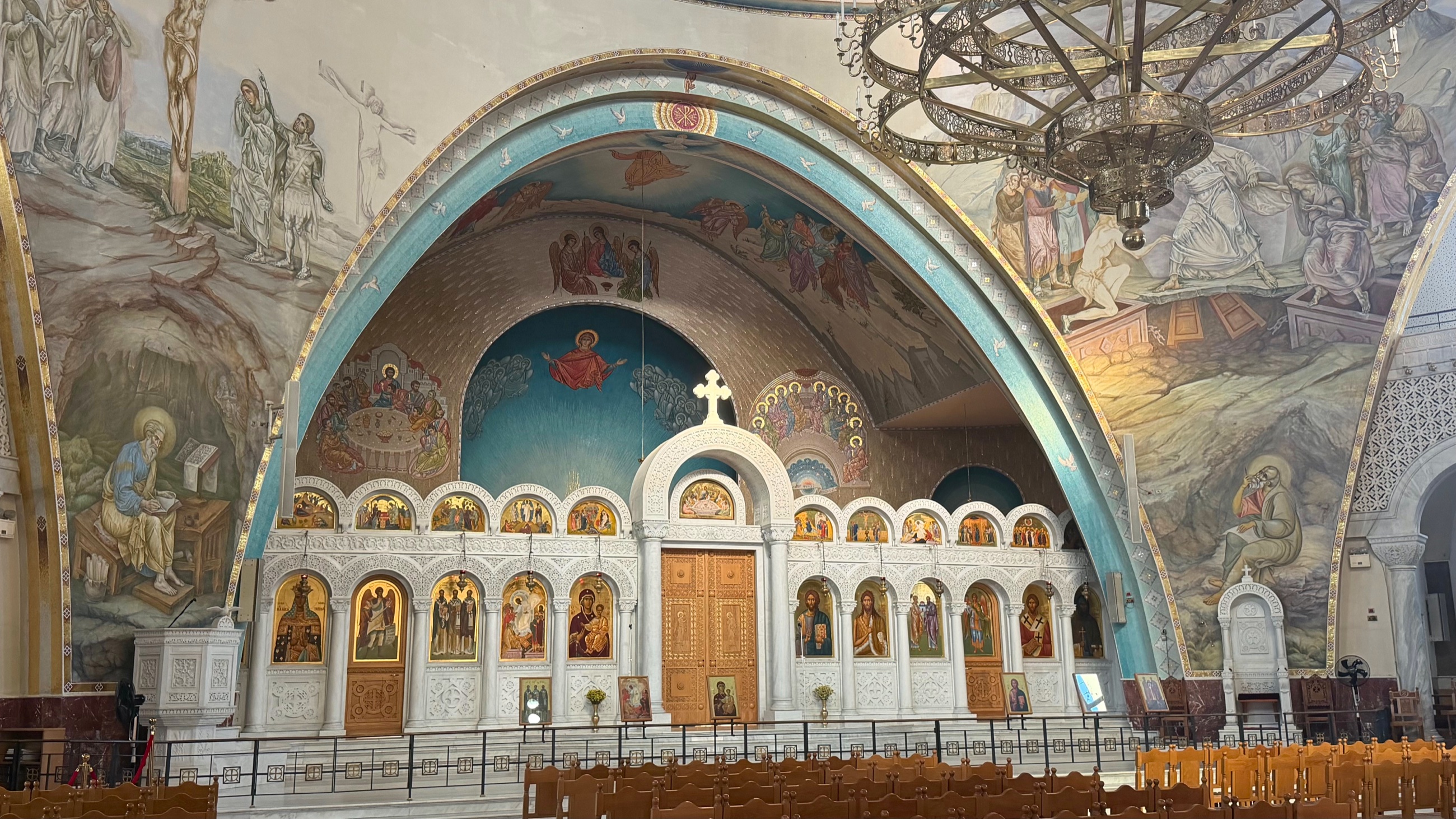 The cathedral interior is filled with icons, painted biblical scenes, and a richly decorated iconostasis, a striking contrast to the decades when churches across Albania were closed, damaged, or repurposed.
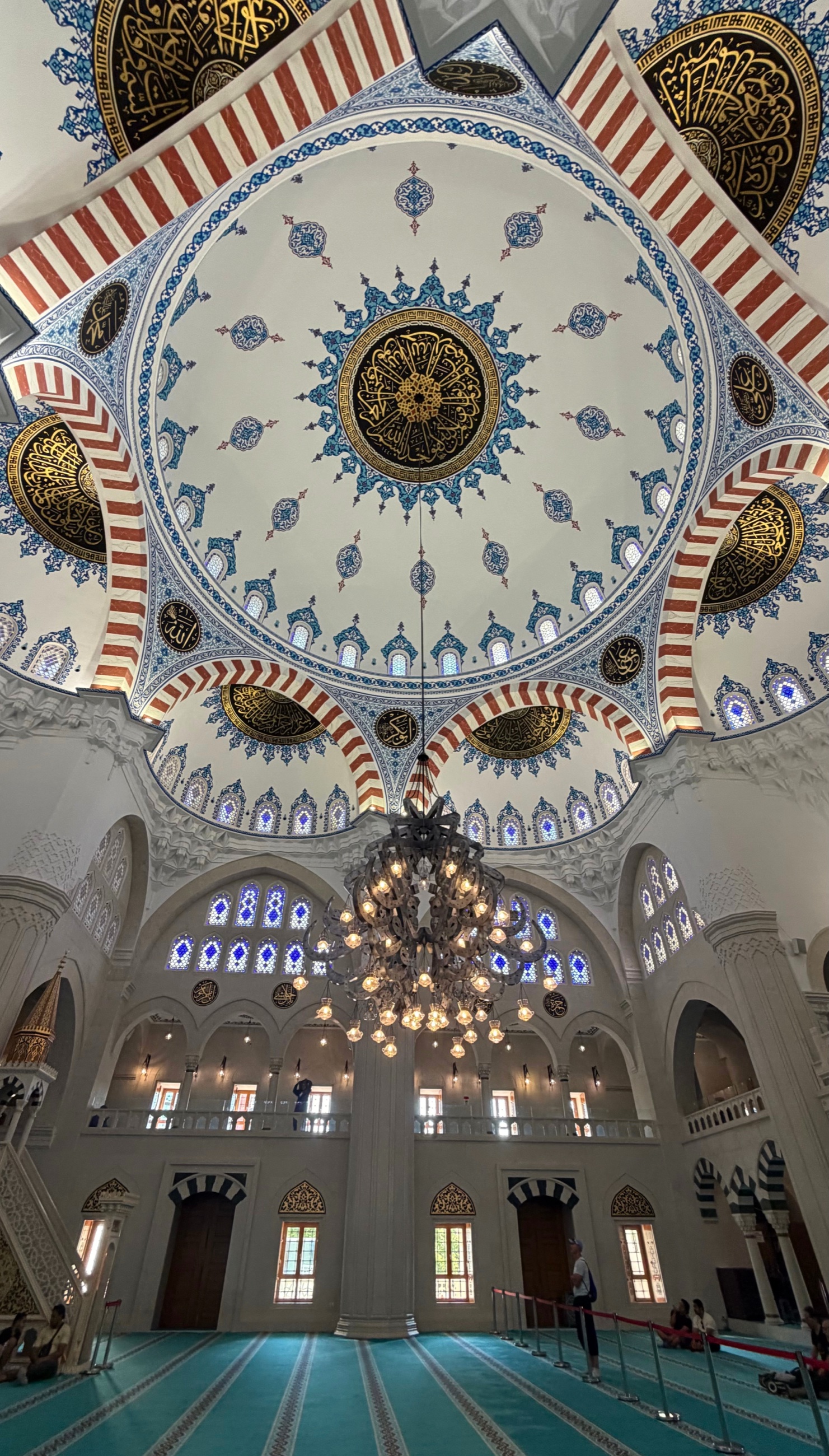 Beneath the immense central dome of Tirana’s newer Namazgah Mosque, calligraphy, chandeliers, and patterned prayer carpets fill one of the city’s most substantial contemporary religious spaces.
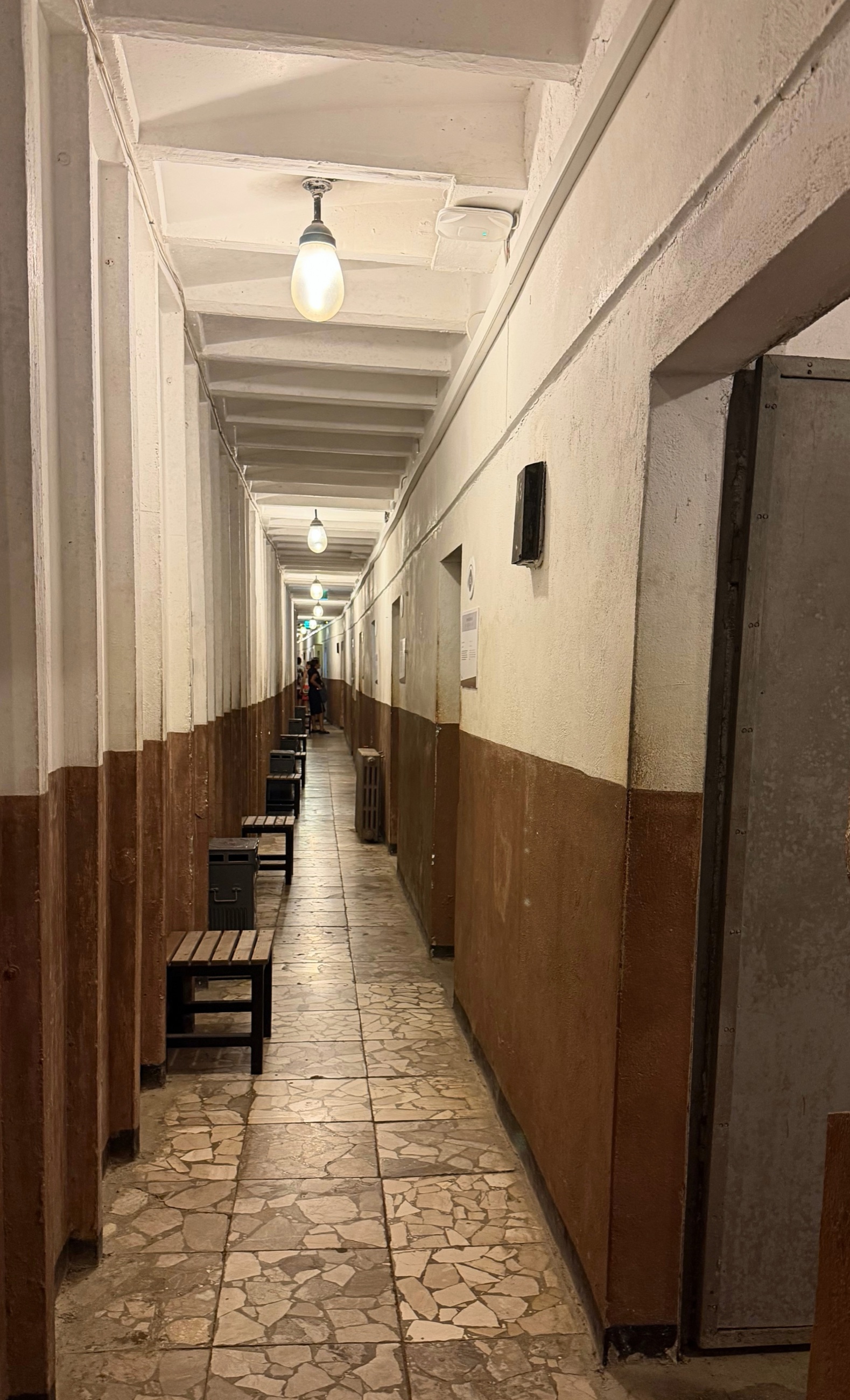 Repeating steel doors and underground corridors reveal the scale of the nuclear shelter built to keep Albania’s communist leadership functioning after an attack that never came.
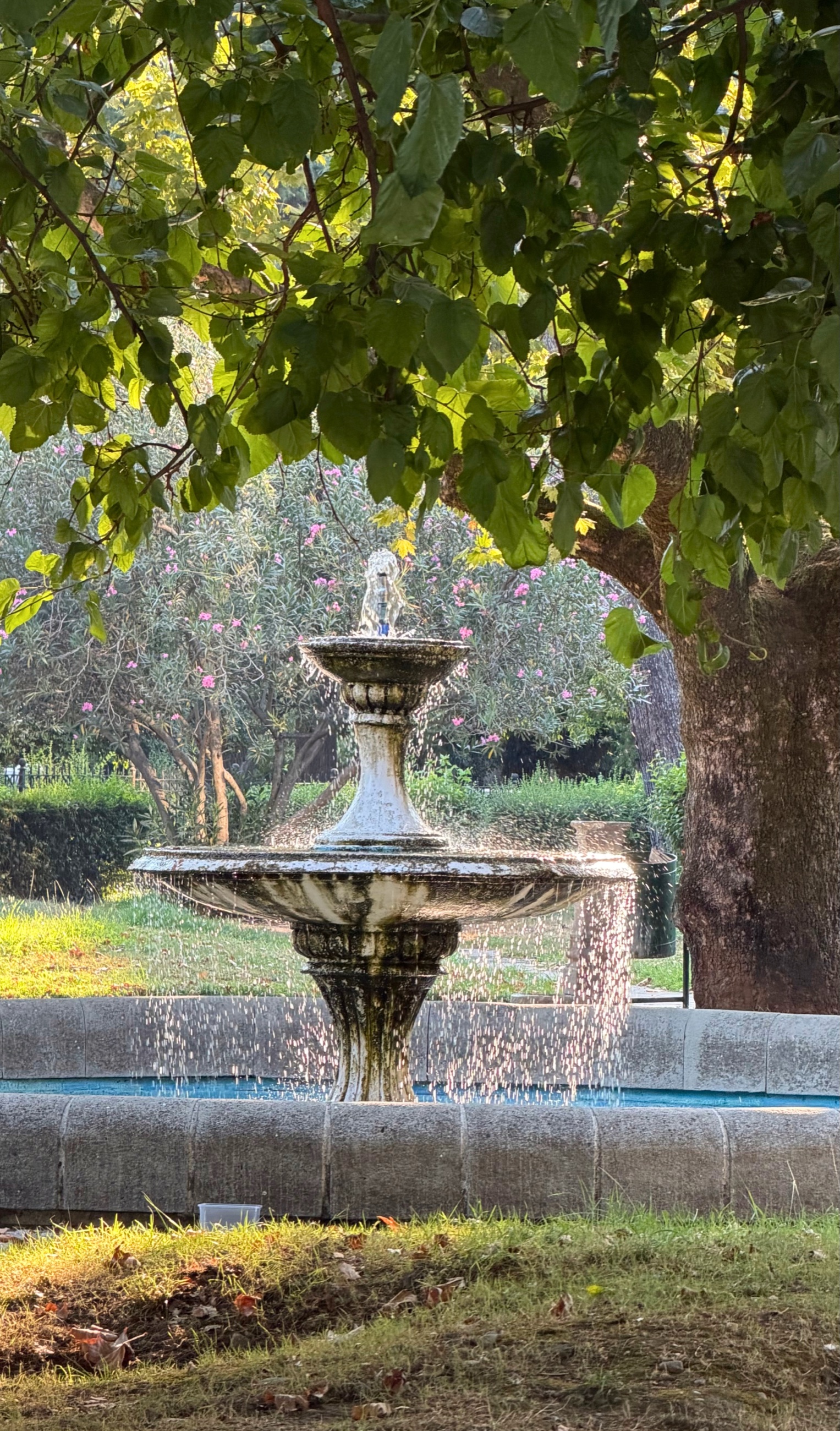 A shaded fountain beneath mature trees closes the week on a more ordinary note: the parks, greenery, and small public spaces that soften Tirana’s dense and rapidly changing urban center.
🎯 Next Week Preview
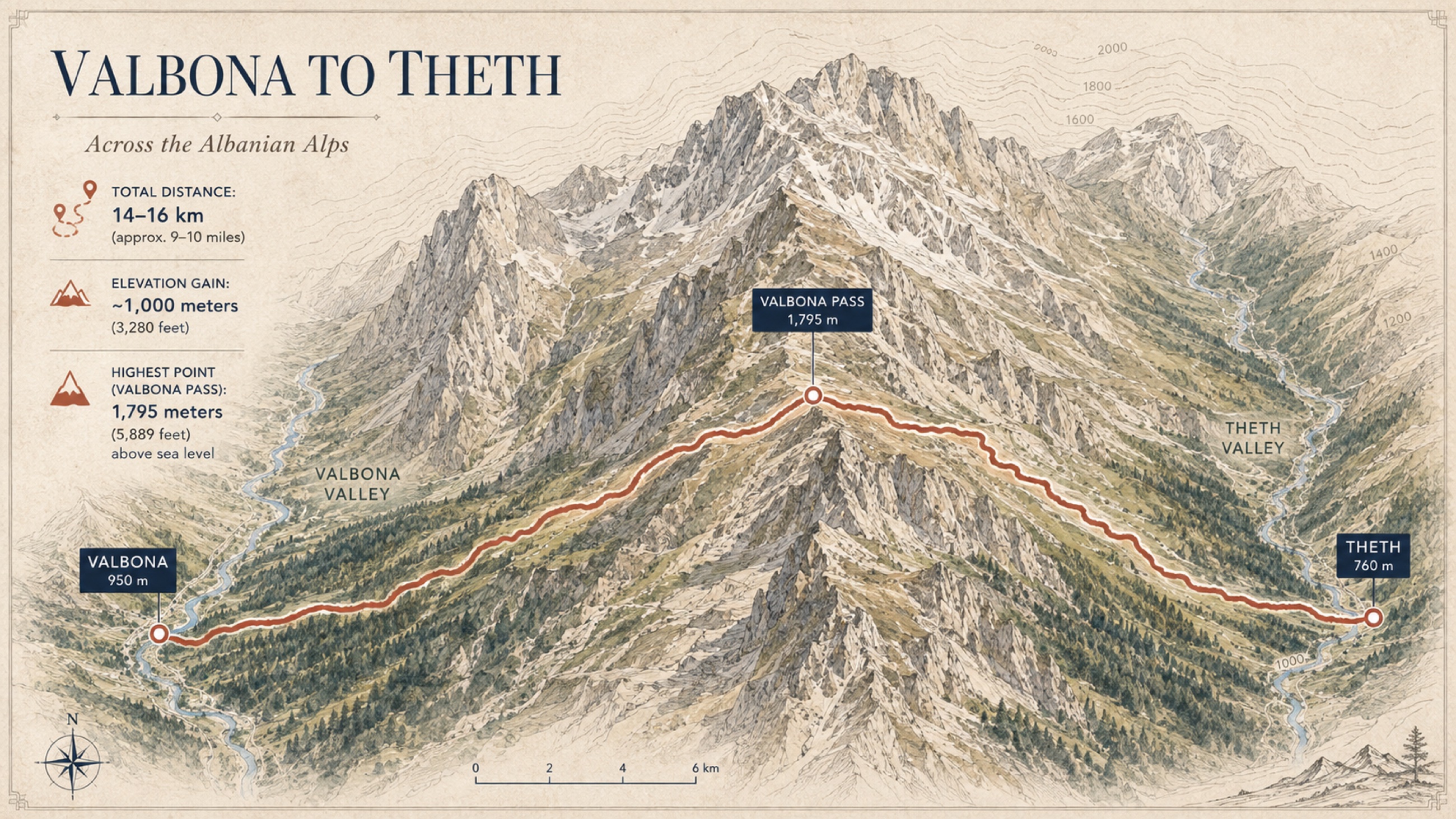 Illustrated route of the Valbona-to-Theth trail, climbing from Valbona through the Albanian Alps to Valbona Pass before descending into Theth Valley.
Next week, Tirana gives way to the mountains.
Our daughter is joining us for a long weekend in the Albanian Alps, beginning with an early departure from Tirana and a journey north to Lake Koman. From there, we will cross the reservoir by ferry through its mountain gorges before continuing overland into the Valbona Valley.
We will spend the night in a family-run guesthouse, then start early the next morning for the crossing from Valbona to Theth: roughly 17 kilometers, or about 10.5 miles, climbing around 1,000 meters toward Valbona Pass before the long descent into Theth. We’re allowing most of the day for the hike, photographs, lunch, and whatever pace the mountain requires.
After a night in Theth and a slow Sunday morning in the village, we’ll make the long trip back to Tirana.
For most of this month, Albania has been an urban story. Next week, we head into the part of the country that rises behind it.
💌 Personal Connection
This week we finished booking every remaining apartment and major flight through our return to the United States this fall. There was real satisfaction in closing the final tabs.
Standing in Hoxha’s suite, what stayed with us wasn’t the paranoia so much as the scale of certainty it required: a government pouring years of planning, labor, and concrete into a single, narrow version of the future, one that never arrived. Our own planning this weekend claims far less than that. We know where we’re headed and roughly when. Beyond that, we are trying not to mistake a plan for certainty. Each country will bring its own realities, and eventually so will our return to the United States. We will adjust when they do.
For much of the past year, that future existed as a long list of possible countries and dates. It has boundaries now. What we’re carrying forward isn’t a guarantee that any of it will go as planned. It’s just enough structure to keep moving when it doesn’t.
And on Friday morning, there is a 5:30 bus waiting to take us toward the mountains, where none of this week’s planning will matter nearly as much as whether it rains.
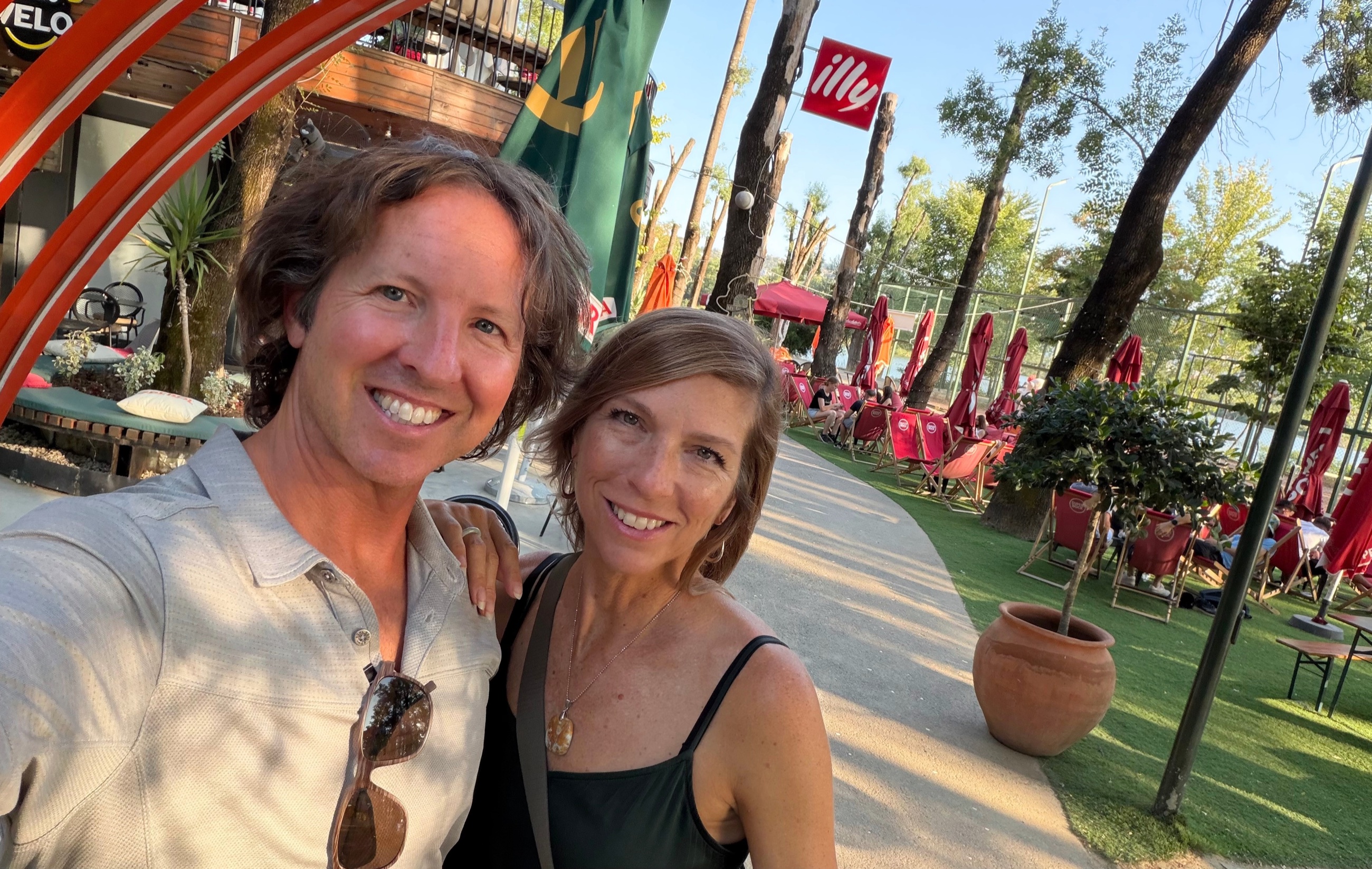 An evening stop at My Favourite Tirana, an outdoor pub beside the tennis courts in Grand Park, near Tirana’s artificial lake.
Until next week, S&S
Some Great Place · Living Local in a Global World · somegreatplace.com